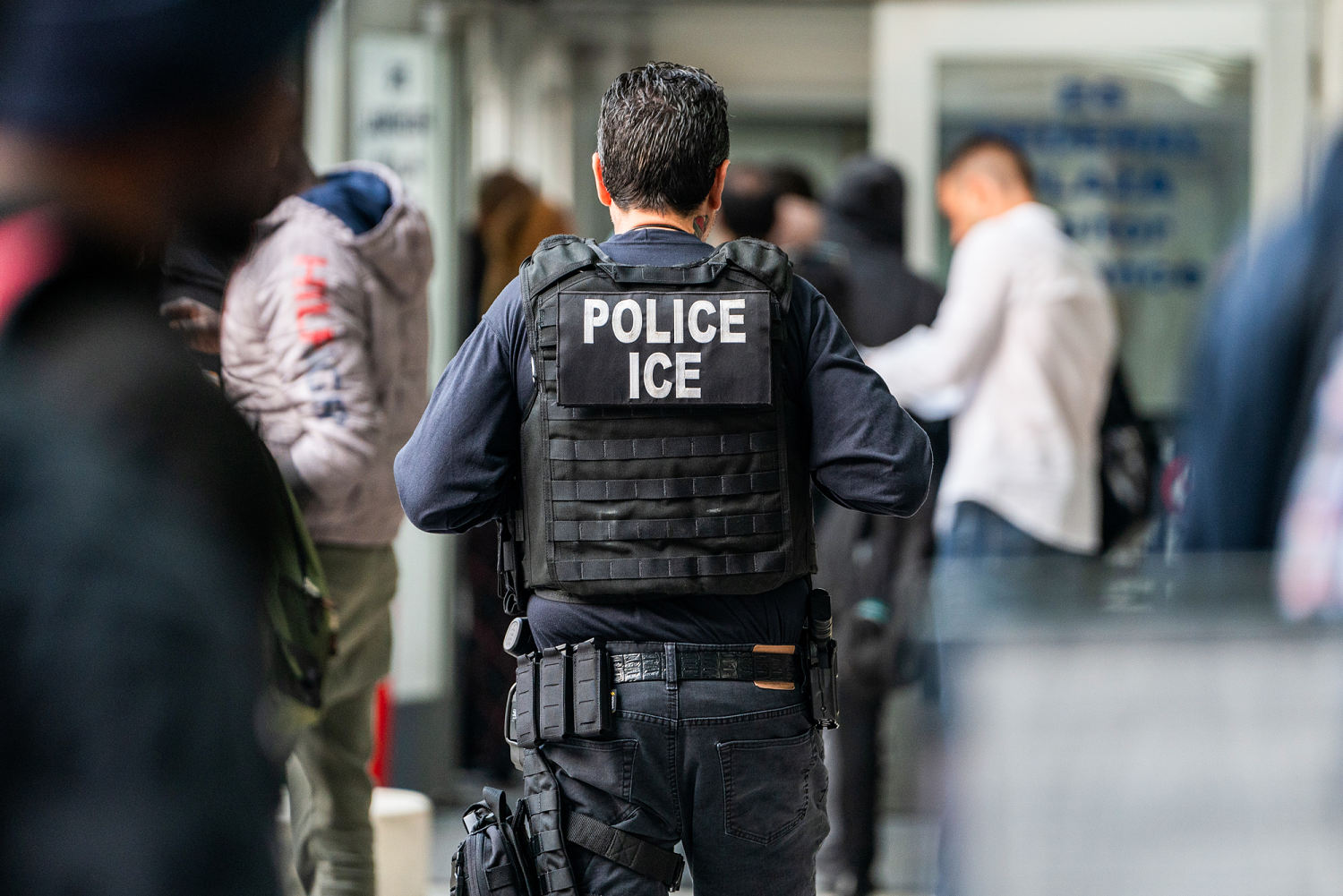
Federal immigration enforcement operations in local neighborhoods rarely happen without friction, but a Tuesday morning confrontation in Houston has pushed tensions to a boiling point. An Immigration and Customs Enforcement (ICE) officer shot and killed a motorist during an early morning traffic stop on Canal Street, sparking immediate outrage, conflicting narratives, and demands for outside oversight.
The agency claims self-defense against a suspect weaponizing a vehicle. Local advocacy groups and family members tell a vastly different story, pointing to a string of recent federal enforcement actions where initial official accounts didn't match later video evidence.
Here is what actually happened on the ground, the details missing from initial headlines, and why this particular incident is reverberating across southeast Texas.
The Early Morning Confrontation on Canal Street
The shooting occurred around 6:50 a.m. in the 6800 block of Canal Street, located in Houston’s historic Magnolia Park neighborhood. The area is a deeply rooted, culturally rich Latino and immigrant community.
According to a statement released by ICE, plainclothes federal agents were conducting a "targeted enforcement operation to arrest an illegal alien." They attempted to pull over a vehicle driven by Lorenzo Salgado Araujo, a Mexican national whom ICE stated was living in the United States without legal permission.
The agency alleges that Araujo refused to follow verbal commands and attempted to flee the scene. According to the federal account, Araujo then rammed an ICE law enforcement vehicle and drove toward an officer in an attempt to run him over. One agent fired his weapon, striking Araujo in the right flank.
Emergency medical services were called to the scene. The Houston Fire Department transported Araujo to Ben Taub Hospital while performing CPR, but he was pronounced dead shortly after arrival. Three other passengers in the vehicle were detained by federal authorities.
The Family Account and the Legal Fight Ahead
The official federal narrative was quickly challenged by those who knew Araujo. His son, Ronaldo Salgado, told Spanish-language television station Telemundo Houston that his father was not actively evading law enforcement or looking for a fight. Instead, he was simply driving through the neighborhood to pick up local laborers for a work shift.
Civil rights organizations have stepped in to back the family's demand for an independent review. Juan Proaño, chief executive of the League of United Latin American Citizens (LULAC), noted that Araujo's family claims he was in the active process of adjusting his legal status in the United States.
LULAC has put up a $5,000 reward for any community members, business owners, or bystanders who can provide independent cellphone or surveillance footage of the morning encounter. Former Texas lawmaker and past LULAC president Domingo Garcia publicly criticized the federal response, calling for local police and county prosecutors to run the primary investigation rather than letting federal entities police themselves.
Why Official Narratives are Facing Skepticism
The immediate pushback from community leaders isn't just a reflex. It stems from a series of high-profile incidents over the past year where early press releases from immigration enforcement agencies were later contradicted by physical evidence or bystander video.
- The Chicago Case: In October, law enforcement officials accused a Chicago-area woman, Marimar Martinez, of intentionally ramming officers with her car before they opened fire, hitting her five times. Criminal charges against her were completely dropped after video evidence emerged suggesting federal vehicles actually initiated the collision.
- The Minnesota Shootings: In January, federal immigration agents shot and killed U.S. citizens Renee Good and Alex Pretti during separate enforcement operations in Minneapolis. The agency initially alleged vehicle-as-a-weapon scenarios, drawing intense local scrutiny and protests.
- The South Padre Island Incident: Newly released body camera footage from a 2025 incident on South Padre Island, Texas, showed an ICE agent fatally shooting 23-year-old U.S. citizen Ruben Ray Martinez during a late-night traffic encounter. Though a grand jury declined to indict, the confirmation that an ICE agent was responsible took months to surface.
Because of this track record, local representatives are demanding total transparency. U.S. Rep. Sylvia Garcia (D-Texas), who represents the Houston district where the shooting occurred, publicly insisted that all communication logs, bodycam footage, and dashcam video must be preserved immediately for an impartial review.
The Overlapping Investigations
Because the shooting involved federal officers, the legal aftermath is complicated. Right now, two separate federal entities are looking into the morning's events.
The Department of Homeland Security’s Office of Inspector General (DHS-OIG) is the primary agency investigating the actual use of lethal force by the ICE officer. At the same time, the FBI’s Houston field office has launched an investigation into the "potential assault on a federal law enforcement officer," focusing on the allegation that Araujo used his car as a weapon.
Meanwhile, local Houston leadership faces pressure from immigrant rights groups like FIEL Houston, which has spent years fighting against local police cooperation with federal immigration raids. Houston recently amended local policies regarding how long city police can hold individuals for ICE custody, a move that increased friction between city leaders and state officials like Texas Governor Greg Abbott.
Next Steps for Residents and Witnesses
If you live or work near the 6800 block of Canal Street in Houston, your immediate actions could impact the investigation. Civil rights attorneys and local leaders recommend the following steps for community safety and accountability.
Check any private security cameras, Ring doorbells, or commercial surveillance systems that face Canal Street. If you recorded footage between 6:30 a.m. and 7:15 a.m. on Tuesday, preserve the raw video file immediately.
Do not edit, crop, or alter the timestamp of any footage you find. You can contact local community advocacy groups like LULAC or FIEL Houston to hand over evidence safely if you prefer not to deal directly with federal investigators.
Keep an eye on announcements from local congressional offices regarding public forums or town halls, which are expected as neighborhood groups push for clearer boundaries on how federal agencies operate inside municipal borders.