Somalia stands at the precipice of catastrophic famine as international humanitarian aid budgets collapse and frontline medical workers operate entirely without pay. Behind the grim headlines of empty grain silos and skeletal children lies a systemic breakdown of global funding architecture, where geopolitical distraction and donor fatigue have conspired to abandon millions to hunger and disease.
When international assistance dries up, the immediate casualty is not abstract policy but the fragile infrastructure keeping communities alive in the Horn of Africa. Clinics run out of oral rehydration salts and therapeutic milk. Nurses and doctors treat severe acute malnutrition without compensation, relying on shared portions of rice to feed extended households of seventeen or more dependents. The crisis is neither sudden nor unpredictable. It is the direct mathematical result of slashed donor allocations colliding with chronic climate shocks.
The Anatomy of a Budget Collapse
Foreign aid operates on promises made in distant capitals, yet its failure is felt acutely in rural dispensaries across Mogadishu, Baidoa, and Kismayo. Over the past twenty-four months, traditional donor nations redirected billions of dollars toward domestic economic pressures and protracted conflicts in Europe and the Middle East. Humanitarian appeals for East Africa faced severe funding gaps long before cameras turned toward new emergencies.
The UN humanitarian response plan for Somalia historically operates at a fraction of its required budget. When major governments trim their foreign assistance portfolios by ten or twenty percent, the impact on localized food security programs is exponential. Supply chains do not adjust downward smoothly; they shatter. Commercial cargo freighters carrying fortified therapeutic foods face port delays because administrative fees and fuel subsidies go unpaid. Warehouses that once stocked months of nutritional supplements sit empty, guarded by watchmen who have not seen a paycheck in four months.
This fiscal starvation occurs against a backdrop of compounding environmental disasters. Consecutive failed rainy seasons decimated pastoralist livelihoods, killing millions of livestock. Families who once measured wealth in camels now find themselves sleeping in makeshift camps constructed from scavenged plastic sheeting and thorn branches. Without functioning boreholes or veterinary medicine, rural subsistence collapsed entirely, driving waves of displaced people toward urban peripheries where humanitarian agencies struggle to maintain even basic sanitation.
Inside the Unpaid Clinics
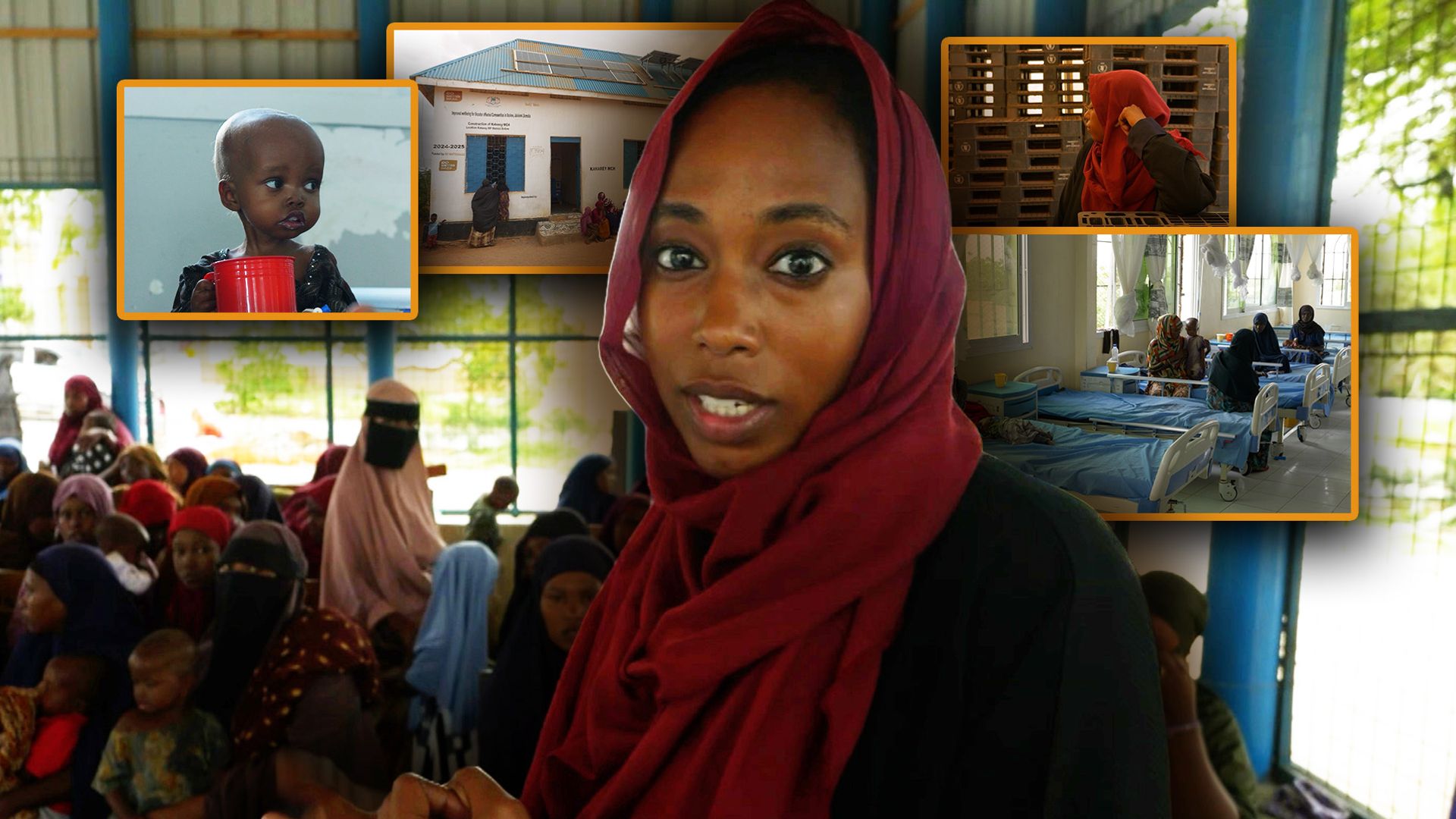
Healthcare delivery in Somalia's displacement settlements depends almost entirely on the quiet heroism of local staff who refuse to walk away. Nurses working in stabilization centers face impossible triage decisions daily. A mother arrives after walking three days carrying an infant whose ribs press visibly against translucent skin. The diagnosis is severe acute malnutrition complicated by measles.
The treatment protocol is clear, but the pharmacy shelves are bare. Antibiotics are rationed for only the most critical admissions. Intravenous lines are washed and reused despite clinical guidelines because replacements are locked behind customs clearance holds that require fees the district health bureau cannot pay.
Laboratories lack reagents to test for malaria or cholera. Clinicians rely on clinical observation alone, watching for the telltale lethargy and sunken fontanelles of dehydration. Yet these professionals report to shifts six days a week. They receive no salary from cash-strapped non-governmental organizations whose headquarters in Geneva or New York report administrative shortfalls.
To understand why these workers stay is to understand the local social contract. In communities where institutional state presence is weak, the health worker is often the sole bulwark between survival and total demographic collapse. Leaving means watching neighbors perish. Staying means feeding seventeen family members on a single daily communal bowl of boiled rice purchased on credit from a local vendor who is also drowning in debt.
The Structural Flaws of Emergency Response
International humanitarian interventions suffer from a recurring structural flaw. They are reactive rather than preventative. Funding floods into the region only after graphic images of starving children saturate global media broadcasts. By the time emergency appropriations clear legislative hurdles and procurement pipelines activate, the acute phase of mortality has already peaked.
Early warning systems in East Africa function with remarkable precision. Meteorologists and food security analysts track soil moisture, market prices, and livestock mortality rates months in advance. The Famine Early Warning Systems Network reliably flags impending catastrophes long before the threshold of crisis is crossed. Yet political leaders rarely mobilize capital during the warning phase. Prevention lacks the visceral television appeal of intervention.
Furthermore, the operational architecture relies too heavily on centralized international NGOs rather than decentralized local actors. Bureaucratic overhead consumes a substantial percentage of every disbursed dollar before it reaches the field. Administrative compliance, risk assessments, and security protocols designed for stable environments slow down emergency distribution in active conflict zones.
Local civil society organizations, women’s groups, and clan-based mutual aid networks often reach populations cut off by armed opposition groups or destroyed infrastructure. Yet these grassroots entities receive a minuscule fraction of institutional funding. Direct cash transfer programs, while efficient in theory, falter when local markets run entirely out of food stock due to disrupted trade routes and currency depreciation. When a sack of sorghum costs more than a laborer earns in two weeks of hard physical work, digital cash grants cannot buy calories that do not exist on the shelf.
The Geopolitical Disconnect
The crisis in Somalia cannot be divorced from broader shifts in international relations. Traditional donor fatigue is compounded by competing strategic priorities. Western foreign policy establishments view development aid through the lens of security containment and migration management. When funds shift toward border enforcement and military assistance elsewhere, humanitarian budgets in secondary theaters absorb the cuts.
Diplomats stationed in Nairobi speak privately of shrinking leverage. Multilateral institutions attempting to broker peace agreements or secure humanitarian access corridors find themselves with diminished bargaining power when their aid leverage disappears. Dictators and armed factions alike recognize when the international community lacks the stomach or financial backing to enforce compliance with international humanitarian law.
The consequence is a pervasive sense of abandonment among Somali communities who watched global attention pivot away years ago. The international community treats the country as an intractable humanitarian footnote rather than a dynamic society grappling with systemic shocks largely driven by global climate patterns to which they contributed virtually nothing.
Breaking the Cycle
Resolving the structural vulnerability of Somalia requires abandoning short-term crisis management in favor of multi-year resilience financing. Emergency food drops and temporary nutritional clinics act as vital stopgaps, but they treat symptoms while the underlying disease spreads unchecked.
Investment must pivot toward climate-resilient agriculture, pastoralist diversification, and decentralized solar-powered water infrastructure. Boreholes equipped with renewable energy systems can protect livestock herds during prolonged dry spells, preventing the catastrophic asset stripping that drives families into displacement camps.
Equally vital is the establishment of guaranteed baseline compensation for frontline workers. A functioning healthcare system cannot rely indefinitely on the moral exhaustion of unpaid nurses. When educators, health professionals, and agricultural extension agents receive reliable salaries, local economies stabilize, and institutional memory is preserved rather than scattered by migration.
The risk of famine in Somalia is not an act of unalterable fate. It is a human-made crisis sustained by political neglect, underfunded response mechanisms, and a failure of international imagination. Until donor governments recognize that long-term stability in the Horn of Africa is inseparable from consistent, proactive investment in human capital, families of seventeen will continue to share bowls of rice in the shadows of empty clinics, waiting for a rescue that arrives too late.