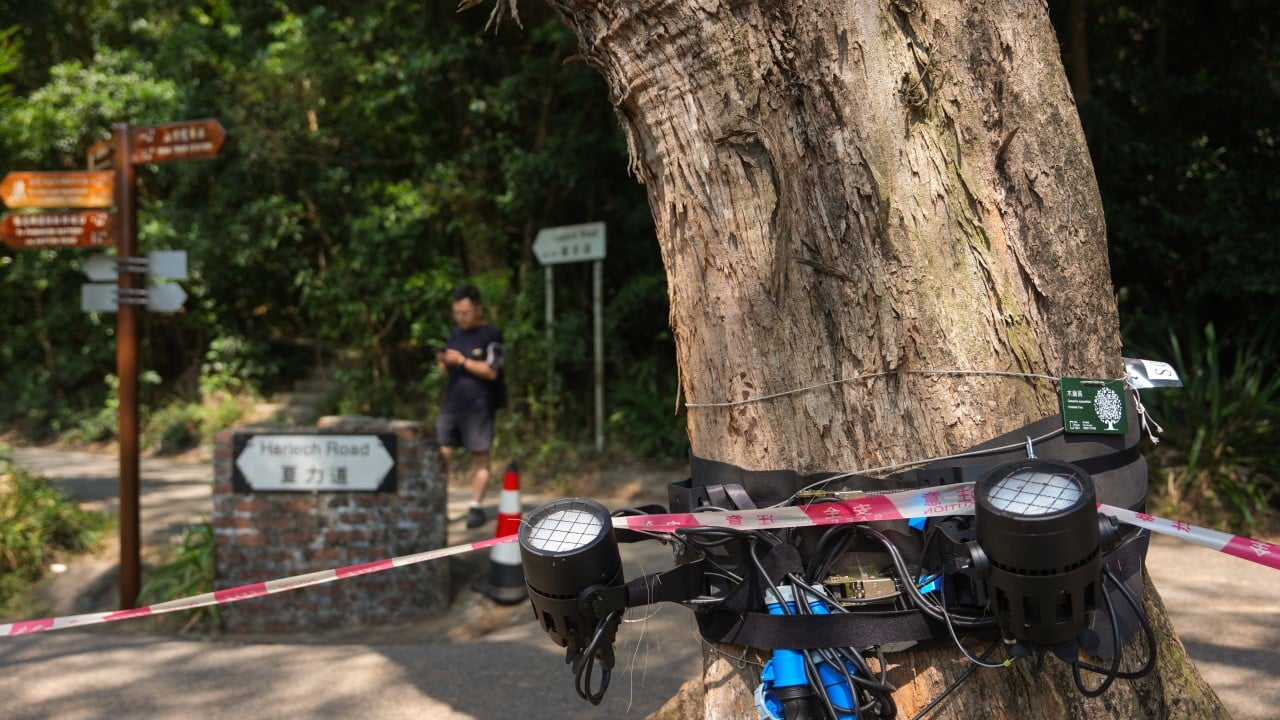
Municipal tourism boards routinely confuse capital expenditure with cultural value, a strategic error that culminated in Hong Kong canceling its planned lighting installation at Victoria Peak following immediate public opposition. Rather than generating incremental visitor footfall, the proposed deployment of artificial illumination atop a protected natural asset triggered a sharp negative feedback loop among residents, environmental advocates, and urban planners. Understanding this failure requires analyzing the structural misalignment between top-down destination marketing and the economic reality of authentic urban conservation.
The Structural Anatomy of the Tourism Misstep
When destination management organizations (DMOs) face stagnating visitor yield or shifting demographic preferences, the default bureaucratic response is to commission physical infrastructure—specifically, high-visibility visual spectacles designed for social media amplification. At Victoria Peak, the operational logic relied on a flawed assumption: that adding artificial luminosity to an already world-renowned vantage point would increase dwell time and night-time commercial spend.
This approach ignores the fundamental economic principle of diminishing marginal utility. Victoria Peak already possesses a monopoly on Hong Kong’s primary visual asset: the unencumbered panoramic view of Victoria Harbour and the Kowloon skyline. Introducing localized artificial lighting at the summit does not enhance the core product; instead, it introduces visual noise that competes with the primary attraction.
The cancellation reveals three distinct structural failures in the project's conception:
- Asset Cannibalization: The Peak’s value proposition rests on its contrast to the hyper-dense, neon-saturated urban core below. By exporting the visual language of Tsim Sha Tsui or Mong Kok to the summit, planners attempted to homogenize two distinct spatial experiences.
- Externalized Environmental Costs: Light pollution in urban-adjacent country parks disrupts nocturnal ecosystems, alters avian migration patterns, and degrades the dark-sky buffer zones that residents rely on for psychological decompression.
- Stakeholder Exclusion: Treating a multi-use civic space exclusively as a commercial tourist funnel alienates the local tax base, who bear the congestion costs without capturing the theoretical commercial upside.
Quantifying the Friction Between Spectacle and Authenticity
In urban economics, successful tourism interventions operate as force multipliers for existing neighborhood character. Unsuccessful interventions operate as extractive overlays—installations that sit atop a location without integrating into its historical or ecological context.
The public outcry against the Peak lighting project was not an isolated aesthetic disagreement; it was a predictable market correction against an extractive overlay. Residents and urbanists recognized that the installation offered zero functional utility while actively degrading the site's primary competitive advantage.
The Mechanics of Visual Saturation
Hong Kong’s global brand identity is already heavily indexed toward artificial light, anchored by the nightly A Symphony of Lights harbor show and dense commercial signage. From a portfolio management perspective, allocating additional capital to lighting installations creates severe concentration risk.
When a destination over-indexes on a single sensory modality—in this case, artificial illumination—each subsequent installation yields lower media impressions, shorter visitor engagement, and higher maintenance liabilities. The Peak project failed because it attempted to scale a saturated asset class rather than diversifying the city's experiential portfolio into eco-tourism, heritage preservation, or low-impact architectural integration.
The Regulatory and Reputational Cost Function
The decision to scrap the project after public pushback demonstrates the high cost of late-stage stakeholder discovery. In municipal project management, the cost of altering a design increases exponentially as it moves from conceptual scoping to public announcement.
- Phase 1 (Internal Scoping): Modifying project parameters requires only administrative reallocation.
- Phase 2 (Vendor Contracting): Canceling or pivoting incurs sunken procurement costs and design fees.
- Phase 3 (Public Announcement): Retreating under public pressure inflicts severe reputational damage on the governing body, signaling a disconnect between state planners and civic sentiment.
By bypassing early-stage environmental impact assessments and community consultations, the project architects compressed all stakeholder friction into Phase 3, forcing a binary choice between proceeding with an unpopular mandate or absorbing the political cost of a public cancellation.
Ecological Externalities as Economic Liabilities
Modern destination strategy can no longer treat ecological preservation as a separate compliance hurdle; it is a core component of brand equity. Global travel demographics—particularly high-spending, long-haul visitors—increasingly penalize destinations perceived as engaging in environmental degradation or over-tourism.
Victoria Peak sits within the Pok Fu Lam and Lung Fu Shan country park network. Introducing high-intensity artificial lighting into this zone creates immediate ecological fragmentation. Nocturnal insects, bats, and migratory birds depend on predictable photoperiods for foraging and navigation. Disrupting these cycles degrades the biodiversity that makes Hong Kong’s proximity between urban density and wild terrain unique among global financial centers.
Furthermore, light spillage from elevated terrain travels significantly further than street-level illumination, impacting residential districts along the Mid-Levels and disrupting astronomical visibility across the southern side of Hong Kong Island. The financial cost of installing and powering the fixtures was dwarfed by the uncalculated social cost imposed on the surrounding urban ecosystem.
Corrective Frameworks for Destination Infrastructure
To prevent future capital misallocations, municipal tourism boards and urban developers must replace intuition-driven spectacle creation with rigorous, multi-variable evaluation frameworks prior to capital commitment.
1. The Subtraction-First Audit
Before introducing new physical structures to an established landmark, planners must conduct a subtraction audit. The objective is to identify visual clutter, outdated signage, poorly maintained pathways, and acoustic pollution that currently degrade the visitor experience. Removing detractors consistently yields higher satisfaction scores and stronger organic social media sharing than adding artificial attractions. At Victoria Peak, improving pedestrian flow, restoring historic stone balustrades, and optimizing natural viewing corridors offer higher return on invested capital than temporary lighting rigs.
2. Civic Utility Indexing
Every proposed tourism infrastructure project must score positively on a dual-use metric: Does this installation improve the daily quality of life for permanent residents in the absence of tourists?
- High Civic Utility: Improved trail drainage, shaded seating, public drinking water stations, restored heritage architecture, and low-glare, downward-directed safety lighting.
- Zero Civic Utility: Decorative light installations, oversized branded photo-op sculptures, and temporary seasonal backdrops.
Projects scoring zero on civic utility should be disqualified from utilizing public land in protected or high-traffic residential zones, regardless of their projected short-term social media reach.
3. Ecological Carrying Capacity Modeling
Capital deployment in natural or semi-natural zones must be governed by strict ecological thresholds rather than commercial footfall targets. Planners must establish baseline metrics for ambient light levels (measured in lux), decibel ceilings, and soil compaction rates before drafting architectural briefs. Any vendor proposal that pushes the site beyond its established baseline must be rejected at the procurement stage.
Limitations of Community-Driven Veto Power
While public intervention successfully halted a flawed project at Victoria Peak, relying on reactive public outcry as a quality-control mechanism carries significant operational risks. Public sentiment is inherently volatile, often favoring status-quo preservation over necessary modernization.
If municipal authorities become overly sensitized to vocal opposition, they risk entering institutional paralysis—a state where legitimate infrastructure upgrades, accessibility improvements, and sustainable commercial developments are abandoned at the first sign of friction. The objective is not to grant an unconditional veto to the loudest demographic, but to integrate structured, representative feedback during Phase 1 scoping so that projects launch with built-in legitimacy.
The Strategic Play for Urban Landmarks
Municipal planners and tourism executives must immediately halt the procurement of standalone visual spectacles at natural landmarks. Reallocate the capital saved from the canceled Peak lighting project into a dedicated Natural Asset Restoration Fund focused on three operational priorities:
- De-cluttering Summit Sightlines: Remove obsolete commercial kiosks, redundant wayfinding poles, and unshielded security floodlights around Victoria Peak to restore the visual integrity of the natural ridgeline.
- Deploying Dark-Sky Compliant Infrastructure: Retrofit all existing pathway illumination in the Peak district with warm-spectrum (under 2700K), fully shielded, motion-activated LED fixtures that eliminate upward light spillage while maintaining pedestrian safety.
- Shifting Marketing Capital to Invisible Infrastructure: Redirect promotional budgets away from physical installations and toward digital interpretation—such as augmented reality historical overlays accessible via personal devices—which deliver rich contextual storytelling without altering the physical environment or imposing ecological costs on the summit.