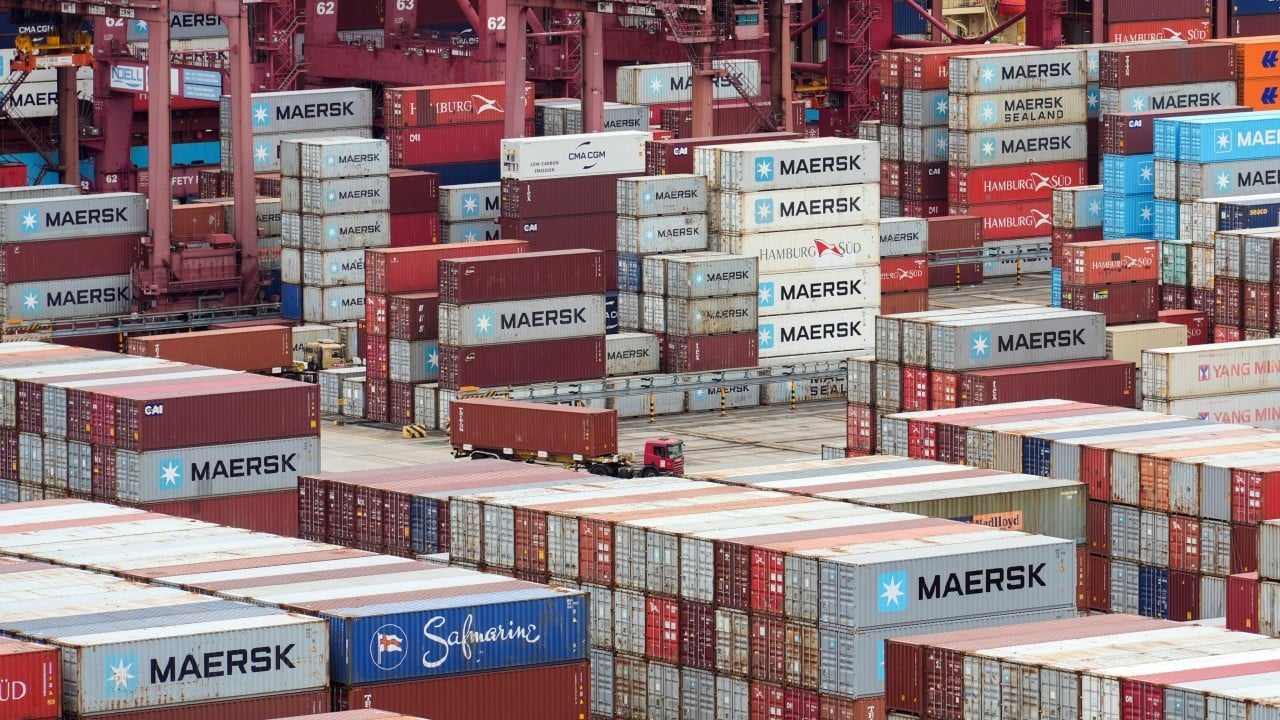
The mainstream economic commentary loves a lazy apocalyptic headline. Whenever political rhetoric turns sharp, pundits dust off dramatic historical analogies about blockades and economic collapse, pretending that global trade operates like a closed corporate ledger that can simply be shut off with a single executive signature.
The lazy consensus is straightforward: apply maximum pressure, squeeze a nation's primary trading partners, and watch the target economy grind to a sudden halt. It is a neat, comforting narrative for cable news segments. It is also entirely divorced from how modern, sanction-hardened supply chains actually function.
Look past the surface-level panic over macroeconomic buzzwords, and a completely different reality emerges. Economies under decades of intense multilateral isolation do not just roll over and die; they mutate. They build shadow architectures, diversify into alternative settlement mechanisms, and reroute commerce through regional hubs that treat Western compliance as an optional suggestion rather than a rigid law.
The Myth Of The Direct Border
When analysts list a nation's primary trade partners, they usually look at official customs ledgers and tally up bilateral flows as if every dollar moves through transparent, regulated banking channels. This is an amateur mistake.
Take Iran's commercial web. Standard reports love to point the finger strictly at Beijing, Ankara, or historical re-export nodes like the United Arab Emirates, assuming that cutting off one financial pipeline stops the flow of capital. I have watched companies waste millions trying to track direct transactional lines, treating international trade like a game of whack-a-mole against overt customs declarations.
That approach misses the entire machinery of modern evasion. When primary corridors face restrictions, commerce simply fragments into a decentralized network of private intermediaries, localized barter systems, and maritime grey-market operations.
Imagine a scenario where a cargo vessel loaded with hydrocarbons turns off its transponder in the Persian Gulf, transfers its load mid-ocean to a vessel bearing a different flag, and watches its cargo rebranded as originating from an entirely different jurisdiction before reaching a non-compliant independent refinery. Official customs statistics register a blank; reality records a multi-billion-dollar transaction. When you rely on surface-level metrics, you are measuring the shadow while the actual economy walks right past you.
The Resilience Of The Shadow Fleet
The foundational error in evaluating sanctioned economies is the belief that enforcement scales linearly with pressure. It does not. Every tightening of formal rules creates an immediate, highly lucrative profit margin for illicit logistics providers.
This gives rise to the maritime shadow fleet—hundreds of aging, unregistered tankers that operate completely outside Western insurance markets and maritime registries. They do not need SWIFT. They do not need Western maritime certification. They run on localized insurance pools and digital asset settlements or bilateral currency swaps that bypass the dollar-denominated system entirely.
When politicians talk about creating an economic crisis for a defiant state by targeting its trade partners, they assume those partners care more about distant geopolitical compliance than immediate access to heavily discounted energy and raw materials. That is a fundamental miscalculation of incentives. For developing manufacturing hubs and energy-hungry industrial giants, a steady stream of cheap oil isn't a political statement; it is fuel for domestic GDP growth. They will gladly absorb diplomatic friction to keep their factories running on discount crude.
Rethinking Economic Leverage
If we want to understand why decades of maximum pressure campaigns fail to achieve their stated objectives, we have to stop looking at trade as a binary switch. It is a dynamic, adaptive fluid. Block one channel, and the pressure simply hydro-fractures the market, creating three new underground conduits.
The real story of modern trade isolation is not about how tightly a superpower can squeeze the valve. It is about the astonishing ingenuity of economic actors operating in the dark. Until policymakers understand that sanctions act as an evolutionary pressure rather than a death blow, they will keep fighting last century's trade wars with broken instruments. Stop looking at the official spreadsheets. Start looking at the decentralized networks that thrive precisely because the rules were designed to break them.