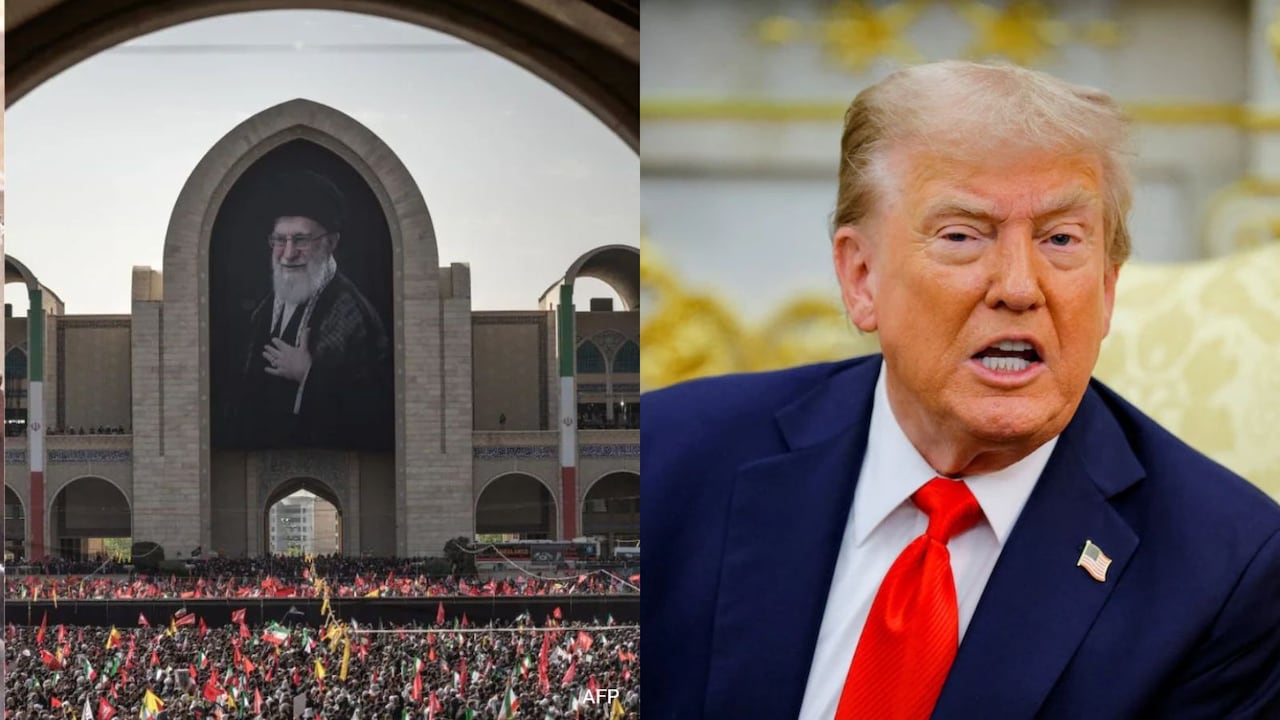
The mainstream media loves a funeral, and they love a war scare even more.
When Donald Trump dropped his "one shot" threat directed at Tehran during the delicate transition period surrounding Ayatollah Ali Khamenei’s funeral, the foreign policy establishment broke out in its predictable, synchronized panic. Columns were written. Talking heads hyperventilated. The consensus was immediate: we are on the precipice of an uncontrollable regional conflagration.
Then came Iran’s response. A dismissive, sharp reminder that Washington has "no history" compared to Persia’s millennia of survival. The press ran with it as a terrifying escalation of rhetoric.
They got it completely wrong.
What the talking heads call an escalation is actually a finely tuned, symbiotic ritual. The Western foreign policy apparatus consistently treats geopolitical rhetoric as a precursor to kinetic action. It isn’t. In the real world of hard-nosed statecraft, Trump’s bluster and Iran’s historical flex are not opening salvos. They are domestic stabilization mechanisms.
The lazy consensus insists that both nations are itching for a devastating military showdown. The reality is far more calculated, cold, and transactional.
The Myth of the Unhinged Escalation
Every time an American president rattles a saber and Tehran rattles back, the assumption is that someone is about to miscalculate. Analysts point to historical flashpoints, screaming that a single spark will ignite the Middle East.
This view ignores how deterrence actually functions between adversarial states.
Consider the mechanics of Trump’s "one shot" doctrine. It is a classic execution of the Madman Theory, a strategy pioneered by Richard Nixon and Henry Kissinger. The objective is not to actually initiate a catastrophic war; the objective is to project an image of absolute unpredictability so the adversary flinches first.
When Trump threatens a catastrophic, definitive strike during a moment of profound Iranian vulnerability—the death and funeral of its Supreme Leader—he isn't drafting a deployment order. He is establishing a high baseline for negotiation. He is telling the incoming Iranian leadership exactly what the ceiling of American tolerance looks like.
Iran understands this perfectly.
Decoding the Persian Historical Flex
When Western analysts read Iran’s "no history" retort, they view it through a literal, defensive lens. They see an angry rogue state lashing out because its pride was wounded during a period of national mourning.
That is an amateur reading of Iranian diplomacy.
I have spent years analyzing regional proxy frameworks and state-level posturing. If you look at the actual behavior of the Islamic Revolutionary Guard Corps (IRGC) and the clerical establishment during past crises—such as the aftermath of the Qasem Soleimani assassination—you see a pattern of hyper-calculated restraint disguised as fierce resistance.
Iran's invocation of its deep civilizational history is a deliberate tactical pivot designed to achieve three specific goals:
- De-escalation through Superiority: By claiming Washington lacks historical depth, Iran frames the American threat not as a terrifying military reality, but as the fleeting temper tantrum of an adolescent superpower. It allows Tehran to step back from immediate kinetic retaliation without looking weak to its domestic population.
- Consolidation of Power: Khamenei’s passing creates an institutional vacuum. The Assembly of Experts and the IRGC are currently engaged in a brutal, quiet scramble to secure the succession. External threats are the ultimate glue. Trump’s threat gives the regime the exact external foil it needs to suppress internal dissent and unite competing factions behind the new Supreme Leader.
- Signal to Proxies: The Axis of Resistance—stretching from Baghdad to Sana'a—runs on narrative. A weak response from Tehran during Khamenei’s funeral would fracture proxy confidence. A grand, civilizational rebuff maintains the ideological brand without committing a single drone to the sky.
Imagine a scenario where Iran actually took the bait and launched a massive, uncoordinated strike in response to Trump's words. It would invite the exact structural destruction the regime has spent forty years avoiding. They are survivalists, not martyrs.
Why the Media PAA Queries Are Inherently Flawed
If you look at the standard questions the public asks during these cycles, you can see how deeply the mainstream narrative has warped public understanding.
Is the US going to war with Iran?
No. The structural costs are too high for both sides. The US military infrastructure in the region is positioned for containment, not occupation. For Iran, an open war with a nuclear superpower means the immediate end of the clerical state. Both leadership teams know the lines. The loud threats are a substitute for war, not a prelude to it.
Why does Iran always bring up history in diplomacy?
Because history is their primary asymmetric asset. When you cannot match an adversary’s defense budget dollar for dollar, you match it by changing the timeline. By reminding the global community that regimes in Persia outlast empires, they signal that they are playing a multi-decade game, while American foreign policy changes every four to eight years based on election cycles.
The Cost of the Performance
To be completely transparent, this contrarian view carries its own grim reality. Just because the rhetoric is theatrical doesn't mean it is harmless.
The downside of this perpetual brinkmanship is that it locks both nations into a permanent state of economic and social paralysis. The Iranian people bear the brunt of this, trapped under crushing sanctions justified by the regime's manufactured stance of eternal defiance. Meanwhile, American taxpayers continue to fund a massive forward-deployed military presence to counter a threat that is constantly managed through backchannels anyway.
The Swiss embassy in Tehran isn't empty right now. The phone lines between Washington and Iranian intermediaries are burning up. While the public is fed a diet of "one shot" warnings and civilizational insults, the diplomats are quietly hammering out the actual boundaries of the transition period.
Stop reading the headlines as if they are military logs. Stop believing that a funeral and a few sharp words are going to trigger World War III. The actors know their lines, the script is decades old, and the curtain isn't coming down anytime soon.