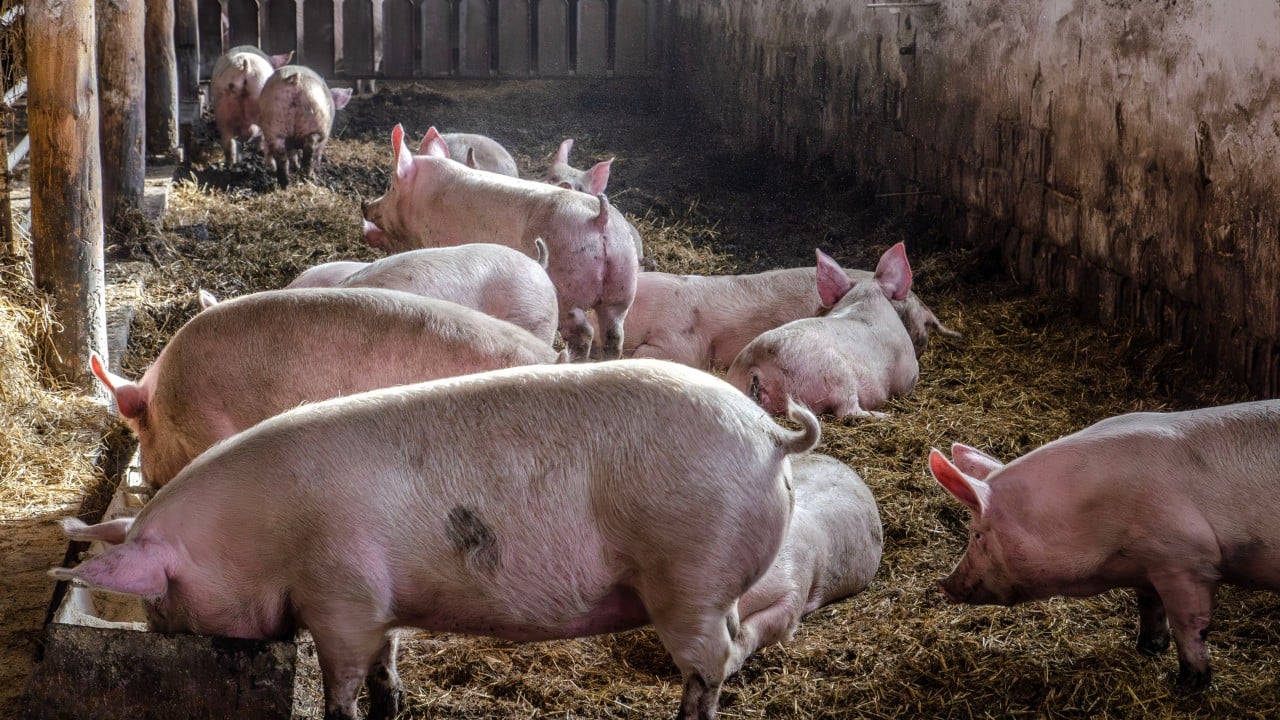
The media is lazy. When the Selangor state government announced a phased shutdown of its domestic pig farming industry following a royal decree, commentators rushed to their predictable scripts. They framed it as yet another predictable flashpoint in Malaysia's fragile, multi-ethnic political structure. They wailed about minority rights, corporate bullying, and the delicate balancing act of Prime Minister Anwar Ibrahim's administration.
They got it entirely wrong.
This is not a story about identity politics or religious friction, even if opposition politicians use those angles to score cheap points. To look at the Selangor livestock crisis and see only race and religion is to fundamentally misunderstand how modern capital, state governance, and environmental economics collide.
The collapse of the Selangor pig farming sector is a case study in governance failure, regulatory cowardice, and the outsourcing of environmental degradation. Framing this strictly as an ethnic dispute ignores the reality of a broken agricultural system that chose complete capitulation over modern regulation.
The Myth of the Culture War
For decades, political analysts have treated every policy dispute in Malaysia as an ethnic proxy war. When the Selangor palace expressed dissatisfaction over long-standing waste management issues in Kuala Langat and halted the proposed 202-hectare centralized facility in Bukit Tagar, observers immediately dusted off the old playbook. They claimed the move was designed to appease majority-Muslim voter bases at the expense of ethnic Chinese livelihoods.
That narrative falls apart under basic economic scrutiny.
If this were purely an ideological crusade against the pork industry, agricultural policies across the rest of the federation would mirror Selangor's trajectory. They do not. States with significantly different political dynamics continue to operate mega-farms because they manage their spatial planning and waste logistics with actual foresight.
I have seen state administrations blow millions on reactionary policies because they lack the spine to enforce basic industrial zoning before an issue escalates into a public crisis. What happened in Selangor was not a sudden burst of identity politics. It was the predictable endgame of twenty years of administrative inertia. Traditional, scattered open-air farms in areas like Tanjung Sepat consistently struggled with inadequate waste infrastructure. Runoff leaked into local water systems, and instead of enforcing the transition to zero-emission, closed-house technologies a decade ago, regulators kicked the ball from department to department.
When a problem is ignored long enough to threaten the water supply of nine million residents, the eventual shutdown isn't a cultural statement. It is a structural eviction notice caused by administrative incompetence.
The False Promise of Total Import Reliance
The state's proposed solution to the ban is a masterclass in economic delusion: phase out local production, move toward full pork imports, and let global markets satisfy non-Muslim demand.
Consider the mechanics of the pork supply chain. Selangor previously produced roughly 30 percent of its internal pork requirements. Erasing that production capacity overnight doesn't eliminate the environmental footprint of the meat consumed by residents; it simply exports that degradation to someone else’s backyard.
When a government bans local production in favor of absolute import reliance, it participates in a highly hypocritical form of environmental arbitrage. You get to claim clean rivers at home while relying on industrial farms in Vietnam, Europe, or neighboring states to bear the ecological, biosecurity, and waste management burdens of your diet.
Furthermore, shifting production completely outside state borders introduces immense systemic risk to food security:
- Biosecurity Vulnerabilities: Relying entirely on external supply chains leaves the market completely exposed to global outbreaks of African Swine Fever (ASF) or other zoonotic disruptions.
- Price Volatility: Eliminating local buffers means retail prices are at the mercy of international freight costs, currency fluctuations, and foreign trade policies.
- Regulatory Surrender: Instead of leveraging advanced circular agriculture—where waste is converted into biogas and organic fertilizer via anaerobic digesters—the state completely surrenders its capacity to build a high-tech agricultural sector.
If a state chooses to abandon livestock production because it deems the ecological footprint unmanageable, that logic must apply across the board. If you ban pig farming due to waste runoff, you must logically apply the exact same regulatory standard to the massive nutrient pollution generated by the cattle, poultry, and aquaculture sectors. Singling out one protein source while ignoring the systemic pollution of the wider livestock industry isn't environmentalism. It is elite risk aversion masquerading as public policy.
The True Cost of Policy Bureaucracy
The real victims here are not abstract concepts of multiracial harmony. The victims are the multi-generational farming families who invested heavily in an industry where the goalposts never stopped moving.
Imagine a scenario where an entrepreneur spends hundreds of thousands of ringgit upgrading facilities to meet evolving state guidelines, only to have the entire regulatory framework dismantled by administrative decree. For years, farmers in locations like Tanjung Sepat faced delayed license renewals, vague zoning laws, and contradictory signals regarding the long-term plan for a centralized facility. This regulatory instability actively discouraged independent operators from investing in expensive, top-tier waste mitigation technologies. Why spend millions on a closed-loop system when your operating license is renewed on a whim and your land tenure is permanently insecure?
The sudden pivot to a total shutdown, justified under the convenient banner of compliance, sets a dangerous precedent for any industry operating within the state. It signals to domestic investors that decades of capital investment, commercial loans, and operational infrastructure can be wiped out instantly without transition pathways, clear legal recourse, or equitable compensation.
If a administration can terminate a legal, tax-paying agricultural sector overnight to bypass a difficult regulatory challenge, then no commercial sector relying on state land leases or sensitive zoning approvals is truly secure. This is the structural reality that standard political commentary completely misses. The risk isn't just social friction; it is the erosion of regulatory predictability.
Fix the Enforcement, Not the Dietary Choices
The current approach treats the existence of the livestock as the core problem, when the true failure lies entirely in the historical lack of independent environmental enforcement.
To resolve a complex industrial zoning issue, you do not ban the industry. You fix the governance framework. A sophisticated agricultural strategy would reject the binary choice between environmental degradation and total prohibition. Instead, it would deploy a highly structured, strictly policed transition model:
- Mandatory Co-Investment: Tie remaining operational extensions directly to the immediate installation of closed-loop effluent treatment systems, co-funded by industrial penalties and state modernization grants.
- Independent Statutory Oversight: Strip local municipal councils of arbitrary zoning decisions and hand environmental compliance over to an independent technical body with the power to issue immediate, non-negotiable operational halts for pollution violations.
- Circular Integration: Require all centralized livestock operations to feed waste directly into regional biogas grids, transforming an environmental liability into a localized energy asset.
The tragedy of the Selangor pig farming ban is that it represents an admission of administrative defeat. It is an acknowledgment that the state lacks the capacity to monitor, regulate, and modernize a sensitive industry, opting instead for the blunt-force trauma of an outright prohibition. Shifting the entire burden of this regulatory failure onto local farmers and consumers isn't a victory for public harmony. It is a cautionary tale of what happens when a government chooses the easy path of policy capitulation over the hard work of structural modernization.



:max_bytes(150000):strip_icc()/how-many-types-of-dwarfism-are-there-2860725-v1-8dae2c531b4b47d9ae36ae404d3308a0.png)