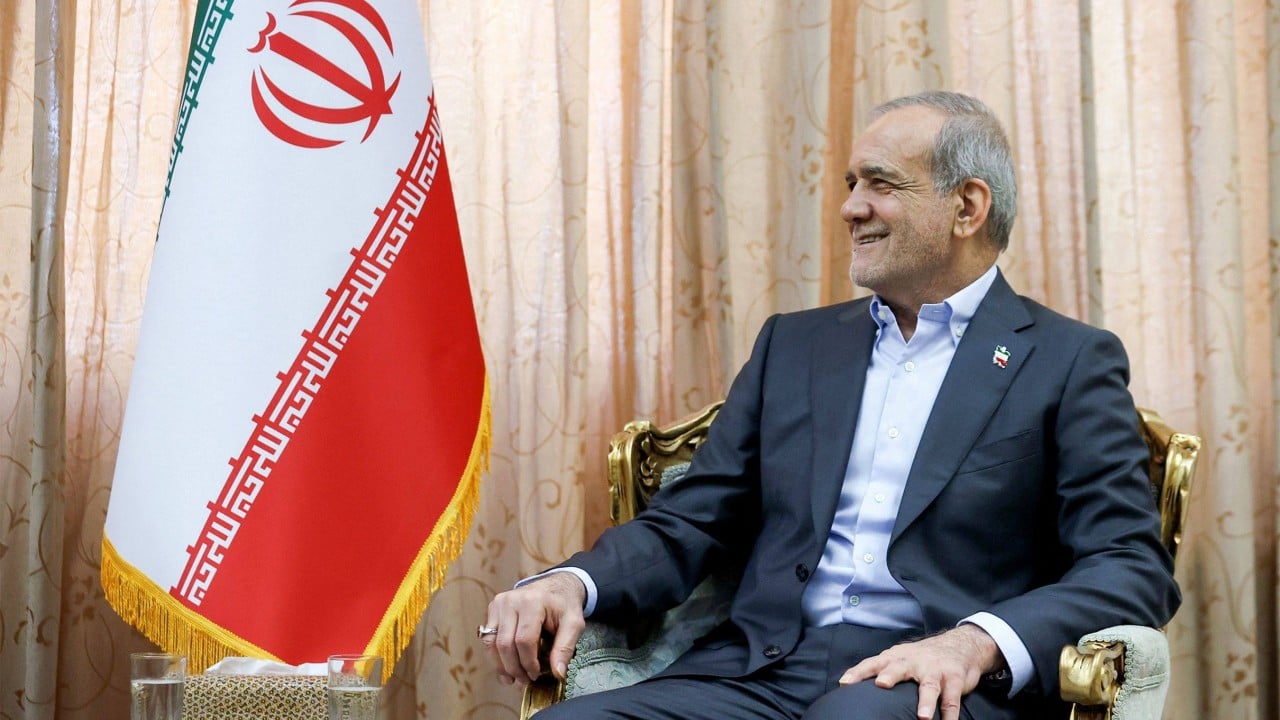
Western media loves a neat, predictable narrative. When Iranian President Masoud Pezeshkian issued an order to restore global internet access after an 87-day blackout, mainstream outlets immediately defaulted to their favorite lazy script. They painted it as a straightforward victory for a reformist administration over a monolithic security apparatus, framing the end of the near-total digital blackout as a sudden return to the status quo.
It is a comforting story. It is also entirely wrong.
I have tracked Middle Eastern digital infrastructure and state-level censorship networks for years, watching regimes burn through millions of dollars to build parallel networks. If you think a single executive pen stroke from a civilian president instantly plugs 90 million people back into the open, unrestricted global web, you are fundamentally misreading the mechanics of autocratic control. The reality is far more calculating, far more dangerous, and entirely misunderstood by the commentators celebrating this headline.
The Illusion of the Executive Switch
The core fallacy of the mainstream coverage is the belief that Pezeshkian holds the master key to Iran's digital gateway. The media treated the Cyberspace Regulation Committee’s 9-to-3 vote as a definitive policy shift.
It wasn't. Within hours of the announcement, IRGC-affiliated outlets like Fars News openly weaponized a constitutional reality: the blackout was originally mandated by the Supreme National Security Council during the height of the January protests and subsequent military escalations. A civilian president cannot unilaterally override a wartime security directive.
When an authoritarian regime signals that it is lifting an internet blockade, it is not an act of surrender. It is a tactical pivot.
The regime does not view the internet as a light switch to be toggled on or off indefinitely. It treats connectivity like a valve, adjusting the flow of data based on real-time threat assessments. Total blackouts are economically ruinous and structurally unsustainable over long periods. The 13-week disruption cost the domestic economy an estimated $30 million to $40 million a day, totaling upwards of $4 billion in direct losses. Tech platforms, online retailers, and the banking sector were sliding toward a structural collapse that threatened the regime's own financial lifelines.
Pezeshkian’s order is an economic stabilization maneuver, not a ideological conversion to digital freedom. The valve is opening slightly because the immediate, acute threat of localized protests has been suppressed, and the state needs to collect its taxes.
The National Information Network Trapper
What the lazy consensus misses entirely is that a "reopened" internet in Iran is fundamentally different from the internet that existed before January. While global connectivity was severed, the domestic intranet—the National Information Network—was working exactly as designed.
During the blackout, banking apps, state-approved schools, and local logistics platforms remained functional. The regime used this 87-day window as a massive stress test for its isolated digital ecosystem. They proved they could isolate the population from the global web while keeping essential domestic machinery humming.
When the international pipelines are reconnected, users are not entering a free digital public square. They are stepping back into a highly sophisticated, multi-layered trap characterized by specific structural limitations:
- Deep Packet Inspection (DPI): Modern state censorship does not rely on crude IP blocking. It inspects the actual metadata of the packet to identify traffic signatures of forbidden protocols.
- The VPN Economy Contraction: The regime does not want to completely eliminate VPNs; they want to control who can afford them. By shifting the technical baseline, only state-sanctioned, highly expensive corporate VPNs survive, effectively turning global access into a luxury tier for elites.
- Localized DNS Poisoning: Routing requests for global sites to internal state-monitored landing pages to harvest user data.
Imagine a scenario where a regime builds a wall around a city, replaces every store inside with a government-run alternative, and then claims they are "reopening the gates" while leaving armed checkpoints at every entrance. That is what "pre-January status" actually means. The filtering architecture is tighter, the logging tools are more pervasive, and the digital panopticon is stronger than it was three months ago.
Dismantling the Apparent Contradiction
Let us look at the questions people actually ask when these headlines break, and address the flawed premises driving them.
Will this move jumpstart Iran’s tech sector and AI startups?
No. The domestic media claims that restoring connectivity will rescue young entrepreneurs who use open-source AI tools to build low-cost businesses. This ignores the irreversible damage of a 90-day severance. No international partner will outsource development, integrate APIs, or contract tech talent from a region where the entire infrastructure can vanish for a quarter of a year without warning. The trust is gone. The tech sector will not recover; it will continue to suffer from a massive brain drain as engineers realize that a conditional connection is no connection at all.
Does this signal a fracture within the ruling elite?
The media points to the open bickering between Pezeshkian’s ministry and hardline elements like the Supreme Council of Cyberspace as proof of a fragile regime. This is a misunderstanding of how autocratic regimes distribute roles. The public friction allows the civilian government to act as the good cop, absorbing economic anger and projecting a moderate face to international markets, while the security apparatus quietly maintains absolute control over the physical routers. It is a synchronized performance, not a systemic fracture.
The Cost of the Compromise
The hard truth nobody wants to admit is that the temporary restoration of the international web serves the state's security apparatus just as much as it serves the citizenry.
Total blackouts make the population blind, but they also make the state deaf. When millions of users are forced entirely offline or onto hyper-secure, isolated networks, the regime loses its primary mechanism for signals intelligence, sentiment analysis, and predictive policing. By allowing traffic to flow through international gateways again, the state can resume monitoring who is talking to whom, what keywords are spiking, and where the next node of dissent is forming.
For the Iranian citizen, using this newly restored internet requires an unyielding, paranoid approach to digital hygiene.
If you are operating within a contested digital space, you must abandon the assumption that an open connection equals a safe connection. Do not rely on commercial VPNs that promise privacy but operate within local jurisdictions or rely on easily compromised protocols. Shift entirely to decentralized, obfuscated transport mechanisms like Shadowsocks or VMess. Assume every domestic application, from banking to ride-sharing, is actively logging device identifiers and matching them against network traffic timestamps.
The international web is back online in Iran, but the war for digital autonomy was never about a presidential decree. The regime didn't back down; they just finished upgrading the cage.