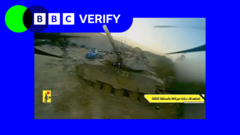
Mainstream defense analysts love a predictable narrative. For weeks, the media has hyperventilated over first-person view (FPV) drone strike videos released by Hezbollah. The prevailing consensus across major news outlets frames these low-cost, fiber-optic guided quadcopters as an absolute revolution in asymmetric warfare. Commentators point to footage of commercial-grade drones evading electronic jamming, bypassing the Iron Dome, and hunting Israeli Defense Forces (IDF) personnel in southern Lebanon with terrifying precision. They scream that the military balance has permanently cracked.
They are completely misreading the map.
What you are watching on social media is not a demonstration of a highly advanced, insurmountable doctrine. It is the tactical death rattle of a severely degraded non-state actor trying to compensate for the total loss of its strategic deterrent. The obsession with high-definition, point-of-view explosion clips obscures a brutal reality: Hezbollah is consuming its long-term operational leverage to win a short-term public relations war.
The Fiber Optic Mirage
The central argument of the current media panic relies on a technical fact. By utilizing physical, spooling fiber-optic tethers—a trick copied directly from the eastern European battlefields—militants can pilot quadcopters without transmitting radio frequencies. Traditional spectrum jamming, multi-million dollar electronic warfare (EW) arrays, and signal-blocking suites become useless. The wire cannot be jammed.
But defense intellectuals fail to look at the logistical physics of this setup. A fiber-optic cable the thickness of dental floss extending tens of kilometers introduces extreme operational vulnerabilities.
- Severe Payload Restrictions: Carrying kilometers of glass fiber adds significant dead weight. Every extra hundred meters of cable reduces the size of the improvised explosive charge or the rocket-propelled grenade (RPG) warhead the quadcopter can carry.
- Static Launch Vulnerabilities: You cannot easily fire a tethered drone while on the run. The operator must remain stationary, often inside civilian structures or subterranean bunkers, to prevent the delicate wire from snapping on trees, ruins, or topographical obstacles.
- The "Flock" Bottleneck: Intelligence reports estimate Hezbollah relies on fewer than 100 dedicated drone operators in southern Lebanon. This is not a massive, automated robotic army. It is a boutique, highly localized craft industry that requires immense operator skill and distinct, uninterrupted launch environments.
When the IDF shifts from fixed defensive positions to highly dynamic, mobile, night-time maneuvers, the utility of a tethered, line-of-sight drone drops to near zero. A weapon that requires a pristine, static environment to avoid self-sabotage is a niche tool, not a theater-wide substitute for a conventional arsenal.
The Propaganda Paradox: Theater vs. Attrition
To understand why the mainstream consensus is flawed, you must ask why these videos exist in such high volumes.
Historically, Hezbollah’s strategic deterrence rested on its massive stockpile of precision-guided long-range rockets, anti-tank guided missiles (ATGMs) like the Kornet, and massive fixed-wing Iranian-designed Unmanned Aerial Vehicles (UAVs). That entire apparatus was designed to overwhelm Israel's multi-layered air defense through raw volume and heavy payloads capable of leveling infrastructure.
That strategic layer has been systematically dismantled. Months of intense air campaigns, targeted strikes on command structures, and the neutralization of supply routes through Syria have stripped the group of its ability to wage a high-intensity, macro-level war.
Enter the FPV drone strike video.
Imagine a scenario where an armed group loses its heavy artillery and capital weapon systems, leaving it unable to dictate the geopolitical terms of a ceasefire. To convince its remaining supporters, its regional patrons, and its own ranks that it remains a potent threat, it must manufacture hyper-visible tactical successes.
The FPV drone is the ultimate content-generation engine. It records its own execution in high definition, delivering pristine, visceral propaganda clips directly to Telegram channels. When a $500 quadcopter hits a group of three soldiers or crashes near a medical evacuation helicopter, it creates a massive psychological ripple that dominates the news cycle for forty-eight hours.
But do the math. Over a multi-week period involving intense exchanges, approximately 100 to 160 explosive drones were launched, resulting in handfuls of casualties. In terms of raw military attrition, these numbers are a statistical blip. They do not stop an armored advance. They do not hold territory. They do not alter the broader operational reality on the ground. The videos are highly effective theater masking a profound strategic vacuum.
Dismantling the "Unjammable" Panic
The question dominating defense forums is clear: How does a state military defeat an unjammable drone?
The premise of the question is inherently flawed because it assumes electronic warfare is the only solution. Militaries adapt rapidly to tactical shifts. The reliance on fiber-optic tethers is already driving an aggressive pivot away from spectral warfare and back toward kinetic, mechanical, and passive physical defense layers.
1. Low-Tech Physical Interception
The deployment of structural wire netting, chain-link cages, and canopy screens over armored vehicles, command posts, and stationary infantry positions drastically mitigates the impact of small quadcopters. A drone that detonates against a steel mesh fence meters away from its target expends its small, directional payload harmlessly into the open air.
2. Automated Kinetic Sights
The integration of computerized, smart-optic sights on standard infantry rifles allows ground troops to track and down low-flying quadcopters with conventional small-arms fire. You do not need a multi-million dollar missile to destroy a plastic commercial drone; you need a standard rifle paired with an algorithmic fire-control system that calculates bullet lead in real time.
3. Thermal and Acoustic Detection Arrays
While the drone doesn't emit radio frequencies, it cannot hide its heat signature or the distinct acoustic whine of its high-RPM electric motors. Deploying localized micro-radar, thermal sensors, and acoustic listening posts allows units to identify the approach vector of low-altitude threats long before they reach the target area, destroying the element of surprise that FPV tactics rely upon.
The Operational Cost of Low-Cost Warfare
The ultimate delusion of the "cheap drone revolution" narrative is the idea that asymmetric forces can maintain this posture indefinitely without consequence.
I have watched defense analysts argue that because a drone costs a few hundred dollars and an interception system costs hundreds of thousands, the economic math favors the insurgent. This completely ignores the asymmetry of the human capital required.
Training an elite FPV drone pilot who can navigate a tethered wire through dense urban ruins or hilly terrain under combat stress takes months of specialized instruction. Conversely, training a soldier to erect a protective net or fire an automated kinetic rifle takes days. Every time a localized launch cell is located via counter-battery radar or forward reconnaissance, Hezbollah loses an irreplaceable human asset. The group is trading irreplaceable, highly trained operators for fleeting tactical disruptions.
The influx of high-definition drone footage creates an optical illusion of dominance. Do not confuse a highly visible tactical pivot with a winning strategic doctrine. Hezbollah's shift to fiber-optic quadcopters is an admission of weakness, a desperate embrace of a short-range, logistically constrained platform because their primary tools of leverage have been stripped away. The videos are not a sign of things to come; they are the final, localized friction of a closing chapter.