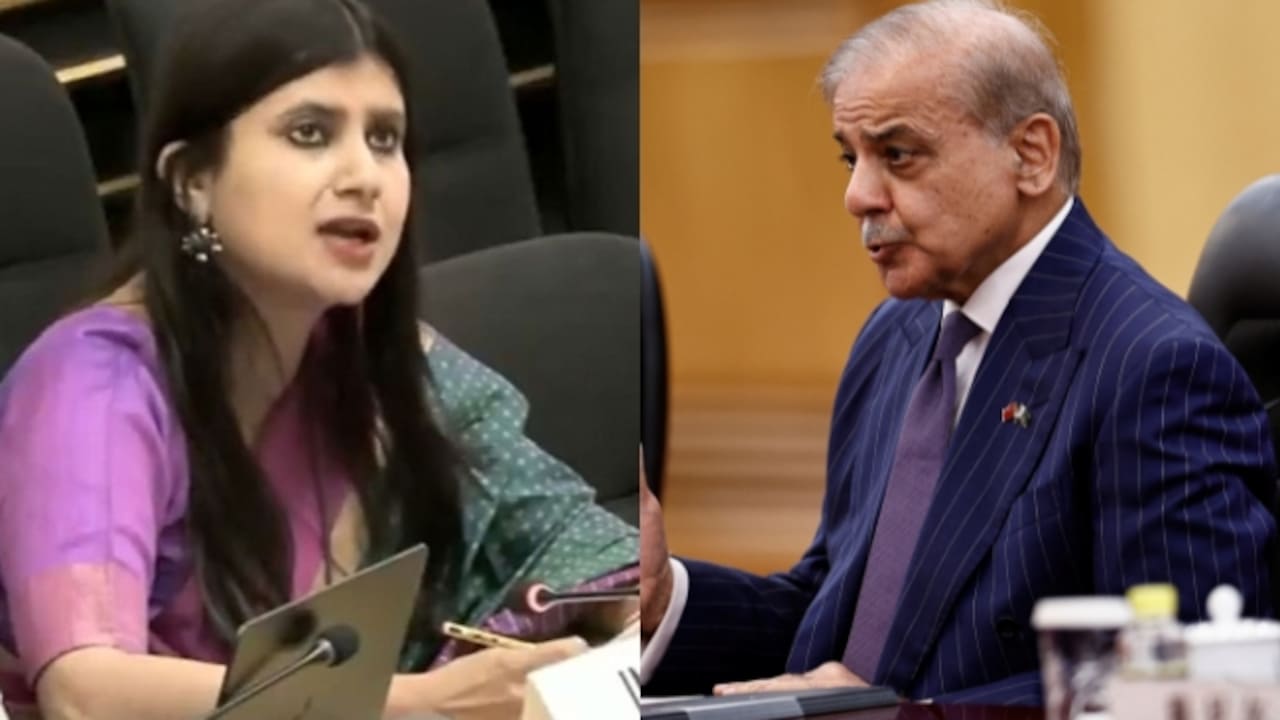
Diplomacy at the United Nations often looks like a rehearsed dance where everyone knows the steps and nobody actually gets hurt. Every now and then, though, a speech cuts right through the bureaucratic fluff and exposes a raw, undeniable reality. That is exactly what happened at the 62nd Session of the United Nations Human Rights Council in Geneva.
India did not just politely reject Pakistan's usual complaints about Jammu and Kashmir. Instead, Indian First Secretary Anupama Singh tore apart Islamabad's entire foreign policy playbook with a single, devastating literary metaphor. She branded Pakistan a living example of a Frankenstein state.
When you look closely at what is happening on the ground right now, the description is not just clever rhetoric. It is an accurate diagnosis of a country completely coming apart at the seams because of its own choices.
The core of India's argument hits a massive paradox that Islamabad has tried to sweep under the rug for decades. Pakistan loves to position itself as a major victim of global terrorism. Yet, its own government officials cannot seem to stop bragging about running the school where those exact terrorists are trained.
Anupama Singh pointed out that Pakistan's sitting defense minister has openly boasted about hosting, training, and deploying militants as an official instrument of state policy. You cannot build a factory designed to produce chaos, point it at your neighbors for forty years, and then expect sympathy when the workers turn around and burn down your own house. It is a wild contradiction that simply defies common sense.
The monster has explicitly turned on its creator. The very proxy groups cultivated to destabilize regional neighbors are now running rampant inside Pakistan's own borders, targeting its security forces, its infrastructure, and its economy.
The Mechanics of a Broken Strategy
For a long time, the security establishment in Islamabad believed they could maintain a distinction between good terrorists and bad terrorists. The good ones were the assets sent across borders to cause trouble in India or Afghanistan. The bad ones were anyone else.
This policy blew up. Groups like the Tehrik-i-Taliban Pakistan and various other militant factions do not care about bureaucratic distinctions. They operate on an uncompromising ideology. Once these networks are given sanctuary, funding, and weapons, they create their own agendas.
Look at the sheer volume of internal security crises hitting Pakistan today. Security forces are dealing with daily ambushes, suicide bombings, and insurgencies in Balochistan and Khyber Pakhtunkhwa. The state spent decades hollowed out its public institutions, education system, and economy to feed a military apparatus obsessed with low-intensity conflict. Now, the bills are coming due all at once.
The strategy failed because terror networks are not military units you can turn off with a remote control. They are decentralised, deeply radicalised, and highly adaptable. When international pressure or domestic pressure forces a temporary crackdown, these groups simply pivot their targets inward. The result is an unstable nuclear-armed nation constantly on the verge of fiscal and social collapse.
The Exploding Unrest in Rawalakot
While Islamabad screams about human rights on international stages, its own actions inside Pakistan-occupied Jammu and Kashmir tell a dark story. The world is finally starting to look closely at places like Rawalakot, where the situation is deteriorating fast.
Anupama Singh explicitly raised the tragedy unfolding across PoJK during her UN address. She noted that the ongoing crackdowns and civilian casualties are the entirely predictable result of a governance system that relies on forcible occupation and systemic repression.
Let us look at the facts of what triggered this recent chaos. The Jammu Kashmir Joint Awami Action Committee has been leading massive protests against the administration. These are not grand geopolitical rallies. They are regular people demanding basic human rights. People are hitting the streets because they cannot afford bread. They are protesting sky-high electricity bills, inflation, and a complete lack of basic dignity.
The state's response has been brutal. Around mid-June, security forces used severe force to disperse peaceful sit-ins at places like the Eidgah site in Rawalakot. Multiple civilians were killed. Hundreds were injured. The government immediately cut off communication networks and blocked the movement of essential supplies to stop information from leaking out.
It is a massive display of hypocrisy. You cannot claim to be the global champion of Kashmiri rights when you are actively shooting Kashmiri civilians in Rawalakot for demanding affordable food and electricity. An illegal occupation can only survive through raw force. The moment the local population loses its fear, the whole illusion falls apart.
Putting the Indus Waters Treaty on Notice
The most significant policy shift in India's recent UN intervention was not just the name-calling. It was the blunt declaration that the iconic Indus Waters Treaty of 1960 is now completely outdated.
This is a massive deal. For over six decades, the Indus Waters Treaty survived multiple wars, intense border skirmishes, and frozen diplomatic relations. It was widely seen as an untouchable piece of international cooperation. India just explicitly challenged that status quo.
The logic from the Indian side is straightforward and impossible to argue against. No technical agreement can remain completely frozen in time while the entire world changes around it. A water-sharing mechanism negotiated in the mid-twentieth century cannot be treated as a permanent entitlement that is insulated from modern political realities and state accountability.
Think about the absurdity of the current setup. Pakistan heavily relies on the Indus river system for roughly eighty percent of its agricultural land and over ninety percent of its total water consumption. At the same time, it uses the territory fed by those resource structures to launch cross-border terror attacks into India.
Following the horrific Pahalgam terror attack, New Delhi chose to hold parts of the treaty management in abeyance. The message is clear. India will no longer separate economic and environmental goodwill from basic security realities. If a state chooses to export terror as its primary tool of foreign policy, it cannot simultaneously turn around and demand the privileges of friendly resource cooperation.
The Failure of the Propaganda Machine
For years, Islamabad relied on international bodies like the UN Human Rights Council and the Organisation of Islamic Cooperation to keep its narrative alive. It used these forums to run a seasonal theatrical performance, rehashing the same script about Kashmir to divert attention from its own massive domestic failures.
That strategy has run out of road. The international community is exhausted by the repetition. More importantly, India's diplomatic strategy has shifted from defensive posturing to aggressive exposure.
By pulling back the curtain on the OIC's rubber-stamping of Pakistani propaganda, India is forcing global players to choose between manufactured narratives and hard numbers. Pakistan's economy is running on emergency lifelines from international lenders. Its political system is deeply fractured. Its internal security is a mess. Using international forums to obsessionally attack India is a desperate attempt to find an external enemy to unite a fractured domestic audience.
The reality is that Jammu and Kashmir remains an integral, completely inalienable part of India. No amount of speeches in Geneva or resolutions passed by distant blocs can change that legal and geographic truth. As India's delegation made clear, the only real unresolved issue on the table is Pakistan's illegal occupation of Indian territories and when they plan to hand them back.
The New Rules of Regional Engagement
If you are looking at where this conflict goes next, understand that the old rules of engagement are officially dead. The days of India absorbing attacks while maintaining quiet diplomacy to preserve regional stability are gone.
New Delhi is systematically rewriting the terms of its relationship with Islamabad. If Pakistan wants to talk about resources, water, or regional trade, it has to clean up its house first. You cannot run a terror estate policy on weekdays and ask for water agreements on the weekend.
The immediate next steps do not involve bilateral talks or grand peace summits. India has made it clear that the ball is entirely in Pakistan's court. The international community needs to shift its focus away from Islamabad's theatrical complaints and look directly at the human rights crisis inside PoJK and the ongoing instability caused by state-sanctioned militant groups.
For anyone tracking South Asian geopolitics, the takeaway from the latest UN confrontation is unmistakable. India is no longer willing to play along with diplomatic fiction. The Frankenstein state is stuck in a trap of its own making, and the rest of the world is finally refusing to bail it out.