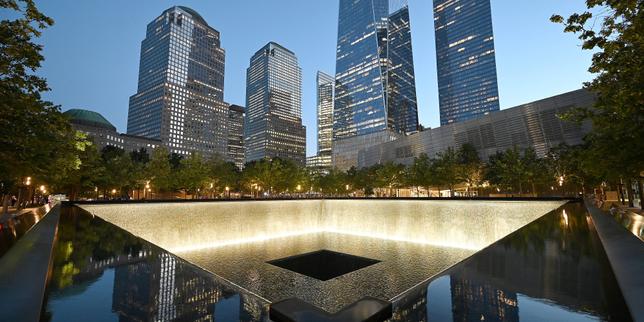
Twenty-five years after the dust settled over Lower Manhattan, the narrative surrounding Ground Zero isn't one of clean closure. It is a messy, ongoing urban experiment. If you walk through the Financial District today, you see gleaming glass towers rising beside deep granite footprints. You hear the rumble of the Fulton Center subway lines intersecting with tourist chatter. You notice the sharp scent of roasted nuts from street carts mixing with harbor air. Yet, underneath the polished concrete of the World Trade Center complex, a quiet tension persists.
Most people picture a finished memorial and think the story is wrapped up. They assume urban renewal follows a neat, linear timeline. They are wrong. Rebuilding a site burdened by such immense historic weight required navigating competing visions, intense political gridlock, and multi-billion-dollar budget fights that dragged on for decades. Meanwhile, you can find other events here: The Sky Above Chișinău Remembers Every Close Call.
The Architectural Tug of War
Right after the attacks, the immediate pressure was both emotional and economic. New York needed to prove it wasn't broken. Real estate developers wanted massive square footage. Families of victims fought for solemn, respectful preservation. Politicians craved iconic symbols that could project strength on the global stage.
Daniel Libeskind's master plan promised a striking spire and a contemplative memorial sunken into the earth. What actually materialized over the next twenty-five years was a compromise. Freedom Tower, officially named One World Trade Center, became a triumph of modern engineering and security infrastructure, but it also transformed into a fortress of glass. Its reinforced concrete base tells a story of risk management that didn't exist in the city's older skyscrapers. To see the complete picture, check out the detailed report by The Guardian.
You can't talk about this quarter-century milestone without acknowledging how commercial realities reshaped the original grief-driven ideals. The site was never going to remain an empty pit, nor was it destined to be purely sacred ground. It became a hybrid zone where corporate boardrooms sit directly above a subterranean museum. That friction makes people uncomfortable. It forces you to reconcile capitalism with catastrophe every time you swipe a MetroCard or grab a coffee in the concourse.
Shifting Demographics and Daily Life
Lower Manhattan used to empty out entirely after five o'clock. Office workers caught commuter trains, leaving the neighborhood to the quiet ghosts of finance. September 11 paradoxically accelerated a residential boom that changed the zip code forever.
Developers realized that relying solely on office space was a vulnerability. Schools, supermarkets, parks, and daycare centers popped up around the perimeter. Today, strollers crowd Battery Park City where makeshift rescue staging areas once stood. Families who moved downtown long after 2001 live normal lives amid extraordinary architecture. They don't walk around with constant mourning, but the perimeter fence of the 9/11 Memorial remains part of their daily shortcut to the subway.
This normalization is both a blessing and a strange psychological hurdle. How do you live a mundane life in a monument? Ask any resident living on Church Street who listens to tour buses idle outside their window during rush hour. The neighborhood adapted by compartmentalizing its identity, learning to balance profound collective grief with the chaotic, fast-moving energy of modern New York.
The Economic Reality Check
Building at Ground Zero tested municipal financing to its absolute limits. Delays, lawsuits, and insurance disputes cost billions more than initial projections estimated. The Port Authority of New York and New Jersey, private developers like Larry Silverstein, and city officials locked horns over who would foot the bill for underground infrastructure and transit hubs.
The Santiago Calatrava-designed Oculus became a prime example of this fiscal controversy. Critics blasted its soaring price tag, which eventually ballooned past four billion dollars, labeling it an extravagant transit white elephant. Supporters point to it as a breathtaking architectural achievement that knits together disparate subway lines and PATH trains. Both things are true. You can admire the white ribbed ribs of the interior while questioning if public funds could have been managed tighter during an economic downturn.
Looking Past the Anniversary
Twenty-five years mark a definitive generational shift. Young adults visiting the memorial today were born after the event occurred. For them, the towers falling belong in a history textbook, right alongside the moon landing or the fall of the Berlin Wall.
Ground Zero has completed its transition from a raw crime scene and construction zone to a permanent anchor of American memory. The chaos hasn't completely vanished; it has simply matured into the typical friction of a living, breathing metropolis. If you want to understand New York today, stop looking at the skyline as a postcard. Look at the seams where tragedy meets ordinary Tuesday afternoons, and you will see how the city actually survived.