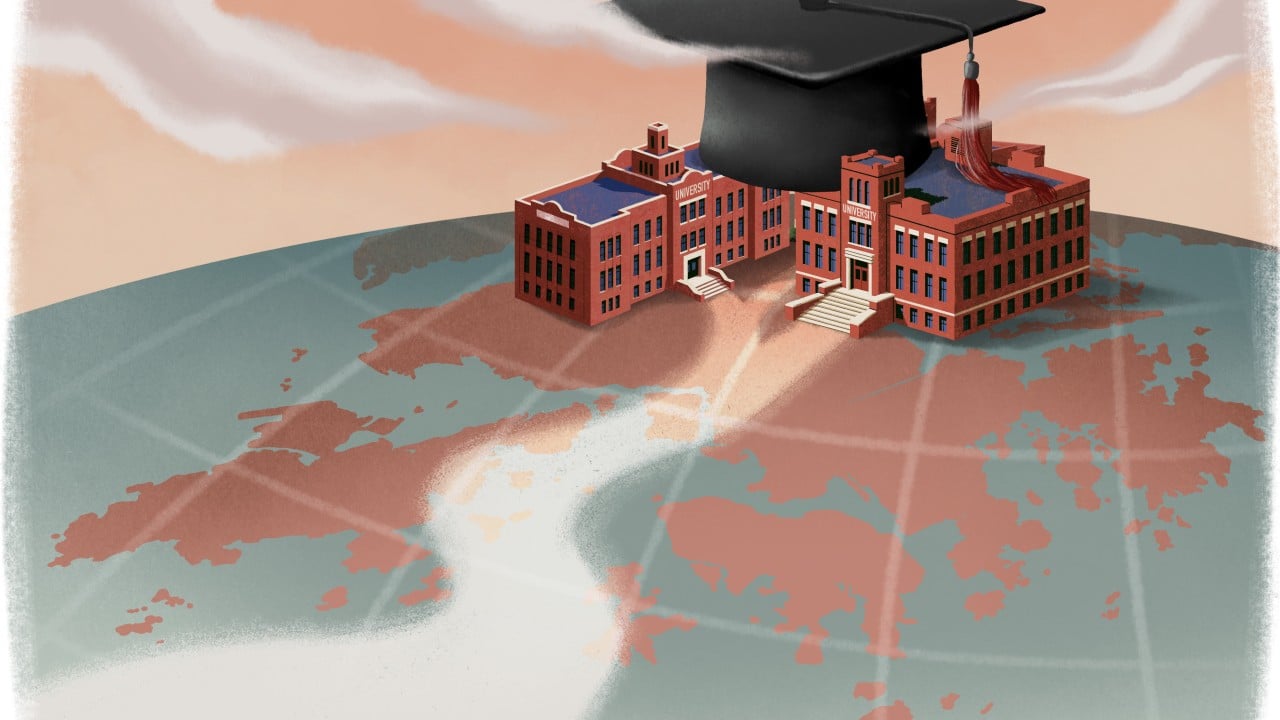
Hong Kong wants to build an education empire from scratch in its borderlands, but nobody seems to agree on who is footing the bill. The plan to carve out a massive university town across the Northern Metropolis sounds great on paper. Politicians love talking about innovation hubs and global talent pipelines. Reality check: building high-tech campuses across hundreds of hectares requires billions of dollars, crystal-clear timelines, and actual buy-in from institutions that are already stretched thin.
If you look past the glossy government brochures, you find a high-stakes gamble. The city is betting its economic future on transforming sleepy border zones into an engine for applied sciences and commercial research. Let us break down where the money is supposed to come from, what success actually demands, and why skeptics are holding their breath. Also making news in related news: The Invisible Handcuffs Holding Wall Street Hostage.
The Strategy Behind the Northern Metropolis Expansion
The core idea centers on a triple-site blueprint spanning Hung Shui Kiu, Ngau Tam Mei, and New Territories North. Spanning roughly 100 hectares designated for higher education, these zones are designed to escape the cramped confines of traditional urban campuses. Hong Kong universities historically operate like isolated islands. They guard their turf, manage their own facilities, and rarely share resources.
The new approach flips the script entirely. Officials are pushing shared lecture halls, central research laboratories, and joint-use libraries. Taller campus buildings will replace sprawling low-rise quads to maximize land use. It is an efficient model, but it forces independent academic boards to cooperate in ways they have never done before. More information on this are covered by Bloomberg.
Each designated node carries a distinct economic mission:
- Hung Shui Kiu: Targeted at applied higher education, smart manufacturing, and professional services integration.
- Ngau Tam Mei: Positioned right next to the San Tin Technopole to anchor life sciences, artificial intelligence, and robotics.
- New Territories North: Blending arts with technology, supporting cultural industries, and driving modern re-industrialisation.
Follow the Money or Watch the Project Stall
Who pays for all this concrete, high-end laboratory equipment, and student housing? That remains the million-dollar question keeping university presidents awake at night. Public coffers cannot fund every single brick and mortar structure without cutting budgets elsewhere.
Senior leaders at institutions like Hong Kong Polytechnic University have pointed out that joint investment models are essential. Universities, private enterprises, and the public sector must pool capital. Yet, private investors want clear guarantees on return on investment. Tech companies will not dump cash into a campus zone unless they see a direct pipeline to commercialized intellectual property.
Without explicit funding parameters and realistic milestones, this entire initiative risks turning into expensive real estate with empty lecture halls. Universities need financial flexibility to design custom facilities without getting bogged down by bureaucratic red tape.
The Clash Between Pure Academia and Applied Economics
Hong Kong possesses world-class research talent, but the city has historically struggled to bridge the gap between academic papers and commercial products. The university town aims to fix this by forcing a marriage between industry, academia, and research.
This tilt toward technology and applied sciences raises valid concerns for humanities programs. Officials insist that non-tech disciplines are not banned, but the heavy financial backing clearly favors fields that feed the digital and industrial economy. If your department does not generate patent applications or tie directly into the Greater Bay Area manufacturing base, securing funding will get much harder.
This transactional view of education worries traditionalists. Universities are supposed to be centers of critical thought, not just corporate R&D extensions. Finding the right balance between profit-driven innovation and foundational education will dictate whether these campuses retain true academic prestige.
What Real Success Looks On the Ground
Success won't be measured by how many concrete pillars go up by 2030, or how many glossy press releases the administration pushes out. True success means a self-sustaining ecosystem where graduates walk out of a lab and straight into a high-paying role at an adjacent tech firm.
It means cross-border talent can move fluidly between Shenzhen and Hong Kong without drowning in administrative paperwork. It means small startups can access multi-million dollar testing equipment that normally sits out of reach.
If the government keeps lines of communication open with academic leaders and provides flexible, transparent funding frameworks, the Northern Metropolis might actually deliver on its heavy promises. If it stays stuck in rigid top-down planning, it will become another ghost town of unfulfilled potential. Keep a close eye on how the first phased land releases unfold over the next twenty-four months. That will tell you everything you need to know about where this experiment is heading.