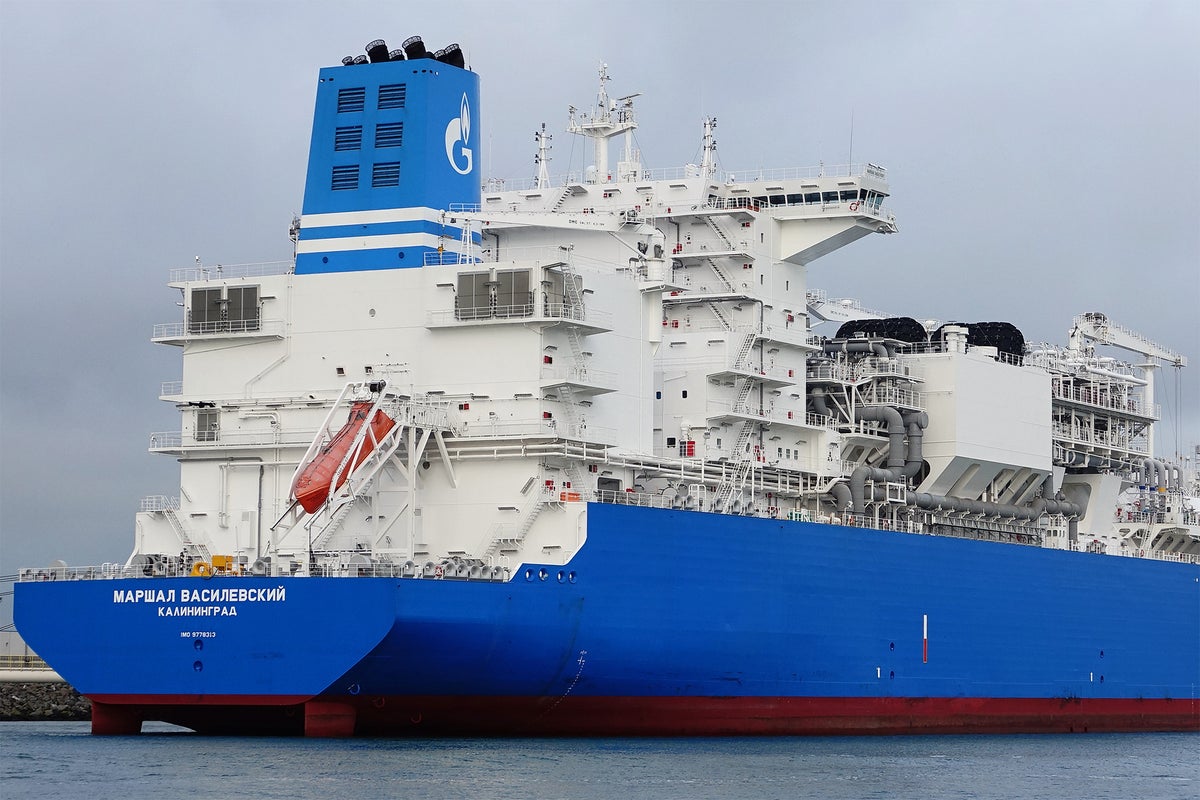
Western defense analysts are having a collective meltdown over a few sandbags and two machine guns.
When the Estonian Border Guard released aerial photographs of the Russian LNG carrier Marshal Vasilevskiy sporting a pair of 12.7mm Kord heavy machine guns on its bridge, the mainstream media narrative wrote itself. We were told this is a "crazy new step," a "hostile message to NATO," and proof that the high seas are descending into lawlessness.
This hysteria exposes a profound ignorance of basic naval mechanics and maritime security.
Two machine guns bolted to a 300-meter commercial gas tanker do not threaten NATO. To frame this as an aggressive geopolitical challenge to a nuclear-armed military alliance is laughable. It is not an offensive provocation. It is a desperate, baseline defensive reaction to a highly vulnerable supply chain.
The Myth of the NATO Deterrent
Let’s strip away the theatrical commentary. Mainstream analysts claim these weapons are meant to achieve a "zero probability of boarding" by European or NATO forces. They argue that special forces would think twice before approaching a ship with heavy machine guns.
I have spent years evaluating maritime risk and operational security in contested waters. Let me tell you how a real naval boarding operation works. If a NATO navy decides to detain or inspect a vessel, they do not send a single, defenseless helicopter to ask politely. They send a guided-missile frigate or a destroyer.
Imagine a scenario where the crew of the Marshal Vasilevskiy decides to open fire on a NATO boarding party. A 12.7mm machine gun has a maximum effective range of about two kilometers. A modern naval vessel can neutralize that threat from twenty kilometers away without breaking a sweat. More importantly, the Marshal Vasilevskiy is a liquefied natural gas carrier. It is a giant, floating pressure cooker. Anyone who thinks a Russian captain is going to start a gunfight on top of hundreds of thousands of cubic meters of highly flammable gas has watched too many action movies.
Bolting machine guns to this ship does not change the strategic calculus for NATO by a single fraction of a percent. If Western authorities wanted to seize this vessel, two machine guns would not stop them. The real reason it won't be seized has nothing to do with firepower; it is because the ship flies a legitimate Russian flag, has a transparent owner in Gazprom Flot, and operates outside the legal definitions of the sanctioned "shadow fleet."
The Reality of Asymmetric Warfare
If these guns are useless against NATO, why are they there? The answer is simple, unglamorous, and completely missing from the mainstream coverage: drone defense.
In March, the Russian-flagged LNG carrier Arctic Metagaz was hit by an explosion in the Mediterranean, an attack Moscow blamed on Ukrainian naval drones. Ukraine has repeatedly proven its ability to strike deep into Russian territory and hit maritime infrastructure using low-cost, uncrewed surface vessels and aerial drones.
The Marshal Vasilevskiy is not just any commercial ship. It is Russia’s only Floating Storage and Regasification Unit (FSRU) in the region. It serves as the primary energy life support system for the Kaliningrad enclave, a strip of Russian territory wedged between Poland and Lithuania. If that ship goes down, Kaliningrad’s energy security goes with it.
The 50 passengers discovered on board—many with verifiable backgrounds in the FSB and Russian military structures—are not an invasion force. They are a glorified security detail tasked with one job: scanning the horizon with thermal optics to spot incoming Ukrainian explosive speedboats or low-flying quadcopters.
The Double Standard of Maritime Security
The Western media loves to treat Russian maritime security measures as unprecedented violations of international norms. It ignores the fact that arming commercial vessels is a standard, time-tested practice.
For over two decades, commercial shipping companies operating in piracy hotspots like the Gulf of Aden or the waters off West Africa have routinely employed armed security teams. They use the exact same type of heavy weaponry to protect commercial assets.
Furthermore, Western nations are doing the exact same thing right now. Just recently, Sweden announced it would equip its civilian Coast Guard vessels with remotely operated weapon stations to counter rising security tensions in the Baltic Sea. When a Western nation arms a civilian-operated hull, it is called prudent defense. When Russia does it, it is labeled a "hostile message."
The Real Cost of Security Theater
This does not mean the Russian approach is flawless. There is a distinct downside to this strategy, but it isn’t the one the media is focusing on.
Placing military personnel and heavy weapons on a commercial gas carrier turns a civilian asset into a legitimate military target under the laws of armed conflict. By trying to protect a critical infrastructure bottleneck, Moscow has inadvertently stripped the vessel of its civilian immunity. If Ukrainian forces decide to target the Marshal Vasilevskiy in the Baltic Sea, they now have every legal justification to do so.
Stop reading the sensationalized headlines about Russia expanding its lawless grip on the high seas. Moscow is not trying to pick a fight with NATO warships using a commercial gas tanker. They are terrified of losing a critical energy asset to a $20,000 explosive drone, and they are using the most basic, low-tech solution available to stop it. It is security theater born out of vulnerability, not a declaration of naval dominance.


