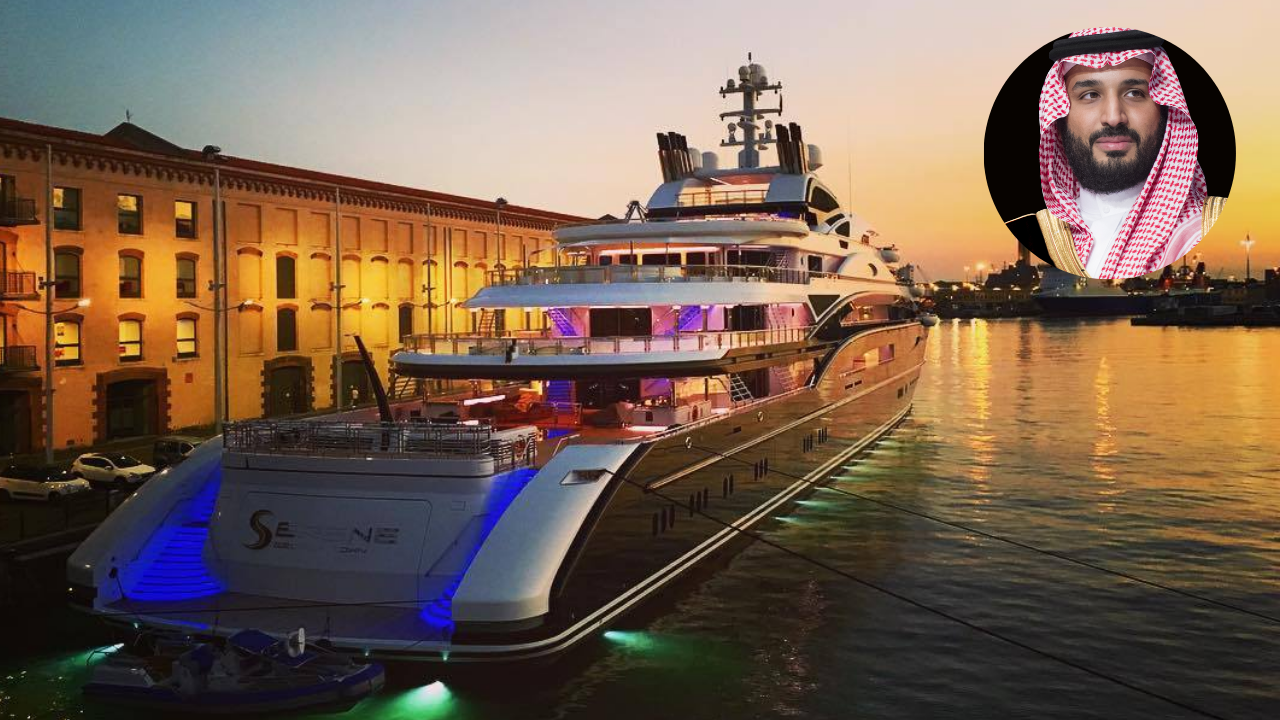
Every six months, the media industrial complex spins up the exact same fairy tale. A publication drops a breathless, viral piece about a nine-figure vessel owned by a Saudi royal, complete with fabricated whispers of hidden panic rooms, secret submarine bays, and subterranean-style cabins buried in the belly of the steel hull.
The lazy consensus is simple. Billionaires are James Bond villains. Their ships are floating lairs.
It is absolute theater for the masses who have never stepped foot on an MCA-compliant commercial yacht, let alone overseen the naval architecture of a five-hundred-foot displacement hull.
I have watched buyers blow millions on custom modifications that sounded incredible in a pitch meeting and proved entirely useless on the open water. I have sat in shipyard conference rooms in Bremen and Kiel while veteran marine engineers rolled their eyes at the architectural impossibilities demanded by lifestyle journalists who think a hull works like a Hollywood movie set.
Let us dismantle the myth.
The Physical Reality of Steel and Space
Here is the fundamental truth about mega-yachts. Every square inch of internal volume is mathematically accounted for, heavily scrutinized by flag states, and optimized for weight distribution.
When an article claims a superyacht hides a secret cabin deep inside the hull, the author fundamentally misunderstands how naval architecture operates. A ship is not an empty warehouse where you can drop a clandestine bunker wherever you feel like playing secret agent.
Weight equals fuel burn. Balance equals survival in a force eight gale.
If you carve out an unmapped, reinforced acoustic chamber deep in the bilge, you disrupt the transverse metacentric height. You mess with the tank capacities for grey water, black water, potable water, and heavy fuel oil. You trigger a nightmare with classification societies like Lloyd's Register or DNV.
Yachts of that scale do not have hidden rooms. They have engineering control rooms, stabilizer fin compartments, ballast tanks, and gray-water treatment plants. The most exotic thing buried deep in the hull is a bank of Alfa Laval fuel separators humming at ten thousand RPM.
The Myth of the Billionaire Panic Room
People love the idea of a secret panic room lined with Kevlar and stocked with vintage champagne. It sells clicks.
The reality of maritime safety management systems is far more boring and far more rigorous. High-net-worth security details do not rely on a secret cabin behind a bookshelf. They rely on standard citadel design governed by strict international maritime law.
A proper citadel on a vessel of this tier is integrated into the superstructure, designed with independent air filtration, hardened communications, and direct access to survival craft. It is not hidden in the dark bowels of the hull where a hull breach or a generator fire would trap the occupants in an iron coffin.
Putting a living space below the waterline for privacy or security violates basic human psychology and marine engineering logic. Below the waterline, you deal with continuous low-frequency mechanical vibration from the main propulsion diesels or diesel-electric pods. You hear the cavitation of the massive five-bladed propellers. You feel the slap of water against the bow plates.
Nobody wants to hang out in a secret cabin that sounds and feels like the inside of a washing machine.
Why the Media Keeps Churning Out Fantasy
The tabloids rely on ignorance. They know most readers cannot tell the difference between a gross tonnage measurement and a displacement tonnage measurement. They rely on vague terminology like deep inside the hull to obscure the fact that they have zero technical sources.
When you track the lineage of these viral yacht stories, you find they usually originate from design student concept art or promotional renders released by boutique styling firms trying to generate buzz. A designer sketches a moody, cinematic lounge with dark wood and moody lighting, slaps a confidential label on it, and walks away. Two weeks later, aggregators turn it into a multi-million-dollar royal bunker.
It is marketing fiction masquerading as investigative journalism.
The Real Luxury is Boring Compliance
If you want to understand what actually happens on a vessel owned by a prominent global figure, look at the logistics manifests, not the conspiracy theories.
The real flex on a custom build is not a hidden lair. The real flex is a silent anchor system that dynamic-positions the ship within a two-meter radius without dropping ground tackle on a fragile coral reef. The real flex is an integrated hospital suite staffed by a dedicated emergency physician and a trauma nurse, complete with a telemedicine uplink to Mayo Clinic specialists.
That costs a fortune. It requires structural engineering validation. It solves actual problems.
A secret cabin is a liability. In the high-stakes world of maritime assets, liability is the ultimate enemy.
Stop looking for James Bond villains on the high seas. The people writing those checks are obsessed with compliance, asset protection, and operational efficiency.
The hull is packed with machinery, not mysteries.