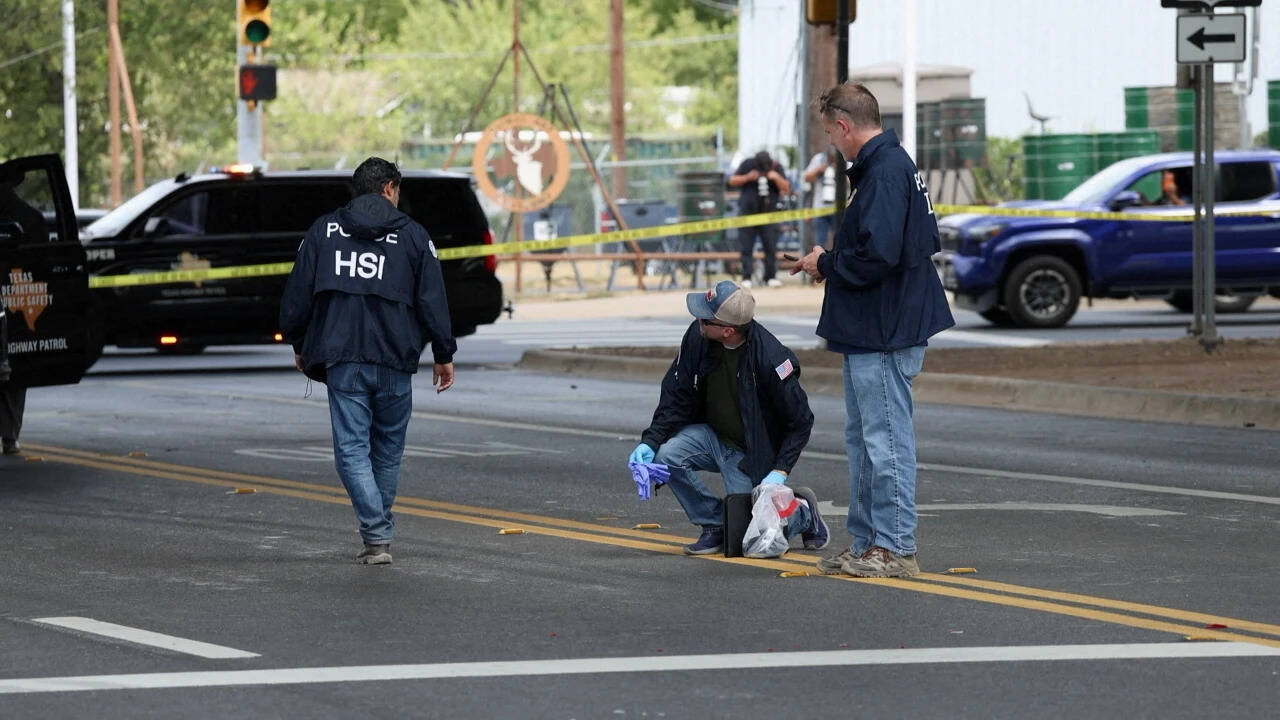
Another headline drops. An ICE officer fires a weapon in Austin, a man is wounded, and the reflexive script plays out with clockwork precision. Crowds materialize. Megaphones bark. Politicians issue carefully sanitized statements expressing deep concern while carefully avoiding any meaningful commitment. Activists demand immediate independent probes, chanting the familiar slogans that have echoed outside municipal buildings for decades.
Everyone knows their lines. Everyone plays their assigned character in a drama written long before the smoke cleared.
And everyone is missing the point entirely.
Focusing exclusively on the split-second mechanics of a single trigger pull is a comfortable intellectual trap. It lets the public treat complex institutional decay as a movie script with clear heroes and villains. It allows commentators to debate fractions of a second, tactical positioning, and use-of-force continuums as if federal and local enforcement agencies operate in a vacuum of pure choice.
The lazy consensus says that individual bad actors or insufficient de-escalation training are the root causes of these violent encounters. If we just swap out the personnel or run a few more seminars, the problem dissolves. This is a comforting fiction. It is a fairy tale told by bureaucrats to protect budgets and by pundits to drive clicks.
The unvarnished reality is that federal immigration enforcement operating within dense municipal environments creates an inherent, structural collision course. When you task agencies designed for border control and administrative deportation with street-level policing in major urban centers, you are forcing a square peg through a circular drain with a hydraulic press. The resulting friction is not an anomaly; it is a mathematical certainty.
Let us look at the mechanics of how these operations actually unfold on the ground. Unlike traditional local patrol officers who build decades of geographic familiarity, cultural fluency, and institutional relationships within a specific neighborhood, federal task forces often operate with fragmented intelligence and immense pressure to hit operational quotas. They enter environments where community trust is already near zero, wearing gear that visually mimics military deployment rather than community policing.
When a confrontation escalates into gunfire, the subsequent protests demand accountability, but they aim their outrage at the symptom while ignoring the disease. A probe will be launched. Reports will be filed. Documents will be redacted. Perhaps an officer will face administrative discipline or exoneration under qualified immunity doctrines. Nothing structural will shift. The same operational parameters will remain in place, guaranteeing that another incident will occur down the line.
Stop pretending that tweaking policy manuals will fix a fundamentally broken architectural design.
If you want to understand why these shootings keep happening, you have to look at the institutional incentives driving federal agents into domestic neighborhoods without local integration. For years, watchdogs and policy analysts have pointed out the dangerous blur of lines between civil immigration enforcement and criminal law enforcement. When federal agencies absorb local policing functions without being subject to local civilian oversight boards or municipal transparency standards, accountability becomes an illusion.
Imagine a scenario where federal agents operated under the exact same transparent, community-integrated oversight frameworks as municipal departments, complete with mandatory prior coordination with local police chiefs and neighborhood leadership. The immediate objection from federal brass is always operational security. They argue that local leaks compromise enforcement actions. But that excuse exposes the core contradiction: if an enforcement action cannot withstand the basic sunlight of local coordination, it has no business being conducted inside a populated civilian center.
The protest movement in Austin and similar cities across the country deserves credit for keeping public attention on state violence, but its tactical playbook is obsolete. Shouting outside a federal building after the blood has already been spilled does nothing to alter the risk matrix. It is reactive theater.
Real reform requires shifting the battleground from post-hoc outrage to pre-emptive structural dismantling. That means stripping federal immigration agencies of domestic street-level policing authority within municipalities that explicitly reject those partnerships. It means forcing federal law enforcement to operate under the same strict constitutional boundaries, body-camera mandates, and independent prosecutorial oversight that modern policing reform demands elsewhere.
Until activists and lawmakers stop treating each high-profile shooting as an isolated moral failure and start treating it as a predictable output of a flawed system, the cycle will repeat. The press release will change names, the crowd will find new signs to hold, and the bullets will keep flying.
Tear down the apparatus that puts federal agents on city streets without accountability, or accept the body count as the cost of your political cowardice.