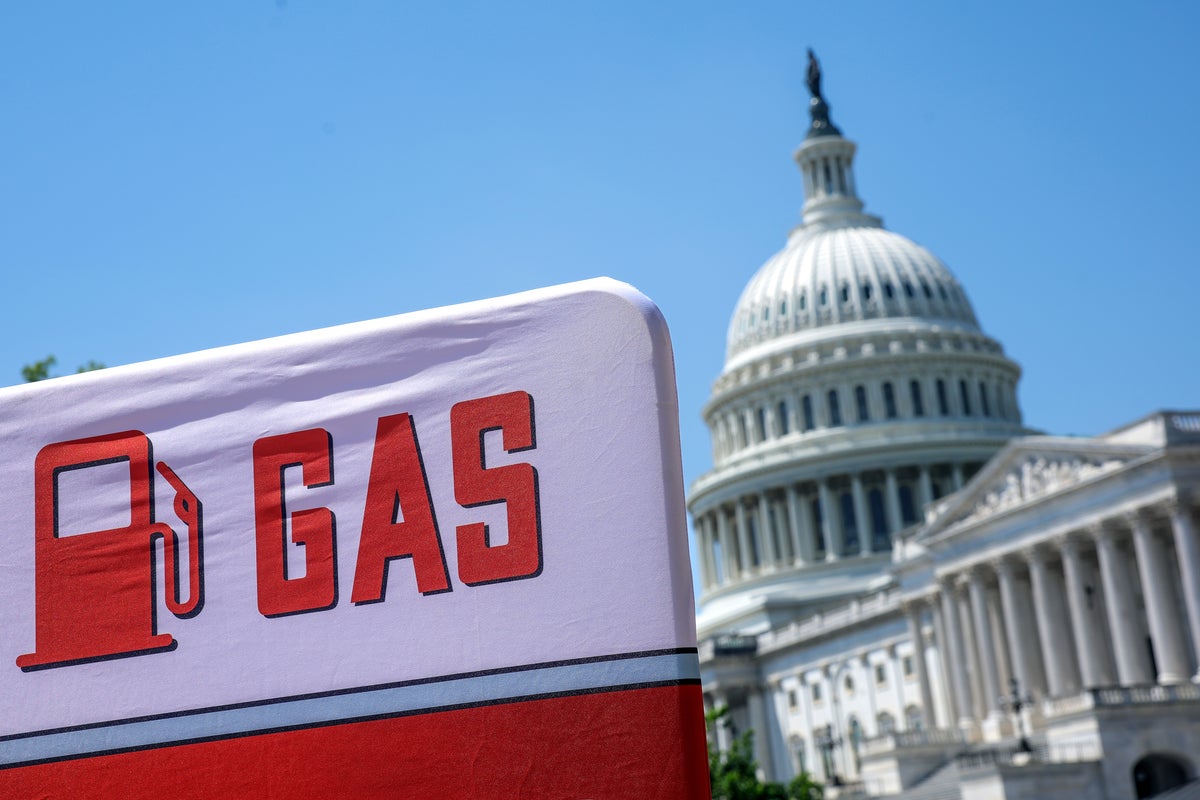
The political press corps is having a collective meltdown because the national average for a gallon of regular gasoline is creeping toward $4.55, threatening to eclipse the $5.02 record. Behind closed doors, campaign strategists are reportedly terrified. White House aides are sweating over bond yields. Pundits are frantically typing up obituaries for congressional majorities.
It is a masterclass in economic illiteracy.
The obsession with nominal gas prices is a fraud. The frantic scrambles to manipulate the pump—whether through tapping the Strategic Petroleum Reserve or pitching temporary gas tax holidays—are not economic strategies. They are theatrical performances designed to appease voters who do not understand how global commodities work, staged by politicians who know better but are too cowardly to say it aloud.
Five-dollar gas is not a unique American catastrophe. It is the natural, predictable cost of geopolitical leverage.
The Nominal Price Fallacy
Every front-page panic piece relies on the same lazy premise: a higher number on a neon sign outside a gas station means the economy is failing. This completely ignores the basic reality of inflation and purchasing power.
When gas hit $5.02 in June 2022, the financial context was entirely different. To pretend that $5.00 today carries the same economic weight as it did years ago is mathematically absurd. If you adjust for cumulative inflation and wage growth over the intervening years, the real, inflation-adjusted pain threshold for American drivers is significantly higher than the old record.
Furthermore, the United States is the largest oil producer in the world. When global crude prices spike due to disruptions in the Strait of Hormuz, the entire American energy sector experiences a massive influx of capital. Money is not vanishing from the domestic economy; it is shifting sectors.
Politicians treat the gas pump like a direct grade on their presidency. It is not. The White House does not have a dial in the Oval Office that controls the price of Brent crude.
The Strategic Petroleum Reserve Illusion
Whenever a political administration freaks out about fuel costs, they immediately reach for the same broken lever: dumping oil from the Strategic Petroleum Reserve (SPR).
This is the energy policy equivalent of eating your seed corn to survive a long weekend.
A Reality Check on the SPR
The Strategic Petroleum Reserve was built to handle catastrophic supply disruptions—think domestic refinery infrastructure getting leveled by a Category 5 hurricane or a total global embargo. It was never intended to serve as a price-subsidy slush fund to protect incumbent politicians during a midterm election cycle.
When an administration dumps millions of barrels into the market to artificially suppress prices by a dime, they create a dangerous market distortion:
- Suppressed Domestic Investment: Artificial price caps signal to domestic drillers that expanding production is a bad bet. Why deploy capital to drill new wells when the government will just flood the market to tank the price?
- Depleted Emergency Stocks: You cannot fight a prolonged geopolitical conflict with empty salt caverns. Emptying the reserve during a hot war in the Middle East leaves the nation exposed to an actual physical supply shortage down the line.
- The Rebound Effect: Every barrel released today is a barrel that must be repurchased later. The market knows the government will eventually have to buy back that oil, creating a floor under future prices that prevents them from falling back to multi-year lows.
Why Gas Tax Holidays Are Direct Subsidies to Refiners
The latest political gimmick making the rounds is the proposal to suspend the 18.4-cent federal gas tax. It sounds great in a thirty-second campaign ad. In practice, it is an absolute scam.
Imagine a scenario where the federal government eliminates the gas tax tomorrow morning. Consumers expect the price at the pump to drop by exactly 18.4 cents. It will not.
Retail gasoline prices are determined by supply and demand, not by cost-plus accounting. If supply is severely constrained because 25% of the world's oil traffic is bottlenecked in a conflict zone, cutting the tax does nothing to create more fuel. It simply stimulates demand in a market that is already short on supply.
When you cut the tax without increasing the supply, the price quickly rebounds to exactly where it was before. The only difference? That 18.4 cents is no longer funding highway infrastructure. Instead, it is captured as pure profit margin by refining companies and gas station operators.
The Unpopular Truth About Energy Transitions
For decades, energy insiders have known a fundamental truth that no politician will utter on camera: if you want a more resilient economy, you actually need high gas prices.
Cheap fuel is an economic narcotic. It encourages structural inefficiencies. It prompts consumers to buy massive vehicles they do not need, coaxes corporations into maintaining hyper-extended, transport-heavy supply chains, and suffocates capital investment into alternative energy infrastructure.
When gas prices spike, the market reacts with brutal efficiency:
- Demand Destruction: Commuters optimize trips, logistics companies streamline routes, and freight shifts to more efficient modes.
- Capital Reallocation: Venturing into complex drilling projects or scaling up grid-scale battery storage suddenly yields a massive return on investment.
- Geopolitical Insularity: The sooner the domestic economy decouples its transport sector from the daily fluctuations of Middle Eastern straits, the sooner foreign policy can stop being held hostage by oil cartels.
Panicking over a $5.00 benchmark is short-term electoral cowardice. The real crisis isn't that gas is expensive; it's that our political leadership is terrified of an electorate that refuses to pay the true cost of global conflict.
Stop looking at the sign at the corner gas station as a measure of national health. It is a lagging indicator of a world in transition. If you cannot handle five-dollar fuel in a world at war, you are fundamentally unprepared for the next decade of global economics.