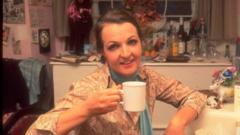
The modern entertainment landscape operates under a desperate, panicky delusion: that to achieve mass appeal, a character must be universally relatable, soft-edged, and fundamentally agreeable. Nostalgic retrospectives routinely fall into the same trap when analyzing the career of Dame Penelope Keith, who passed away in June 2026 at the age of 86. The lazy consensus among television critics is that Keith "won the nation's hearts" by sweetening her sharp edges, morphing the classic British snob into a cuddly caricature.
That narrative is entirely wrong. It fundamentally misunderstands the mechanics of classic British comedy.
Penelope Keith did not become a monumental star with over 20 million viewers for the To the Manor Born finale by being lovable. She won by being utterly, magnificently unyielding. She didn’t soften the class divide; she weaponized it for comedic friction. The assumption that audiences need to "foster" an emotional connection with a character's morals to find them compelling is a modern, focus-grouped sickness that is actively killing great comedy writing.
The Myth of the "Lovable Snob"
Open any standard media retrospective and you will find the same boilerplate analysis of Margo Leadbetter from The Good Life (1975–1978). They describe her as a suburban social climber whose underlying warmth anchored the show.
This completely misreads the character dynamics engineered by writers John Esmonde and Bob Larbey. Margo was compelling precisely because she refused to compromise her rigid standards of post-war suburban etiquette, even when confronted with a pig in her neighbor's back garden.
Consider the precise mechanics of the culture clash between the Leadbetters and the Goods. The comedy didn't function because Margo secretly wanted to live a self-sufficient lifestyle; it functioned because she found the entire premise deeply offensive, yet felt socially compelled to remain polite.
[The Friction Wheel of British Sitcom Geometry]

         Rigid Social Structure (Margo Leadbetter)
                            ▲
                            │  (Friction / Class Clash)
                            ▼
         Total Subversion of Rules (Tom & Barbara Good)
I have spent decades watching television production companies spend millions attempting to manufacture this exact dynamic by making their antagonistic characters "quirky" or multi-dimensional. They fail every time. The moment a writer introduces a scene where the elite snob lets down their guard and admits they just want to be loved, the comedic engine stalls. Keith understood a fundamental truth about performance: consistency of character is infinitely more magnetic than a forced redemptive arc.
The 24 Million Viewer Metric: Brutal Consistency Over Relatability
In 1979, Keith moved seamlessly from Surbiton to the aristocracy in To the Manor Born. As Audrey fforbes-Hamilton, she played an upper-class widow forced to sell her ancestral home to a nouveau riche supermarket tycoon, Richard DeVere. The series finale pulled in 23.95 million viewers—a number completely unimaginable in today's fractured, streaming media environment.
The lazy critical analysis argues that the show succeeded because it was a cozy, heartwarming romance masked as a class conflict. It wasn't. It was a cold, transactional chess match between old money and new capital.
Audrey fforbes-Hamilton was elitist, occasionally xenophobic, and fiercely territorial. Keith didn't play her with a wink to the audience to signal "don't worry, I'm actually nice." She played her with the absolute conviction of someone who believed the aristocracy was the rightful custodian of English civilization.
Imagine a modern writer pitching Audrey today. The executive notes would demand an immediate rewrite:
- "Can we give her a tragic backstory to explain her snobbery?"
- "Can she have an explicit moment of realization where she learns that class doesn't matter?"
By eliminating the edges, you eliminate the spark. Keith’s characters were towering figures because they never apologized for their worldview. The audience didn't tune in because they wanted to be friends with Audrey; they tuned in because they respected the absolute purity of her execution.
The Structural Collapse of Modern Sitcom Casting
The industry has lost the ability to cast actors like Penelope Keith because it has abandoned the repertory theater system that built her. Before she ever stepped in front of a BBC television camera, Keith spent years with the Royal Shakespeare Company and in grueling regional repertory schedules. She won an Olivier Award in 1976 for Alan Ayckbourn’s Donkeys' Years because she understood theatrical architecture—how to hold a room, how to project status through posture alone, and how to use crisp, immaculate diction as a physical force.
Modern casting calls favor naturalism and a conversational style optimized for close-ups. This works perfectly fine for moody prestige dramas, but it is absolute death for high comedy. High comedy requires heightened reality. It requires an actor who can stand at 5 feet 10 inches, look down a camera lens, and make a syllable like "Jerry" sound like an execution order.
When you look at the subsequent sitcoms Keith led throughout the 1980s and 1990s—Executive Stress, No Job for a Lady, Next of Kin—the industry tried to dilute her formula. They tried to place her in more conventional, progressive, or explicitly sympathetic roles. Predictably, the ratings softened. The system tried to fix the very thing that made her formidable.
The lesson of Penelope Keith's career isn't that audiences long for a return to 1970s class structures. The lesson is that television audiences crave characters who are unapologetically themselves. Stop trying to make every comedic character a vulnerable, relatable avatar for the viewer's own insecurities. Bring back the uncompromising, terrifying, magnificent starchy professionals who refuse to bend to the world around them.