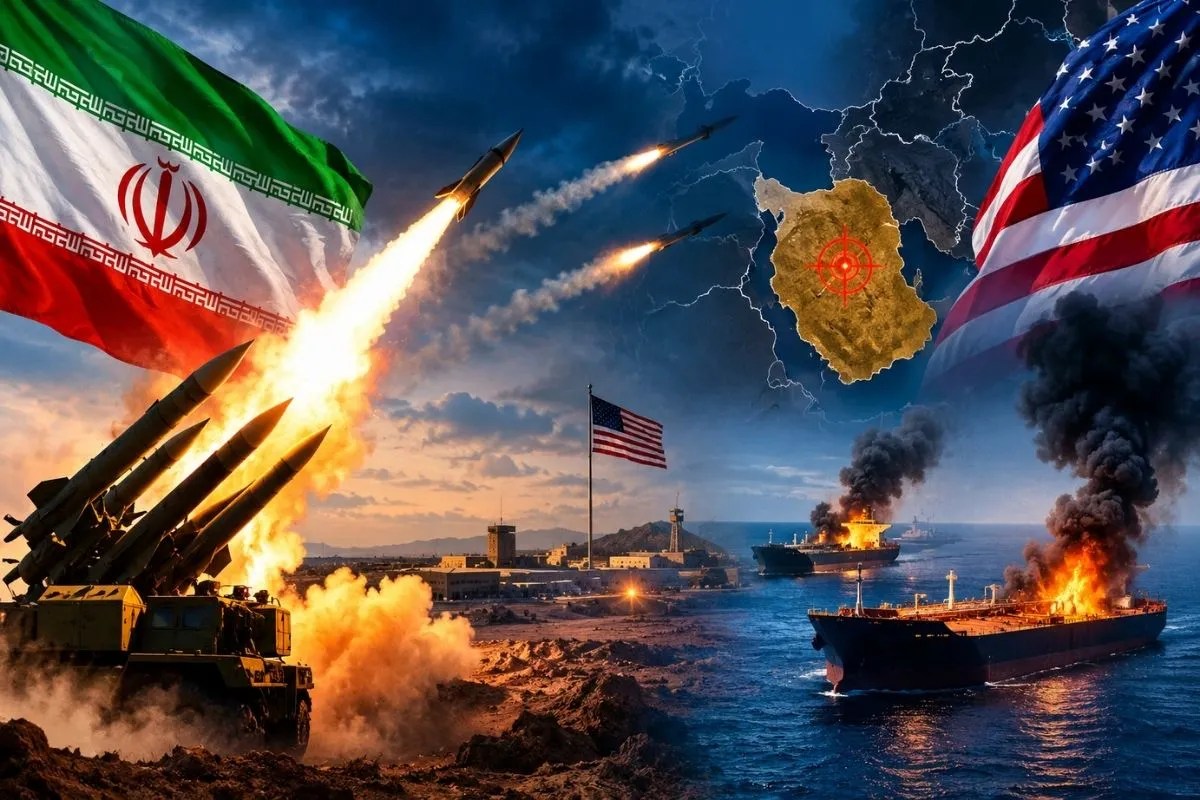
Every single defense analyst, cable news talking head, and frantic Twitter account is selling you a fairy tale. They look at a handful of ballistic missiles arching across a night sky toward a fortified perimeter, listen to the predictable thunder of interceptors, and scream about total war. They point to warnings issued to commercial oil tankers in the Persian Gulf and proclaim that global energy markets are about to burn to ash.
It is lazy, reactive analysis designed for maximum panic and zero comprehension.
I have spent years watching defense contractors and state actors choreograph these exact escalations. I have seen billions of dollars in hardware launched with the absolute certainty that nobody is actually trying to start a regional conflagration. The mainstream narrative assumes that every kinetic action is a step toward mutual annihilation. That assumption is mathematically and strategically illiterate.
When a state actor launches missiles at a heavily defended military installation after giving back-channel warnings through third-party intermediaries hours in advance, they are not executing a surprise assault. They are executing a compliance ritual.
Let us look at the mechanics of modern deterrence theater.
The Choreography of Controlled Escalation
To understand why the current headlines about Gulf shipping and targeted bases are misleading, you have to separate tactical violence from strategic intent. Real war is messy, silent, and designed to annihilate command structures before the enemy knows what hit them. Theater is loud, televised, and heavily telegraphed.
When regional powers trade strikes, they operate within strict parameters dictated by domestic political survival and economic self-preservation. A strike against an American installation in the region is rarely an attempt to inflict maximum casualties. More often, it is a localized pressure valve. It allows a regime to satisfy hardline domestic constituencies by proving they "responded" to a provocation, while carefully calibrating the coordinates and timing to ensure interception rates are high and structural damage is minimal.
To call this a game-changer—or any of the other tired buzzwords cable news anchors recycle—is to fundamentally misunderstand how these actors calculate risk.
The Tanker Threat Myth
Let us address the panic surrounding the Persian Gulf oil lanes. Every time tensions tick upward, commentators dust off the playbook from the tanker wars of the 1980s and pretend that closing the Strait of Hormuz is a simple flick of a switch.
It is not.
Closing or severely disrupting traffic through that narrow corridor is an economic suicide pact for any nation that relies on hydrocarbon exports to fund its own state apparatus. You cannot choke off global crude flows without immediately alienating your few remaining economic partners, driving up maritime insurance rates to prohibitive levels for your own vessels, and inviting a crushing naval response that targets economic lifelines rather than military outposts.
The warnings issued to commercial shipping are diplomatic signaling, not operational blockades. They are meant to inject risk premiums into energy futures, not to sink supertankers indiscriminately. When you look at the actual volume of crude moving through the Gulf during these flare-ups, the baseline throughput rarely plummets the way the doomsday pundits predict. The market adjusts, the ships keep moving under altered insurance riders, and the macro trend continues untouched.
The Cost of Buying the Panic
Investors and policy watchers lose billions of dollars every single year because they trade on the surface noise instead of the structural reality. They look at flashing red banners on their screens, dump equities, pile into safe havens, and buy into the illusion of an imminent apocalypse.
Then, forty-eight hours later, the diplomatic cables hum, the retaliatory cycle pauses, and the markets snap right back to where they started.
Stop treating every tactical exchange as the opening salvo of a global cataclysm. Recognize these events for what they are: highly managed, risk-averse theater performed by actors who are acutely aware of their own fragility.
The next time an alert flashes across your feed about missiles in the Gulf and warnings to shipping, look past the sirens. Ask yourself who benefits from the panic, who is buying the dip you are about to sell, and why everyone in the commentary business is so desperate to sell you a war that neither side can afford to fight.