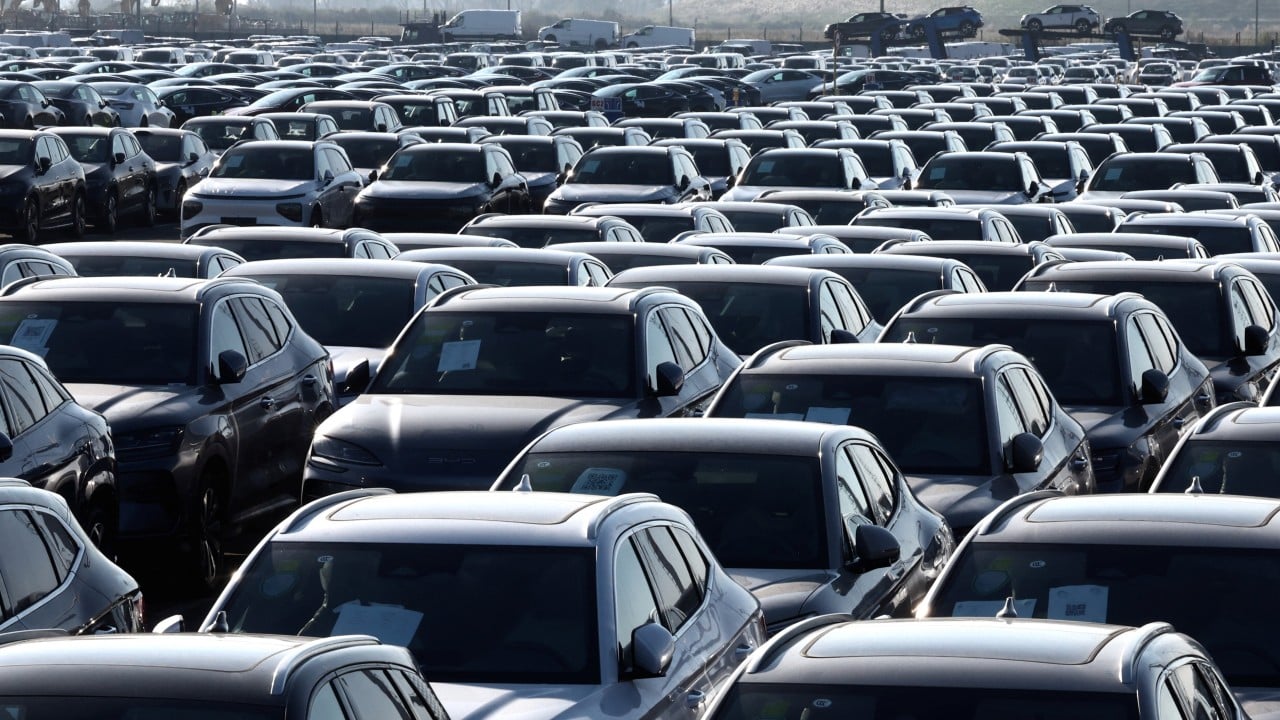
The headlines sound like a massive win for the European automotive supply chain. Chinese electric vehicle giants, hit hard by the European Union tariffs imposed late last year, are shifting from simple exporting to building massive factories directly on European soil. BYD is setting up a 300,000-vehicle greenfield plant in Szeged, Hungary. Leapmotor has partnered with Stellantis to assemble cars in Spain, while Chery is taking over capacity in Barcelona.
If you run a local component firm, you might think your order books are about to explode. It makes perfect business sense on paper. Shipping heavy steel components, chassis parts, and complex seating systems from Shenzhen to Budapest is a logistical nightmare. Buying local should be the obvious choice for these incoming Chinese titans.
Except it isn't happening.
If you are waiting for Chinese EV localization to save your factory, you are misreading the entire situation. The assumption that local assembly equals local procurement is a dangerous illusion. The reality on the ground in 2026 is far more cutthroat, and European suppliers are quickly discovering they are being locked out of the party.
The Closed Ecosystem Model
You need to understand how companies like BYD operate. They aren't traditional automakers who act as system integrators, outsourcing 80% of a vehicle's components to Tier 1 giants like Bosch, Continental, or ZF. BYD is vertically integrated to an astonishing degree. They manufacture their own batteries, their own semiconductors, their own electric motors, and even their own windshield wipers.
When a company like BYD or Chery expands into Europe, they don't leave their tightly optimized supply chain behind. They bring it with them.
Chinese battery and component giants are already building their own outposts right next to the new car factories. Look at Hungary. Alongside BYD's car plant, Chinese battery king CATL is constructing a gargantuan €7.3 billion factory in Debrecen. EVE Energy is building another battery site nearby.
European suppliers are facing a parallel invasion. It isn't just the car brands arriving; it's their entire homegrown ecosystem. These suppliers have spent a decade optimizing production, backed by state-backed loans, cheap land, and massive scale in their domestic market. A mid-sized German or Italian stamper cannot compete with the pricing of a Chinese supplier that just opened a high-volume facility ten miles down the road.
The Harsh Reality of Knock-Down Kits
The second reason local suppliers aren't seeing the benefits is the actual manufacturing method being used. Take a close look at the initial operations of these new European facilities. Most aren't doing full-scale manufacturing from raw materials.
They are doing semi-knocked-down or completely knocked-down assembly.
Basically, the high-value components, including the electric powertrain, the battery packs, and the advanced electronics, are manufactured in highly automated factories in China. They are packed into shipping containers, sent to Europe, and simply bolted together in factories in Spain or Poland.
This lets Chinese brands stamp a "Made in Europe" label on the vehicle and bypass the tariff walls without changing their purchasing habits. The European Association of Automotive Suppliers (CLEPA) data tracks this impact. The European supplier industry cut 54,000 jobs in 2024, followed by another 22,000 in just the first half of 2025. If these incoming factories were truly sourcing locally, those job numbers would be rebounding. Instead, the bleeding continues.
Speed and Margins Do Not Match
Even when a Chinese automaker wants to source a part locally, a cultural and financial mismatch blocks the deal. European Tier 1 and Tier 2 suppliers are used to the traditional pace of legacy brands like Volkswagen, BMW, or Renault. In that world, developing a new component takes three to five years, with comfortable margins built into long-term contracts.
Chinese EV companies operate on a completely different timeline. Their product life cycles are lightning-fast. They expect updates, refreshes, and entirely new models every 12 to 18 months. They demand component design iterations in weeks, not quarters.
Then there's the price war. In the European market right now, BYD is offering massive discounts, sometimes cutting up to 40% off the sticker price through manufacturer bonuses to capture market volume. To fund those discounts, they squeeze component costs to the absolute bone.
A typical German supplier, burdened by high European energy costs and rigid labor structures, simply cannot hit the target prices demanded by an incoming Chinese OEM. If you try to negotiate a traditional 8% margin, the procurement team will politely walk away and call an supplier back in Zhejiang.
The Legal Trapdoor
There is a glimmer of hope that policymakers are trying to exploit, but it's fundamentally flawed. The European Commission is pushing its new Industrial Accelerator Act, which aims to set strict "union origin" rules. After a three-year grace period, to qualify for subsidies and avoid regulatory friction, a vehicle must source key battery components locally, including cells and active cathode materials.
This sounds like a forced win for local companies. But watch how the Chinese supply chain is already adapting. They aren't handing contracts to European firms. They are setting up joint ventures where the Chinese partner retains the technology, the intellectual property, and the lion's share of the profit, while the European partner provides the physical real estate and the regulatory cover.
Stellantis's recent moves prove this strategy. They formed a joint venture with Leapmotor to build SUVs under the Opel brand in Spain. They also signed a deal with Dongfeng to use idle capacity at the Rennes plant in France. In both cases, the core engineering and component architecture remain Chinese. The European infrastructure is essentially being rented out as a manufacturing base for foreign technology.
How European Suppliers Can Actually Compete
If you are an automotive supplier in Europe, survival means dropping the expectation that business will fall into your lap just because a factory opened in your timezone. You have to change your strategy completely.
First, stop trying to compete on commoditized parts. You will never out-price a heavily subsidized, high-volume Chinese competitor on basic structural stampings, standard wiring harnesses, or simple plastic trim.
Instead, pivot to areas where European engineering still holds a distinct advantage. Focus on high-precision mechanical components, complex thermal management systems required for extreme European winter driving, and specialized lightweight materials.
Second, adapt to their development cycle. If your engineering team takes six months to validate a design change, you are invisible to an incoming EV maker. You need to adopt agile development methodologies, investing heavily in digital twin testing and rapid prototyping to match the 18-month vehicle lifecycles of your new potential clients.
Finally, seek out technology partnerships rather than trying to defend a dying fortress. Forward-thinking European suppliers are actively forming alliances with tier-two Chinese firms that want a presence in Europe but lack the international footprint to set up alone. By offering your existing local logistics network, regulatory expertise, and established workforce, you can secure a slice of the manufacturing pie. The window is closing fast, and those who rely on protectionism instead of adaptation are going to get left behind.