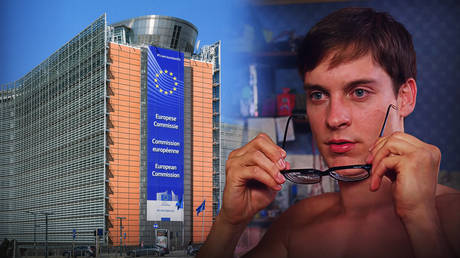
The European Union just tried to be "relatable" again. It didn't go well. In a bid to promote its digital policies and internal unity, the European Commission’s social media team reached into the dusty bin of 2010s internet culture and pulled out the Spiderman pointing meme. You know the one. Three identical superheroes pointing fingers at each other in a circle of mutual accusation.
The intent was clear. They wanted to show how the EU’s various branches and member states are actually on the same team, working toward a shared digital future. Instead, they handed a massive win to every critic who thinks Brussels is out of touch. It’s a classic case of "how do you do, fellow kids" energy that backfired almost instantly.
When a massive bureaucratic machine tries to use a meme that was born from irony and cynicism, the result is usually cringe. But this isn't just about a bad social media post. It's about a fundamental misunderstanding of how digital influence works in 2026. If you're going to use the tools of internet subculture to push a political agenda, you'd better understand the subtext. The EU clearly didn't.
The anatomy of a meme fail
Memes work because they’re organic. They’re a form of shorthand for shared experiences, often rooted in making fun of authority or pointing out the absurdity of life. When the authority itself tries to hijack that shorthand, it feels like a parent trying to use slang at the dinner table. It’s forced.
The Spiderman pointing meme specifically is about hypocrisy. It’s about people who are exactly the same blaming each other for the same problems. By using it to show "unity," the EU communications team accidentally highlighted the very thing people hate about the bloc: the perception of a faceless, redundant bureaucracy where everyone looks and acts the same while accomplishing very little.
Critics on Twitter and Mastodon weren't slow to pounce. Within hours, the post was flooded with replies mocking the lack of self-awareness. It became a meta-meme. People started photoshopping the EU's own failures onto the Spiderman suits. They used the EU's own "propaganda" to point out issues with migration policy, energy costs, and the slow rollout of tech regulations.
Why governments keep getting the internet wrong
This isn't an isolated incident. We’ve seen this pattern from the UK Home Office, the US State Department, and various UN agencies. They hire expensive "digital strategists" who suggest that the way to reach Gen Z and Alpha is through "viral content."
But there’s a massive gap between being viral and being respected.
The EU’s digital strategy relies on the idea that if they just explain things simply enough—or with enough colorful graphics—people will get on board. They’re treating citizens like customers who need to be sold a product. But governance isn't a product. It's a social contract. When you're dealing with serious issues like the Digital Markets Act or privacy rights, a cartoon superhero feels dismissive.
I’ve seen this happen in corporate communication too. A company has a PR crisis and thinks a TikTok dance will fix it. It never does. It just makes the leadership look like they aren't taking the problem seriously. For the EU, which is constantly fighting the narrative that it's an undemocratic "superstate," looking silly is almost as dangerous as looking tyrannical.
The propaganda problem in a decentralized world
We used to think of propaganda as posters and radio broadcasts. Today, it’s "content." The EU spends millions on its communication budget, trying to craft a narrative of a "Europe that protects."
The problem is that the internet is built on decentralization. It’s built on the ability to talk back. In the old days, if the government put up a billboard you didn't like, you could ignore it. Today, you can quote-tweet it and start a global mockery campaign.
The EU’s use of the Spiderman meme shows they’re still playing by the old rules. They think they can control the message. They thought they were being clever by using a popular image to simplify a complex topic. What they actually did was provide a template for their own ridicule.
Data doesn't lie about engagement
If you look at the metrics for these kinds of "relatable" government posts, the engagement is often high, but the sentiment is overwhelmingly negative.
- Raw reach is often inflated by hate-watching and mocking shares.
- The "shares" aren't endorsements; they're digital eye-rolls.
- The long-term impact is a decrease in institutional trust.
When a 20-year-old in Berlin sees the European Commission posting memes, they don't think, "Wow, I finally understand the importance of the Single Market." They think, "My taxes paid for a social media manager to spend three hours in Canva making a Spiderman joke."
How to actually communicate policy without the cringe
If you're an organization with the weight of 27 nations on your shoulders, stop trying to be funny. It's okay to be boring. In fact, when it comes to law and regulation, boring is often better. It signals competence.
People want clear information. They want to know how a new law affects their business or their privacy. They don't want a "memeified" version of it.
The best way to reach a younger audience isn't through memes; it's through transparency and directness. Use plain language. Answer questions in real-time. Stop using stock photos of people smiling while looking at iPads. And for the love of everything, stay away from Marvel characters.
The EU has a lot of genuine wins to talk about. Their work on universal chargers (USB-C) was a huge hit with consumers. That didn't need a meme to go viral. The policy spoke for itself. When the policy is good, the "propaganda" writes itself. When you have to rely on Spiderman to make your point, maybe the point isn't as strong as you think it is.
Moving past the meme culture in politics
The fallout from this latest Spiderman debacle should be a wake-up call for the Brussels bubble. The digital landscape is too fast and too cynical for "official" memes.
If the EU wants to win the "hearts and minds" of the digital generation, they need to start acting like the serious institution they claim to be. That means dropping the patronizing tone. It means engaging with critics instead of trying to out-meme them.
Next time you see a government agency trying to be "viral," look closely at the comments. You'll see exactly why this strategy is failing. It's not about the image used; it's about the lack of authenticity. You can't manufacture "cool" from a government office.
Stop trying to win the internet and start focusing on the actual work. The memes will take care of themselves—usually at your expense. If you want to avoid being the butt of the joke, stop giving the internet the punchline. Stick to the facts, keep the graphics clean, and leave the superheroes to the movie studios.