On December 1, 2026, Estonia will slam shut every remaining road crossing along its eastern frontier with Russia, suspending pedestrian and vehicle traffic across Narva, Koidula, Luhamaa, and Saatse for at least six months. Prime Minister Kristen Michal’s government framed the indefinite blockade as an urgent shield against Kremlin-sponsored sabotage. Yet closing the gates at the Narva River cannot stop a threat that bypasses customs booths entirely. Moscow no longer needs to smuggle trained operatives across border checkpoints when it can recruit locals online, jam Estonian airspace from miles away, and ship sanctioned commodities through the rail lines Tallinn left wide open.
The Spark Behind the December Shutdown
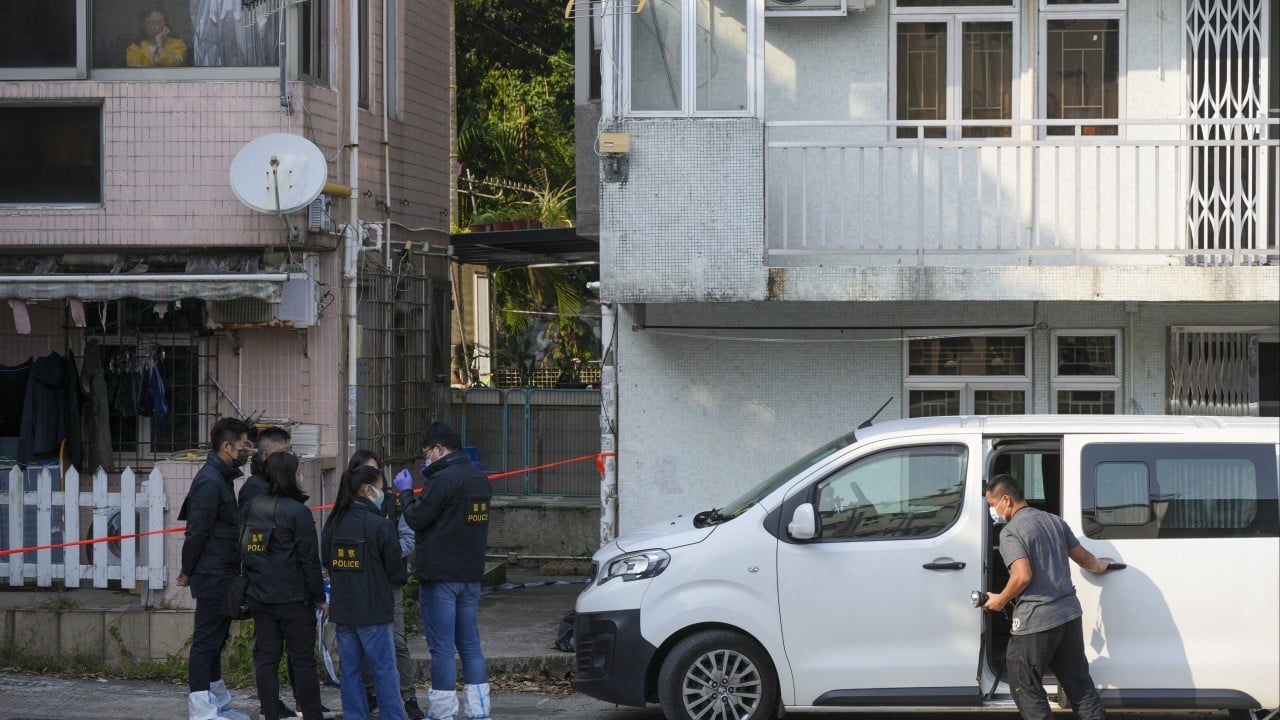
Border closures rarely happen in a vacuum. For years, Tallinn tightened the screws incrementally—banning Russian-plated vehicles, restricting tourist visas, and cutting nighttime hours at southern checkpoints. The final break came in mid-November 2026, after Estonian counterintelligence dismantled an eight-person cell plotting an arson attack against Threod Systems, a domestic manufacturer producing unmanned aerial systems for Ukraine.
Estonia’s Internal Security Service, known as KAPO, traced the operation directly to Russia’s military intelligence directorate, the GRU. It was the second strike against Estonia’s defense sector in three months. On August 15, suspected Russian operatives set fire to a Tallinn facility belonging to Milrem Robotics, a prominent developer of unmanned ground vehicles deployed on Ukrainian battlefields.
Foreign Minister Margus Tsahkna warned that hostile operations on Estonian soil would carry immediate consequences. Within days, the cabinet approved a sweeping suspension of road crossings. By sealing the checkpoints, Tallinn aims to sever physical courier networks, choke off sanctions evasion, and eliminate the friction of managing thousands of daily crossings while border guards brace for escalation.
Why Physical Walls Fail Against Disposable Saboteurs
The logic of a border closure rests on an outdated model of espionage. During the Cold War, intelligence agencies infiltrated agents across frontiers using forged papers, dead drops, and diplomatic cover. Today, Russian intelligence operates like a gig-economy dispatcher.
Security officials across the Baltic states have documented a clear shift in GRU tradecraft. Rather than risking elite intelligence officers at heavily scrutinized European checkpoints, handlers in Moscow and St. Petersburg recruit disposable proxies via encrypted messaging apps like Telegram. The recruits are rarely ideological zealots. They are often petty criminals, cash-strapped locals, or vulnerable residents inside the European Union willing to throw a Molotov cocktail or plant a tracking device for a few thousand euros in cryptocurrency.
Closing the bridge at Narva does nothing to stop an encrypted message sent from a server in Moscow to a smartphone in Tallinn.
Furthermore, the geography of the Schengen Area undermines unilateral border locks. Once an operative—or a shipment of dual-use electronics—enters the borderless European zone through a softer entry point, movement into Estonia requires zero passport checks. Unless every EU state sharing a frontier with Russia and Belarus imposes identical, airtight restrictions simultaneously, a national shutdown merely reroutes traffic rather than halting it.
The Invisible Front Line Over Narva and Saatse
Even where the border is physically fortified with razor wire, surveillance towers, and concrete dragon's teeth, Russian interference crosses effortlessly through the electromagnetic spectrum.
Walk the eastern perimeter near the Saatse Border Guard Station, nearly 280 kilometers southeast of Tallinn, and the war looks less like an armored column and more like a blinking red warning light on a drone controller. Border commanders report that Russian electronic warfare units jam Estonian surveillance drones almost daily. High-powered transmitters stationed inside Russian territory flood the frontier with radio noise, blinding reconnaissance sensors and disrupting GPS signals across eastern Estonia.
The geographic quirks of the Soviet-era boundary create additional vulnerabilities that concrete barriers cannot fix. Consider the Saatse Boot, a bizarre 115-hectare patch of Russian territory that juts into southeastern Estonia like a thumb. For decades, an Estonian public road sliced straight through this Russian enclave. Drivers were permitted to pass through without visas under strict rules: no stopping, no rolling down windows, and no stepping onto the asphalt even if a tire blew out.
That fragile arrangement collapsed in October 2025 when Estonian patrols spotted armed Russian military personnel loitering along the road inside the boot. Tallinn abruptly closed the route and accelerated construction on bypass roads to keep domestic traffic entirely on Estonian soil. Yet the incident exposed a harsh reality. Russia does not need to invade to paralyze infrastructure; it merely needs to place a handful of armed men on a contested curve to force an entire region to redraw its road network.
The Economic Loophole Tallinn Refused to Close
While headlines trumpet a total border lockdown, a closer reading of the Estonian government’s November 26 decree reveals a glaring exception. The closure applies exclusively to road crossings. Rail freight through Narva remains open.
Tallinn’s official crisis guidance acknowledges the reason with unusual candor. Shutting down the Narva rail corridor would inflict severe economic pain on Ida-Virumaa, Estonia’s industrial northeastern county, and disrupt the transit of raw materials still flowing from Russia into broader European supply chains. Customs officials insist that every railcar undergoes strict inspection for sanctioned goods.
Still, leaving a heavy-freight rail artery pumping across a supposedly sealed border highlights the central dilemma facing frontline NATO states. Complete decoupling carries a steep domestic price tag. Moscow understands this asymmetry and exploits it relentlessly, testing how much economic disruption European democracies will tolerate before political consensus fractures.
Inside Narva Where the Border Cuts Through Families
Nowhere are the human contradictions of the December 1 closure sharper than in Narva, Estonia’s third-largest city. Separated from the Russian city of Ivangorod by a narrow river spanned by the Friendship Bridge, Narva is home to roughly 53,000 people—more than 95 percent of whom speak Russian as their primary language.
For decades, the river was a technicality rather than a wall. Residents crossed daily to visit aging parents, tend family graves, buy cheaper groceries, or attend Orthodox church services. When Tallinn closed the Narva checkpoint to vehicle traffic in early 2024 due to Russian renovations on the Ivangorod side, pedestrians still queued for hours in freezing rain just to walk across the bridge.
Starting December 1, even that trickle stops. Anyone needing to travel between Estonia and Russia must now take punishing detours—either flying through non-EU hubs like Istanbul or Belgrade at exorbitant cost, or funneling through remaining land crossings in Latvia.
The human toll creates a secondary security risk that Estonian intelligence officials watch nervously. Alienation is raw material for Kremlin propagandists. When ordinary, law-abiding residents in Narva find themselves cut off from relatives across a hundred-meter river, Russian state media seizes on their frustration to push narratives of Baltic "Russophobia" and state discrimination. Russian Foreign Ministry spokesperson Maria Zakharova immediately condemned Tallinn’s decision as an attempt to erect a new Iron Curtain—a talking point engineered specifically for consumption inside Russian-speaking households in northeastern Estonia.
Counterintelligence Versus Isolation
Critics of the border closure, including several European trade analysts and local municipal leaders in Ida-Virumaa, argue that sealing road crossings punishes ordinary citizens while barely inconveniencing the GRU. Intelligence services, they point out, rarely rely on public bus routes or pedestrian bridges to move high-value assets.
Estonian security planners do not dispute the limitations of physical barriers. Privately, officials concede that a closed checkpoint is not a magic dome. Instead, they view the shutdown through the lens of resource allocation and friction.
Every hour that Police and Border Guard Board officers spend processing civilian travelers, verifying visas, and policing kilometers-long queues at Narva and Luhamaa is an hour stolen from active border surveillance and counter-sabotage patrols. By clearing the checkpoints of routine traffic, Estonia frees up specialized personnel to monitor the 338-kilometer green border—much of it dense forest, marshland, and the shifting waters of Lake Peipus—where clandestine crossings actually occur.
Moreover, the closure sends an unmistakable diplomatic signal. Following the arson plots against Milrem Robotics and Threod Systems, Tallinn needed a visible, asymmetric response that imposed immediate friction on Moscow without triggering a direct military clash. Forcing Russian citizens, couriers, and dual nationals into long, expensive detours raises the operational cost of maintaining cross-border networks.
The Real Battleground Is Domestic Resilience
Ultimately, Estonia’s ability to keep Moscow out depends far less on padlocks at Narva than on what happens inside its own cities over the next six months.
Estonia’s domestic intelligence agency has warned that roughly ten defense companies across the country sit on Russia’s target list for sabotage. Protecting them requires hardening private industrial facilities, vetting supply-chain contractors, and infiltrating the encrypted digital networks where Russian handlers recruit local arsonists. It also demands sustained investment in counter-drone defenses and social integration programs in Narva so that economic isolation does not curdle into political resentment.
Concrete barriers and closed gates buy Tallinn breathing room along its eastern edge. Yet as long as the Kremlin can wage war through fiber-optic cables, radio jammers, and hired hands already living inside Europe, the most dangerous border Estonia has to defend runs straight through its own digital networks and industrial parks.