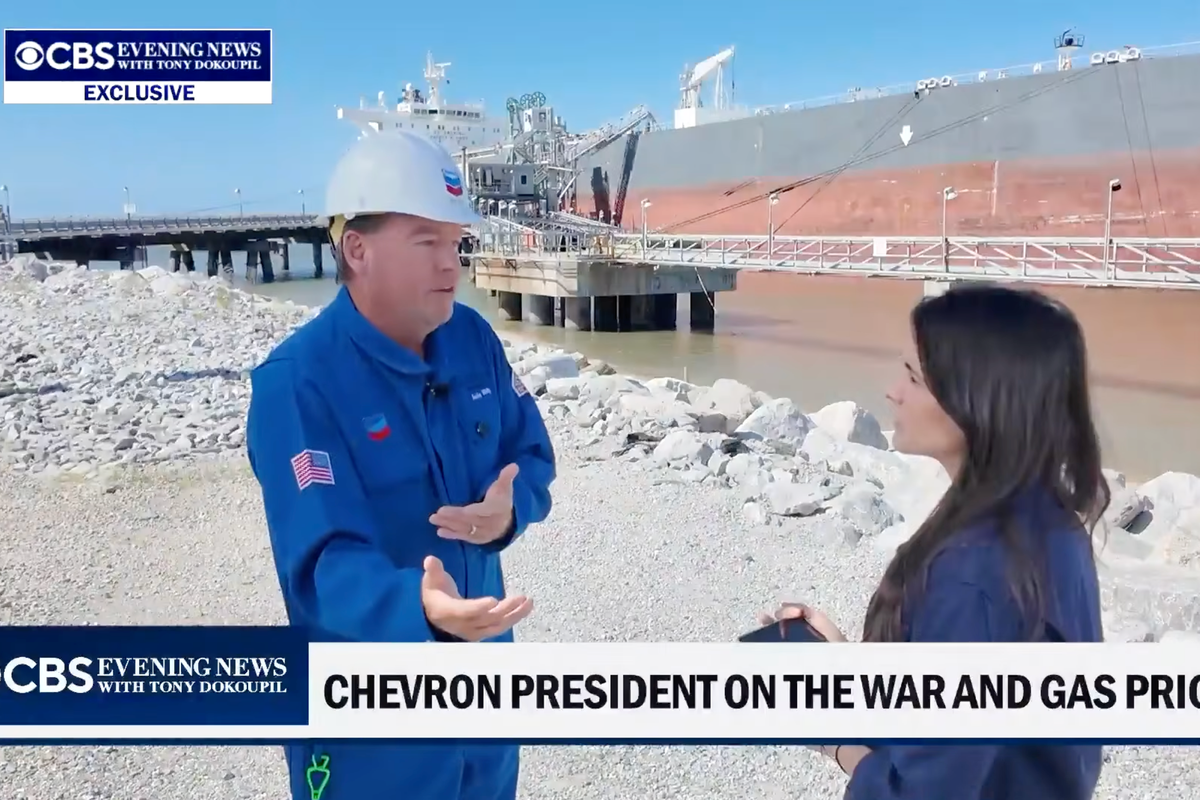
The message coming out of the mahogany-row offices of the world’s largest oil producers has shifted from a promise of abundance to a lecture on austerity. When a high-ranking Chevron executive suggests that the solution to soaring fuel costs is for Americans to simply drive less, it isn't just a PR blunder. It is a calculated admission of a new energy reality. For decades, the social contract between the petroleum industry and the American consumer was built on the premise of cheap, unlimited mobility. That contract has been shredded.
The current friction at the pump isn't merely a byproduct of temporary supply chain hiccups or a single geopolitical conflict. It represents a fundamental disconnect between the structural limits of global refining capacity and the unyielding demand of a car-dependent society. By telling citizens to stay home, the industry is signaling that it no longer has the desire—or perhaps the ability—to drill its way out of high prices.
The Death of the Volume Game
For the better part of the last century, oil majors measured success by the sheer number of barrels they could pull from the earth. More was always better. But the financial hangover of the late 2010s changed the math for companies like Chevron and ExxonMobil. After years of overspending on exploration with diminishing returns, Wall Street demanded a pivot. Investors stopped caring about volume and started obsessing over "capital discipline."
Capital discipline is a polite term for doing less. Instead of pouring billions into risky new deep-water projects or expensive shale plays, oil companies are using their record profits to buy back shares and pay out dividends. They have discovered that they can make significantly more money by producing less oil at higher prices than they can by flooding the market and crashing the value of their product. When an executive tells you to drive less, they are protecting this new, high-margin business model.
The industry has moved from being a provider of a necessary utility to a steward of a scarce resource. They are no longer incentivized to make gas cheap.
The Refining Bottleneck No One Wants to Fix
Even if we pulled every drop of crude oil out of the Permian Basin tomorrow, it wouldn't necessarily lower the price at the local station. We are hitting a hard ceiling in refining capacity. The United States has not built a major, new "grassroots" refinery since 1977. While existing plants have been expanded, the total capacity is shrinking as older, less efficient facilities are shuttered or converted to produce biofuels.
Refining is a low-margin, high-regulation business that takes decades to see a return on investment. If you are an oil executive looking at a global push toward electric vehicles, you aren't going to sink $10 billion into a new refinery that won't be profitable for 20 years.
[Image of a petroleum refinery flow diagram showing crude oil distillation]
The result is a permanent state of precariousness. Any small disruption—a hurricane on the Gulf Coast, a refinery fire in New Jersey, or a maintenance delay—sends shockwaves through the market because there is no "slack" left in the system. The advice to "drive less" is a acknowledgment that the supply side of the equation is now brittle and inflexible.
The Infrastructure Trap
Telling an American to drive less is often like telling a fish to fly. The majority of the United States was built after the 1940s, designed specifically around the assumption that every adult would own a private vehicle and that gasoline would remain affordable. Our geography is a series of "food deserts," suburban sprawls, and industrial parks connected only by asphalt.
- Public Transit Gaps: Outside of a few major hubs like New York or Chicago, public transportation is often a non-starter for those with strict schedules or families.
- Zoning Laws: Minimum parking requirements and single-family zoning ensure that residents must travel significant distances for basic necessities.
- The Commuter Tax: For the millions of workers in the service and construction industries, "driving less" isn't a lifestyle choice; it's a pay cut.
When the energy industry suggests reduced consumption, they are ignoring the reality that our entire economic engine is lubricated by the very fuel they provide. The "drive less" mantra shifts the burden of a systemic failure onto the individual. It frames a global industrial policy issue as a personal moral failing or a lack of frugality.
Geopolitics and the Illusion of Independence
The phrase "energy independence" is one of the most misused terms in the American lexicon. We may produce more oil than we consume, but we operate within a global commodity market. The price of a gallon of gas in Ohio is determined by decisions made in Riyadh, Moscow, and London.
The United States produces a lot of "light, sweet" crude, but many of our domestic refineries are configured to process "heavy" crude from abroad. This mismatch means we must export what we drill and import what we need. This global interdependence ensures that domestic consumers are always exposed to international volatility. An oil executive knows this. They know that no amount of domestic drilling will fully insulate the American driver from a war in Europe or a production cut by OPEC+.
By advocating for lower demand, they are attempting to manage the only variable they can’t fully control: the public’s breaking point. High prices are "the cure for high prices" in economic theory, meaning eventually people get priced out of the market and demand falls. But in the real world, that "cure" involves immense economic pain for the working class.
The ESG Tension
We cannot ignore the role of Environmental, Social, and Governance (ESG) mandates in this shift. Oil companies are under immense pressure from large institutional investors to lower their carbon footprints. This creates a strange paradox. If an oil company invests heavily in increasing production, they are penalized by climate-conscious investors. If they don't invest, the supply remains tight and prices go up.
The "drive less" comment is the ultimate hedge. It aligns the company with environmental goals (lower emissions) while simultaneously explaining away the high prices that are padding their bottom line. It’s a rare moment where corporate greed and environmental activism find a cynical middle ground. The consumer is the only one left out of this alliance.
The Efficiency Myth
Automakers have spent the last two decades touting fuel efficiency, yet the average fuel economy of the American fleet has stagnated as consumers traded in sedans for SUVs and heavy trucks. We used every gain in engine efficiency to power larger, heavier, and more aerodynamically challenged vehicles.
The industry leaned into this trend because profit margins on a large truck are significantly higher than on a compact car. Now that the bill is coming due at the pump, the suggestion to "drive less" feels particularly hollow coming from the same corporate ecosystem that spent billions marketing the 6,000-pound daily driver.
Breaking the Cycle
If the goal is truly to reduce the impact of fuel prices on the average family, the solution isn't a "blunt" suggestion to stay home. It requires a radical shift in how we approach the intersection of energy and movement.
- Decoupling Mobility from Oil: This isn't just about EVs, which many can't afford, but about diversifying how we move. This means massive investment in rail and high-speed bus corridors that actually go where people live.
- Refinery Modernization: If the government wants lower prices, it may have to provide the regulatory certainty or direct incentives required to upgrade the refining fleet for the next 30 years.
- Strategic Reserves Reimagined: The Strategic Petroleum Reserve (SPR) has been used as a political tool to shave a few cents off prices during election cycles. It needs to be managed as a true buffer against the structural volatility of a shrinking industry.
The era of "cheap" energy was an anomaly, not a birthright. We are entering a period where the providers of our most essential resource are openly admitting that they would rather you use less of it than they would produce more of it. This isn't a suggestion; it's a warning. The infrastructure of the 20th century is colliding with the financial realities of the 21st, and the American driver is the one caught in the wreckage.
Stop looking for the price to return to "normal." This is the new normal. The executives have told you their plan. They aren't coming to save you with more oil; they are waiting for you to stop asking for it.