The coffee in the paper cup is lukewarm, and the electronic display board is stuttering again. On Platform 4, a crowd of two hundred people stands in a sort of rhythmic silence, the kind earned through years of shared disappointment. They are waiting for a train that was supposed to arrive twelve minutes ago. It isn’t coming. It won’t be coming for a long time. This isn't just a bad Tuesday for a few thousand commuters; it is the final, sputtering breath of an era.
For decades, the British railway system has operated as a fragmented patchwork of private interests and public subsidies. We were told that competition would breed excellence. We were promised shiny new carriages and ticket prices that reflected a thriving market. Instead, we got a labyrinth. We got "planned engineering works" that stretched into unplanned eternities. Now, the government has reached for the emergency brake. One of the nation's largest train operators is being brought back into the hands of the state.
Renationalisation.
It is a heavy, bureaucratic word that smells of 1970s sandwiches and industrial disputes. But for the person standing on that platform, it is something much simpler: an admission of defeat. The experiment failed.
The Fiction of the Market
To understand how we got here, we have to look past the spreadsheets. Consider Sarah. She is a hypothetical commuter, but her story is a composite of a million real ones. Every morning, Sarah pays a significant portion of her take-home pay for a season ticket that grants her the right to stand in a vestibule next to a leaking toilet. She doesn't have a choice of providers. There is no "market" when you live in a town served by only one line.
In a traditional business, if the product is broken, the customer leaves. In the world of private rail franchises, the customer is a hostage. The operator knows this. The government knows this. The only thing that moves faster than the trains—when they actually run—is the blame. It shifts from the operator to Network Rail, then back to the Department for Transport, circling in a loop that never results in a refund or a seat.
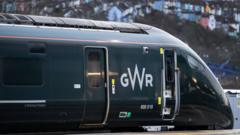
The core facts are stark. The operator in question has been plagued by performance issues, cancellations, and a breakdown in industrial relations. The decision to transfer these services to the "Operator of Last Resort"—the government’s holding company—is a move of necessity, not necessarily ideology. When the private sector can no longer provide a basic utility, the state is forced to step back into the engine room.
The Invisible Stakes of a Late Train
We often talk about rail failures in terms of "delay minutes" or "percentage of cancellations." These are cold, sterile metrics. They hide the human cost.
When a train is cancelled, a father misses a bedtime story. A job interview is lost before it begins. A surgical appointment is pushed back six months because the patient couldn't get to the hospital. These are the invisible stakes of a failing infrastructure. The railway is the circulatory system of the economy. When it clogs, the whole body suffers.
The transition back to public control isn't a magic wand. It won't instantly fix the crumbling Victorian bridges or the ancient signalling systems that fail the moment a leaf falls onto the track. What it does, however, is remove the profit motive from the immediate equation. It stops the leakage of public funds into shareholder dividends when the service provided is subpar.
Critics will argue that the state is a poor manager. They will point to the history of British Rail—the grey uniforms, the stagnation, the lack of innovation. They aren't entirely wrong. The public sector isn't inherently more efficient. But it is, at least in theory, more accountable. If the trains don't run under a nationalised system, there is only one door to knock on. The buck stops at the ballot box.
A Patchwork of Sovereignty
The irony of the current situation is that many of our "private" operators were actually owned by the state-run railways of other countries. For years, commuters in the UK were effectively subsidising the national rail systems of Germany, France, and the Netherlands. We were the only ones playing at a free market while everyone else was playing for keeps.
This move to bring a major operator back into public hands is part of a broader, creeping trend. It is a recognition that some things are too important to be left to the whims of a franchise agreement. Water, energy, transport—the pillars of a functioning society are being re-examined through a lens of resilience rather than just efficiency.
The logistics of the takeover are immense. Thousands of staff members will change employers. Branding will be scraped off the sides of locomotives. IT systems will be integrated into the state’s burgeoning portfolio. It is a massive, expensive, and deeply unglamorous undertaking. But it is happening because the alternative—continued chaos—became politically and economically untenable.
The Ghost in the Machine
There is a specific kind of melancholy in a deserted station at night. You see the ghosts of what the railway was meant to be: the great connector, the engine of the industrial revolution, a symbol of national pride. Over the last thirty years, we lost that. We turned the railway into a transaction, and a poor one at that.
The person standing on Platform 4 doesn't care about the intricacies of the "Operator of Last Resort." They don't care about the political philosophy of renationalisation. They just want to go home. They want to know that when they tap their card or show their ticket, the system will hold up its end of the bargain.
As the sun sets over the tracks, the announcement finally chimes. A mechanical voice apologises for the "continued inconvenience." It is a script we have all memorised. But today, there is a different weight to the words. The old way of doing things is being dismantled, piece by piece, sleeper by sleeper.
We are entering a period of profound uncertainty. The government is taking on a massive liability at a time when the public purse is already strained. There will be mistakes. There will be more delays. There will be moments when we wonder if the private operators were really the problem, or if the system itself is simply too broken to fix.
Yet, as the lights of the next train finally appear in the distance, cutting through the gloom, there is a faint, cautious sense of possibility. For the first time in a generation, the people who run the trains and the people who pay for the trains are on the same side of the ledger.
The engine is turning over. The signal is changing from red to amber. We are moving, however slowly, toward a destination that has been out of reach for a very long time.
The driver looks out from the cab, eyes tired but focused, and pulls the lever.