Energy infrastructure is not a civilian luxury in a theocracy; it is a weapon system.
The "lazy consensus" among the foreign policy elite suggests that Benjamin Netanyahu is merely mimicking Vladimir Putin’s playbook by targeting Iran’s energy grid. They argue this strategy failed in Ukraine and will fail in the Persian Gulf. They claim it creates a humanitarian "backlash" that unites a population against the external aggressor.
They are wrong. They are misreading the map, the math, and the mechanics of power.
Comparing the Iranian energy sector to the Ukrainian power grid is a category error of the highest order. Ukraine’s energy system is a defensive utility designed to keep citizens warm. Iran’s energy system is an ATM for the Islamic Revolutionary Guard Corps (IRGC). When you bomb a utility, you annoy a population. When you incinerate an ATM, you paralyze a military.
The Myth of the Resilient Autocracy
The prevailing argument suggests that striking oil refineries will only embolden the Iranian regime. This assumes the Iranian public shares a symbiotic relationship with their leadership.
I have spent decades watching analysts mistake "enforced silence" for "nationalist fervor." In 2022, during the "Woman, Life, Freedom" protests, we saw the cracks. The Iranian people are not waiting for an excuse to rally behind the Ayatollah; they are waiting for the IRGC’s payroll to bounce.
The IRGC does not run on ideology alone. It runs on the arbitrage of refined petroleum products. Unlike Russia, which sits on a massive, diversified internal market and a pipeline network that China is happy to exploit, Iran’s energy infrastructure is a fragile, aging bottleneck.
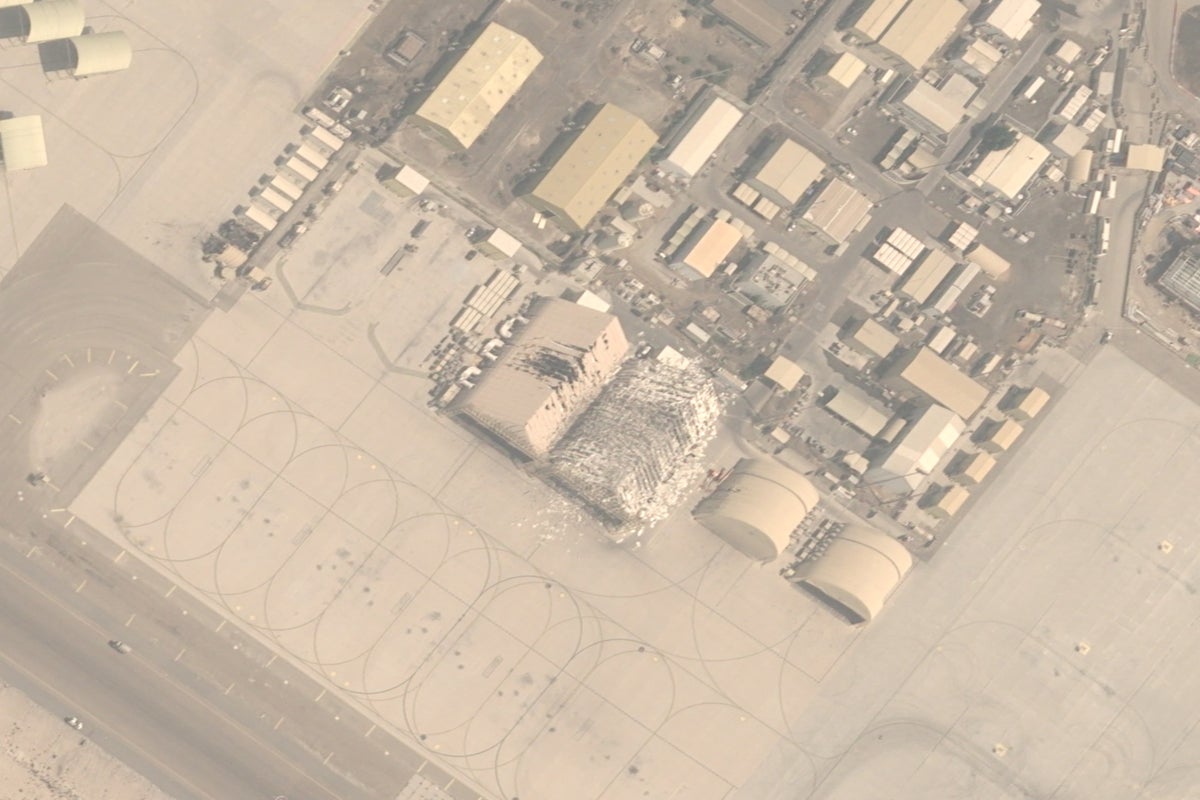
If you take out the Abadan refinery or the Kharg Island terminal, you aren't just "cutting power." You are de-funding the Hezbollah logistics chain in real-time.
Why the Putin Comparison Fails
The media loves a neat parallel. "Putin bombed the grid, Netanyahu is bombing the grid." It’s a convenient narrative that ignores the laws of thermodynamics and economics.
- Substitution Capabilities: Russia has them; Iran does not. Russia can reroute gas through domestic pipelines or liquefy it for the "shadow fleet." Iran’s refining capacity is centralized and antiquated. There is no "Plan B" for a destroyed cracker unit in Bandar Abbas.
- The Currency Crisis: Putin’s war chest was built on a decade of fiscal insulation. Iran is already suffocating under a 40% inflation rate. When the gas stations go dry in Tehran, the regime cannot blame "Zionist aggression" to a man who can’t drive his kids to school or buy bread because the Rial just plummeted another 20%.
- Strategic Intent: Putin’s goal was to freeze a population into submission. Israel’s goal is to bankrupt a military apparatus before it can achieve nuclear breakout. These are not the same mission sets.
The "Backfire" Fallacy
Critics scream that hitting energy targets will spike global oil prices and hand the domestic narrative back to the hardliners.
Let’s address the oil price bogeyman first. The global market has already priced in a "Middle East Risk Premium." Furthermore, the United States is currently the world’s largest oil producer. The strategic lever of Iranian crude is a shadow of what it was in 1979. We are not in an era of scarcity; we are in an era of logistical disruption.
The real risk isn't a price spike. The real risk is a prolonged, low-intensity conflict that allows Iran to continue its "Salami Slicing" tactics across the region. A decisive strike on the economic engine of the IRGC isn't an escalation—it's a shortcut to a conclusion.
The Logistics of Collapse
Imagine a scenario where the three major refineries providing 70% of Iran’s domestic gasoline are neutralized.
The regime is suddenly forced to spend its dwindling foreign currency reserves to import refined fuel at market rates. They have to do this while their primary export—crude—is offline because the loading docks are twisted metal.
This creates a "Scissors Effect":
- Blade 1: Skyrocketing costs for domestic stability.
- Blade 2: Zero revenue from international sales.
In this scenario, the IRGC has to choose between paying the Basij militia to beat protesters in the streets or paying Hamas to fire rockets from Gaza. They cannot do both.
Dismantling the "Humanitarian" Shield
The most frequent pushback is that energy strikes hurt the "average Iranian."
This is the most disingenuous argument in the deck. The "average Iranian" is already being bled dry by a regime that prioritizes Yemeni rebels over Persian infrastructure. The energy sector in Iran is not a public good. It is a state-owned enterprise used to subsidize global terror.
To "protect" this infrastructure under the guise of humanitarianism is to actively fund the next decade of regional proxy wars.
If you want to support the Iranian people, you don't keep the lights on for their oppressors. You remove the tools of oppression. Precision strikes on the energy sector are the most "humane" form of high-intensity conflict available because they target the regime's wallet rather than its population centers.
The Strategy of Disruption
We have been told for years that "stability" is the goal. But "stability" in the Middle East has become a euphemism for "allowing the most aggressive actor to set the pace."
Netanyahu isn't "copying" Putin. He is finally acknowledging that the "Maximum Pressure" campaign of the last decade was all bark and no bite because it left the physical means of production intact. Sanctions are paperwork. A kinetic strike on a refinery is a physical reality that no amount of money-laundering through Qatari banks can fix.
The Faulty Premise of Diplomacy
The "People Also Ask" sections of the internet are filled with questions like: "Can't we just return to the JCPOA?"
The premise is flawed. You cannot negotiate with a state that views the negotiation period as a refueling stop. The only language the IRGC understands is the language of resource depletion.
When the competitor article claims this will "backfire," they are operating on an outdated model of "Rally 'round the flag" effects. Modern history shows us that people don't rally around a flag that can't provide basic electricity or fuel, especially when they know exactly whose fault it is.
The Engineering of a New Middle East
The future of the region depends on the decapitation of the IRGC’s financial independence.
This isn't about "regime change" from the outside—that’s a neoconservative fantasy that died in the sands of Iraq. This is about "regime exhaustion." It is about making the cost of the Islamic Republic’s foreign policy so high that the system collapses under its own weight.
Every dollar Iran spends on fixing a shattered refinery is a dollar they aren't spending on a centrifuge or a drone. That is the only metric that matters.
If the West truly wants to avoid a regional war, it needs to stop clutching its pearls at the sight of a burning oil terminal. Those flames are the sound of the IRGC’s war machine running out of gas.
Stop asking if the strikes will "work." They are already working by forcing the regime to face the one thing it fears more than Mossad: an empty treasury and an angry, stranded population.
The strategy isn't a copy of Putin’s failure; it is the correction of forty years of Western hesitation.
Burn the ATM. Break the machine. Stop the war before it starts by making it impossible for the aggressor to afford the fuel.
Would you like me to analyze the specific technical vulnerabilities of the Kharg Island terminal to illustrate why it is the ultimate strategic choke point?