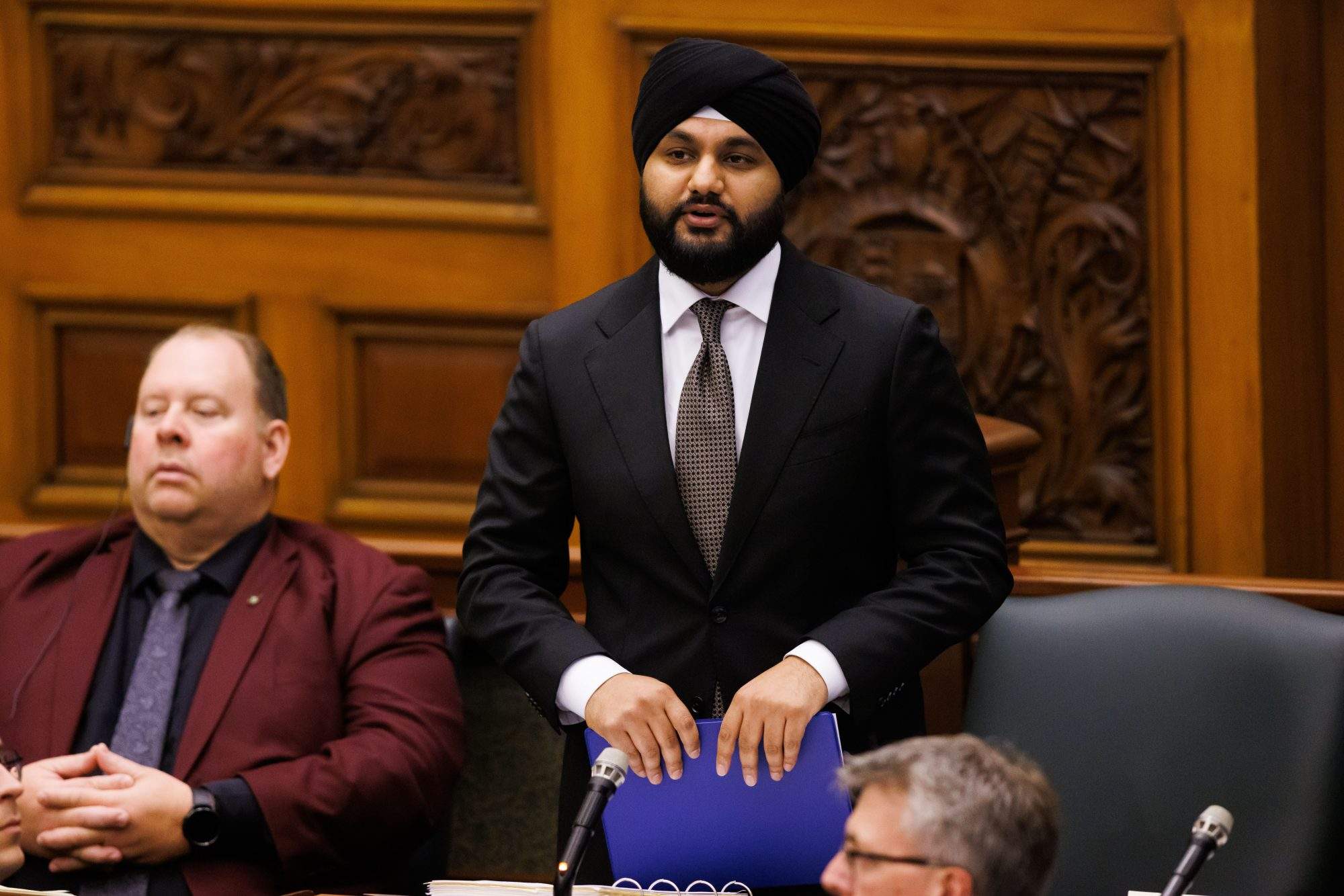
Elections Ontario closed its investigation into a Progressive Conservative Member of Provincial Parliament over taxpayer-funded newspaper advertisements without issuing fines, penalties, or public reprimands. The regulatory agency determined that the print ads, despite appearing during politically sensitive periods and heavily featuring partisan branding, complied with existing legislative boundaries regarding constituency communications. This outcome highlights a chronic, structural blind spot in Ontario’s election finance laws, where the line between legitimate constituent outreach and publicly subsidized campaign advertising remains blurred by design.
Watchdogs and opposition critics routinely flag these print buys. Yet the enforcement mechanism consistently hits a statutory wall.
To understand why these complaints rarely result in sanctions, one must look at the mechanics of the Election Finances Act and the parallel rules governing the Legislative Assembly of Ontario. The core issue is not whether a politician benefited politically from a newspaper spread. The legal question is narrowly confined to whether the advertisement explicitly solicited a vote, promoted a registered political party by its formal campaign apparatus, or violated specific blackout windows immediately preceding a writ drop.
The Architecture of the Constituency Loophole
Every sitting MPP receives an annual Members’ Global Budget funded directly by Ontario taxpayers. This allowance covers constituency office rent, staff salaries, travel, and communications. Within that communications envelope sits the discretionary power to purchase print space in local newspapers, print householders, and distribute mailers.
The rules governing this spending are overseen primarily by the Board of Internal Economy, a secretive, all-party committee of legislators that sets the administrative policies for the Assembly. Elections Ontario, by contrast, only gains clear jurisdiction when spending crosses into defined election advertising under the Election Finances Act.
That jurisdictional split is where accountability goes to die.
When a Progressive Conservative MPP—or a member from any caucus—buys a full-page ad in a community weekly, the layout almost always follows a predictable visual formula. There is a high-resolution headshot of the member. There is a prominent display of the party’s signature color palette, typically Tory blue. There is a list of government funding announcements framed as personal achievements, accompanied by a constituency office phone number at the bottom in smaller font.
To the average reader flipping through a local paper over morning coffee, it looks indistinguishable from a campaign flyer. To the regulators at Elections Ontario, however, the presence of a constituency office address and the absence of the phrase "Vote for" transforms the piece into an official legislative communication.
The Timing Problem
The friction intensifies during the months leading up to a fixed-date general election or a high-stakes by-election. Ontario law restricts government advertising during specific pre-election periods under the Government Advertising Act, which is reviewed by the Auditor General. However, individual MPP constituency budgets operate on a separate track.
Consider a hypothetical scenario that plays out across dozens of ridings every four years. Six months before an election campaign officially begins, a sitting MPP uses their taxpayer-funded office budget to run bi-weekly advertisements in local papers congratulating community groups, touting provincial infrastructure grants, and warning residents about opposition policies in coded, parliamentary language. Because the writ has not yet dropped, the strict spending caps of the campaign period do not apply. By the time the official campaign starts, the incumbent has already saturated the local media market using public funds, leaving challengers to raise private donations just to achieve basic name recognition.
How Elections Ontario Evaluates Complaints
When a citizen, rival riding association, or advocacy group files a formal complaint with the Chief Electoral Officer, the investigation follows a rigid, legalistic checklist. Investigators are not tasked with assessing the spirit of fairness in democratic competition. They are bound by the exact text of the statute.
First, examiners look at the source of funds. If the invoice was paid through the Legislative Assembly’s administrative account rather than a constituency association or party bank account, Elections Ontario immediately faces a jurisdictional hurdle. Misuse of Assembly funds is generally treated as an internal administrative matter for the Speaker and the Board of Internal Economy, not an electoral offense.
Second, investigators analyze the content for express advocacy. Under Canadian electoral jurisprudence, regulators are cautious about infringing on a representative's right and duty to communicate with the people they represent. Unless an advertisement crosses a high threshold into overt partisan campaigning—such as using party logos paid for by the party or directly attacking an opponent’s candidacy—the regulator will almost always defer to the MPP.
Third, the agency checks pre-writ blackout rules. Ontario has tightened rules around third-party advertisers and political parties in the year leading up to a fixed election date. Yet individual members retain wide latitude to maintain their public profile as sitting legislators.
When Elections Ontario closes a file like the one involving the Progressive Conservative MPP, the public rarely sees the underlying investigative reasoning. Unlike court rulings or Auditor General reports, closed compliance files at Elections Ontario are typically communicated via brief, standardized letters to the complainant. The public is left with a binary outcome—complaint dismissed—without the evidentiary record showing how close the ad came to crossing the line.
The Structural Incentives of Incumbency
It would be naive to view this as a quirk exclusive to the Progressive Conservatives. While the governing party naturally commands the largest caucus and therefore controls the greatest aggregate volume of constituency advertising dollars, the system persists because every party with sitting members benefits from it.
New Democrats, Liberals, and Greens who hold seats rely on the exact same Assembly rules to keep their names in front of voters between elections. When an opposition party files a complaint against a government MPP over newspaper ads, the political objective is often earned media—generating a local news story that accuses the incumbent of wasting tax dollars—rather than a genuine expectation that Elections Ontario will levy a fine.
Meanwhile, local newspapers across Ontario have grown increasingly dependent on this steady stream of public money. As private sector retail advertising has migrated to digital platforms, community weeklies and regional dailies rely heavily on government notices and MPP constituency ads to stay solvent. A single MPP buying a recurring quarter-page spot in a small-town paper can represent a meaningful fraction of that publication's monthly operating revenue.
This creates a quiet consensus among stakeholders:
- Incumbent politicians get risk-free, taxpayer-subsidized name recognition throughout their four-year term.
- Political parties preserve their private fundraising war chests for the actual 28-day campaign window.
- Local media outlets receive reliable, recession-proof print revenue from the Legislative Assembly.
- Regulators avoid messy constitutional battles over the limits of legislative free speech.
The only party disadvantaged by this arrangement is the non-incumbent challenger, who must raise every dollar under strict contribution limits while watching their opponent advertise on the public dime.
Why Legislative Reform Stalls
Fixing this gray area is straightforward on paper and nearly impossible in practice. To close the loophole, the Ontario Legislature would need to amend both the Election Finances Act and the internal standing orders of the Board of Internal Economy.
A genuine overhaul would require three specific measures. First, banning the use of partisan colors, personal branding slogans, and promotional photos in any communication paid for by the Legislative Assembly. Official constituency notices would be restricted to plain-text, standardized templates listing office hours, legislative services, and non-partisan public notices. Second, imposing a strict six-month freeze on all discretionary MPP print and digital advertising prior to any fixed-date election. Third, granting Elections Ontario explicit statutory authority to audit Assembly communications budgets and publicly release its investigative findings when complaints are dismissed.
None of these reforms will pass voluntarily because the people who would have to vote for them are the exact people who benefit from the status quo. Passing a law that strips incumbents of their primary mid-term communications advantage requires a level of legislative self-denial rarely seen at Queen's Park.
Until the statutory definitions change, filing complaints with Elections Ontario over an MPP's newspaper ads will continue to produce the exact same result: a months-long bureaucratic review, a quiet closure letter, and another stack of glossy, taxpayer-funded print spreads hitting driveways across the province every Thursday morning.


