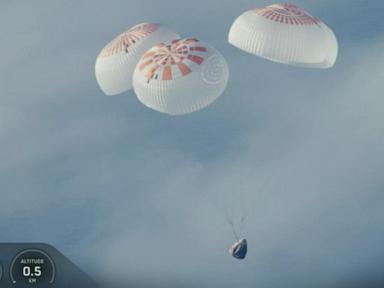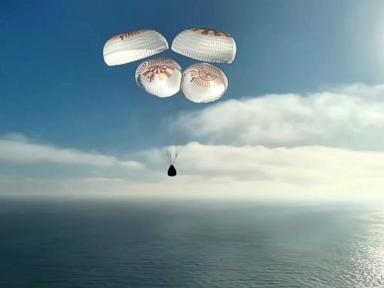
Four astronauts touched down on Earth following an extended eight-month orbital mission, capping off a flight duration that once belonged to the realm of speculative fiction but has now quietly mutated into standard operating procedure.
The descent itself was textbook, breaking through the atmosphere inside a scorched capsule before parachute deployment cushioned the impact. Yet the duration of their stay aboard the orbital outpost highlights a shifting baseline in crewed spaceflight. What used to be a strict six-month rotation window is stretching outward, driven by logistical constraints, vehicle certification delays, and the grueling realities of maintaining a permanent human presence in low-Earth orbit.
Extended stays sound heroic in press releases. On a physiological level, however, they represent a punishing endurance test against human biology.
The Physiological Cost of Prolonged Weightlessness
Gravity is not merely a convenience; it is an active architectural force that shapes human anatomy. Remove it for two-thirds of a year, and the body begins to systematically dismantle itself to save energy.
Bones decalcify at a rate that would alarm any terrestrial physician, leaching calcium into the bloodstream and leaving crew members vulnerable to early-onset osteoporosis. Muscles atrophy, particularly the postural stabilizers in the spine and legs, requiring intense, mandatory daily resistance training just to prevent catastrophic degradation. Fluid shifts upward toward the head, altering intracranial pressure and frequently degrading visual acuity through a condition known as spaceflight-associated neuro-ocular syndrome.
When these astronauts finally step back onto solid ground, their vestibular systems riot. Inner ear mechanisms that rely on gravitational cues are utterly disoriented. Walking straight becomes a conscious, exhausting cognitive task rather than an automatic physical reflex. The cardiovascular system, accustomed to pumping blood in a zero-resistance environment, struggles to maintain blood pressure against Earth's pull, leading to orthostatic intolerance and fainting spells upon re-entry.
The Logistics Behind the Extension
Why are missions stretching past the traditional half-year mark? The answer lies in the messy intersection of aerospace engineering, supply chains, and political scheduling.
Commercial crew rotation vehicles, designed to provide regular taxi service to and from orbit, face rigorous certification pathways. When developmental hurdles or minor component anomalies delay a fresh spacecraft, the current residents must simply stay put. The orbital station functions as a high-stakes ecosystem where replacement crews cannot arrive until the previous occupants depart, and the vehicles bringing them must meet absolute safety thresholds.
Furthermore, optimizing mission duration allows space agencies to maximize scientific output. Launching and landing crews incurs immense financial and operational overhead. Keeping a trained, experienced team on station longer amortizes that cost, granting researchers extended windows to run complex biological and material science experiments that require months of continuous observation.
Psychological Strain in an Artificial Isolation Chamber
Physical decay is only half the equation. The psychological toll of an eight-month isolation window demands remarkable mental fortitude.
Living in a tin can hundreds of miles above the planet, surrounded by the same small group of colleagues, exposes interpersonal friction points that would never surface in normal terrestrial environments. Communication lags with family members, the constant hum of life-support machinery, and the stark artificiality of the habitat conspire to wear down cognitive resilience. Crew members must operate under perpetual self-monitoring, managing stress and fatigue before it impacts mission safety.
The Future of Long-Duration Habitation
As commercial entities eye deep-space exploration and lunar bases, these extended orbital stints are serving as vital, unglamorous testbeds. A journey to Mars will take months just to reach the destination, followed by a long surface stay and a multi-month return trip. The human body must prove it can survive year-long increments of radiation exposure, bone loss, and psychological confinement without breaking down irreversibly.
The four astronauts who landed today will spend weeks in rehabilitation, relearning how to balance, walking through physical therapy sessions, and regenerating lost bone density. Their mission is over, but the data they generated with their own bodies will dictate how humanity pushes further into the dark.