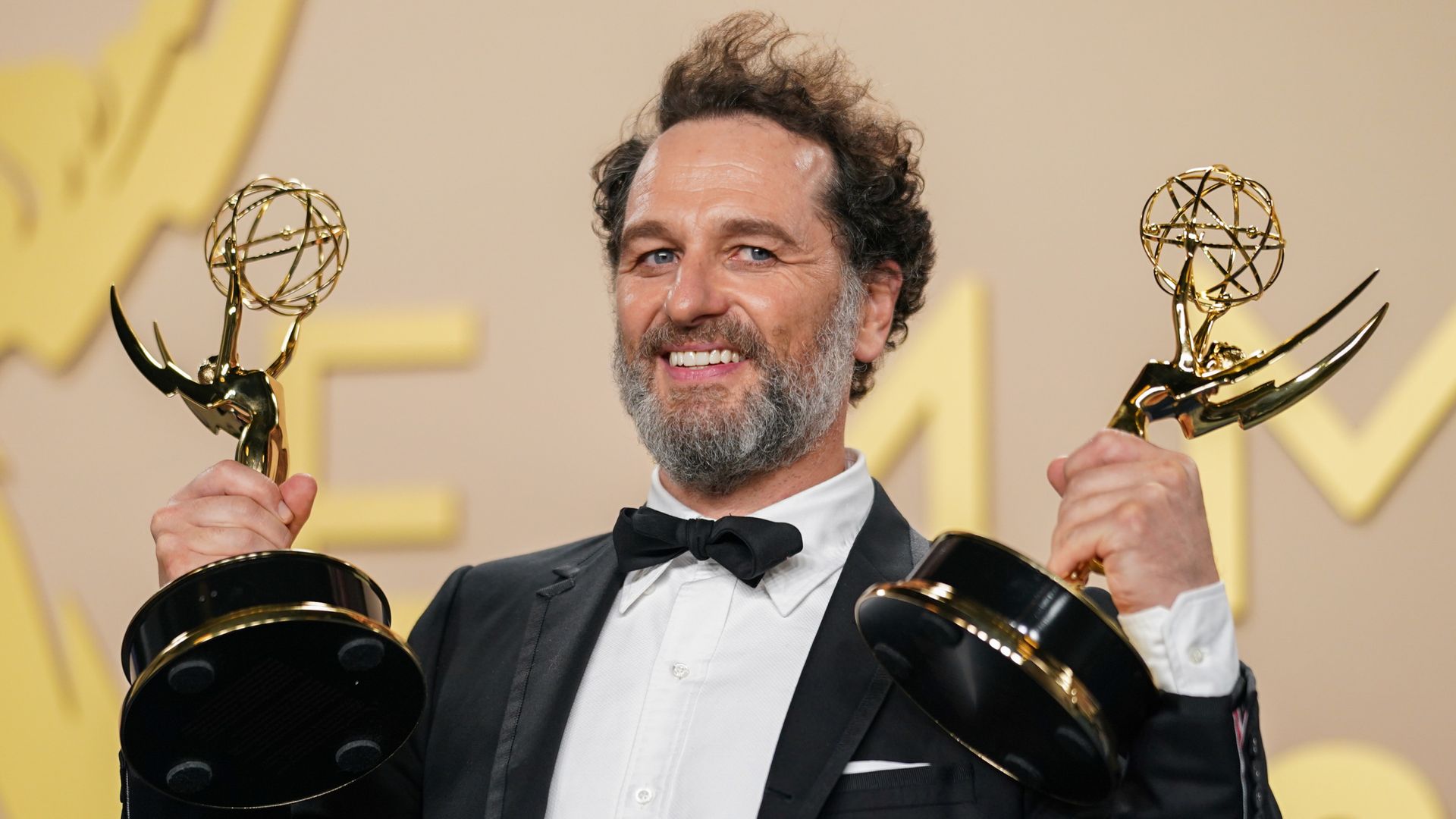
Celebrity red carpet coverage functions as an industrial manufacturing line for cultural capital, turning ephemeral presence into quantifiable long-term enterprise value. When the entertainment press publishes candid photography from major events like the 2026 Emmy Awards, consumers view these items as casual documentation of status and fashion. Behind this output lies a rigorous operational framework designed to optimize audience capture, algorithmic distribution, and personal brand equity. Understanding this visual archive requires moving past superficial style reviews and examining the systemic incentives governing modern award show media coverage.
The Attention Supply Chain and Marginal Yield
The economic viability of red carpet photography relies on capturing finite human attention spans within crowded digital spaces. Every photograph published from an event operates as a distinct unit of intellectual property with a measurable depreciation curve. The traditional press model relied on scarcity, where print magazines held a monopoly on exclusive imagery for weeks following an event. Today, the supply chain compresses that window into milliseconds.
Digital media outlets operate under a high-velocity production schedule where the marginal return on early publication approaches zero within hours of the event's conclusion. Outlets compete not on depth of analysis, but on speed of indexation. Candid photography bypasses the formal, highly stylized portrait studio by offering a simulated illusion of authenticity. This perceived unscripted nature drives higher engagement metrics across social platforms, directly influencing ad-revenue generation for the hosting publishers.
The media organizations covering these events face a distinct cost-benefit matrix. Sending a photography crew involves high logistical overhead, credentialing hurdles, and equipment amortization. The resulting asset must yield immediate high-frequency clicks and prolonged programmatic ad impressions to justify the capital expenditure. Consequently, the selection criteria for which candid photos get published are governed entirely by predictive engagement algorithms rather than artistic merit.
The Taxonomy of Candid Visual Assets
Not all red carpet imagery carries equal weight within the entertainment ecosystem. Editorial curation sorts visual assets into functional tiers, each serving a specific purpose within the talent's broader public relations strategy and the publisher's traffic acquisition goals.
The Micro-Interaction Capture
These frames isolate unscripted exchanges between peers, capturing moments of genuine surprise, tension, or camaraderie. From a data perspective, these assets yield the highest algorithmic sharing rates because they invite parasocial projection from the audience. Viewers decode micro-expressions to construct entire narratives regarding industry politics and personal dynamics.
The Architectural Garment Integration
Fashion on the red carpet functions as mobile corporate sponsorship. Candid photography catches garments in motion rather than static posing, revealing how fabrics interact with physical space and lighting conditions. This creates a friction point between the designer's structural intent and the unpredictable nature of live environments, generating secondary loops of critique and brand validation across niche digital communities.
The Environmental Transition
Images taken while talent moves between security checkpoints, vehicle drop-offs, and green rooms strip away the polished backdrop of step-and-repeat banners. These candid frames project accessibility and human vulnerability, softening the elite barrier inherent to major award ceremonies. Talent management teams strategically leak or approve these transitional assets to humanize public figures facing over-polished saturation.
The Brand Equity Valuation Matrix
For the individual actor, producer, or director, attendance at an event like the Emmys represents a high-stakes capital allocation exercise. Wardrobe selection, styling teams, publicity agents, and jewelry loans constitute significant upfront costs. The return on investment manifests as subsequent casting opportunities, endorsement contract renewals, and elevated baseline salary negotiations.
Candid photography acts as the primary vehicle for measuring this return. Public relations agencies utilize specialized media monitoring firms to track "earned media value," a metric attempting to quantify the financial equivalent of organic press coverage versus paid advertising. A candid shot featuring a clear view of a loaned luxury timepiece or haute couture gown translates directly into brand performance reports presented to corporate sponsors.
This dynamic creates an adversarial relationship between the desire for genuine spontaneity and the strict legalities of image rights. Talent agencies attempt to manufacture the appearance of candidness while retaining absolute control over the narrative framing. When a candid photo diverges from the approved narrative arc—such as capturing an awkward interaction or an unflattering physical angle—it introduces brand volatility that management teams must actively mitigate through counter-PR deployment.
Structural Bottlenecks in Modern Entertainment Journalism
The transition from print-dominated coverage to real-time digital syndication has altered the structural integrity of entertainment journalism. Several bottlenecks now define how visual culture is consumed and archived.
The hyper-acceleration of publishing schedules eliminates the editing phase where context and historical depth are added to visual reporting. Images are stripped of their operational context and recycled into algorithmic fuel designed purely for infinite scroll mechanisms. This creates an environment of visual inflation where the volume of imagery increases exponentially while its collective informational value diminishes.
Furthermore, platform centralization concentrates distribution channels into a handful of dominant social ecosystems. Media outlets no longer control the primary point of consumption; they lease their content to algorithms that favor sensationalism over analytical rigor. Candid photography from the Emmys thus becomes decoupled from the actual achievements being celebrated—the television art itself—and is instead weaponized as low-friction entertainment currency.
Strategic Outlook
The distribution of live-event visual archives will continue to evolve toward automated, hyper-targeted distribution models. As computer vision technologies and automated tagging become standard across editorial workflows, the curation of candid photography will transition from human intuition to predictive machine learning algorithms trained on historical engagement data.
Talent management operations will respond by integrating real-time image auditing tools to monitor unauthorized captures before they circulate broadly. The boundary between spontaneous documentation and calculated presentation will narrow further, rendering true serendipity on the red carpet an increasingly rare commercial anomaly. The resulting media landscape will reward extreme visual efficiency, leaving little room for unscripted human nuance within the modern entertainment apparatus.