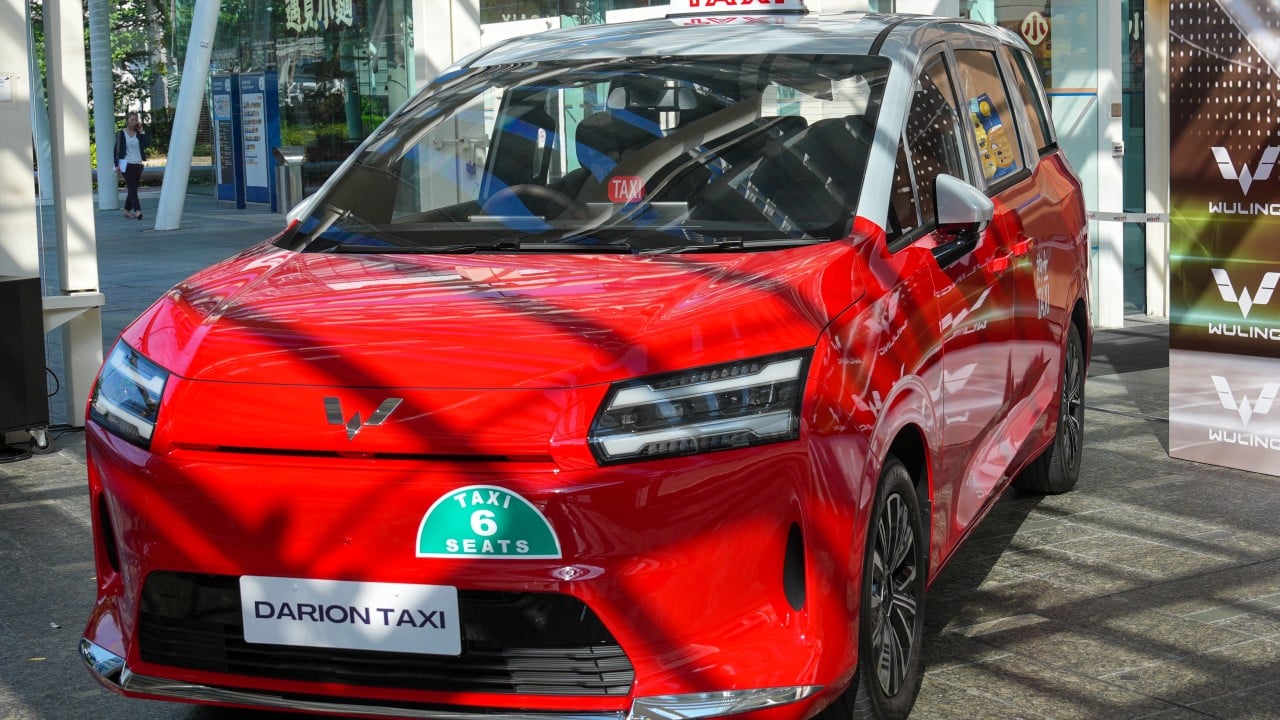
The deployment of a new electric taxi fleet in Hong Kong by a Mainland Chinese joint venture exposes the friction between capital-intensive green mobility mandates and the structural realities of high-density commercial transport. Market entry of this scale is rarely constrained by vehicle manufacturing capacity or battery chemistry alone. Instead, it is governed by a strict matrix of operational parameters: vehicle acquisition cost, charging infrastructure throughput, residual asset value, and driver opportunity cost. Deconstructing this initiative requires looking past the public relations surface of zero-emission adoption and examining the fundamental unit economics that will determine whether this fleet achieves commercial viability or suffers the attrition typical of previous alternative-fuel trials in the territory.
The Operational Mechanics of the Hong Kong Taxi Market
Hong Kong's taxi ecosystem operates under a distinct regulatory and structural regime. Approximately eighteen thousand licensed taxis complete hundreds of thousands of daily trips within a congested, vertical urban geography. For fleet operators and individual medallion owners, the business model rests on minimizing downtime and maximizing revenue per shift.
Internal combustion engine vehicles, predominantly Liquefied Petroleum Gas taxis, established a deep operational baseline over decades. Their dominance was not an accident of history but a function of refueling speed and capital efficiency. A traditional LPG taxi can refuel in under five minutes, maintaining high asset utilization rates across multi-driver shifts. Any electric vehicle replacement must negotiate this baseline.
The introduction of a Mainland Chinese joint venture introduces a new variable into this equation. By leveraging integrated supply chains from vehicle assembly to battery manufacturing, these joint ventures can compress upfront capital expenditures below Western or legacy Japanese alternatives. However, lower acquisition costs do not automatically solve the operational bottlenecks inherent to Hong Kong's street layout. Commercial vehicles in the territory frequently idle in dense traffic, operate in multi-shift configurations running up to twenty hours a day, and face severe spatial constraints for charging infrastructure installation.
The Cost Function of Fleet Electrification
Evaluating the commercial viability of this electric taxi initiative requires a precise examination of the total cost of ownership equation. The financial architecture rests on four distinct variables:
$$TCO = C_{cap} + C_{energy} + C_{maintenance} - V_{residual}$$
Capital expenditure forms the initial barrier. While imported electric vehicle platforms often carry a prohibitive price premium for commercial operators, Mainland joint ventures deploy vertically integrated supply chains to reduce initial unit costs. Yet, commercial vehicle financing in Hong Kong is conservative, requiring clear visibility into asset depreciation curves. Because battery degradation rates under high-cycle commercial use remain a variable, lenders often discount the residual value of electric taxis compared to their LPG counterparts.
Energy cost dynamics present a more complex trade-off. Electricity pricing for commercial fleets is generally lower per equivalent kilometer than retail LPG prices. However, the economic advantage of lower per-unit energy costs evaporates if the vehicle spends non-revenue hours stationary at a charging terminal. In a commercial transport model, time is the primary cost driver. A taxi earning revenue generates roughly twenty to thirty Hong Kong dollars per running kilometer; every minute spent waiting in a charging queue represents direct top-line erosion for the driver.
Maintenance expenditures theoretically favor electric platforms due to fewer moving parts, the absence of internal combustion engine overhauls, and regenerative braking reducing mechanical brake wear. Against this, high-frequency suspension wear caused by Hong Kong's variable road surfaces and heavy battery weight profiles introduces specific structural maintenance overheads that fleet managers must budget for.
Infrastructure Bottlenecks and Charging Topology
The core constraint facing any new electric taxi entrant in Hong Kong is not vehicle supply, but charging topology. The territory lacks the expansive, dedicated depot space common in mainland cities or European municipalities. Taxis in Hong Kong are largely owner-operated or managed in small-to-medium fleets where vehicles return to street parking or scattered overnight lots rather than centralized depots with high-capacity grid connections.
Fast-charging infrastructure is scarce relative to commercial vehicle density. Current public DC fast chargers are heavily contested by private electric passenger vehicles, logistics vans, and ride-hailing fleets. For an electric taxi to maintain parity with LPG refueling times, the joint venture must either secure exclusive, high-power charging corridors or deploy proprietary fast-charging hubs strategically located near major urban interchanges like Cross-Harbour Tunnel portals or airport feeder routes.
Without dedicated fast-charging infrastructure capable of delivering a 20 to 80 percent state-of-charge replenishment in fifteen to twenty minutes, drivers will face mandatory downtime during peak earning hours. This structural friction alters driver behavior, often leading to resistance against fleet adoption unless subsidized by operational incentives or guaranteed shift-subsidy models from the operating company.
Regulatory Alignment and Subsidy Dependence
Market penetration for alternative energy commercial vehicles in Hong Kong has historically correlated with government fiscal policy rather than pure organic market forces. The New Energy Transport Fund and various vehicle-replacement grant programs dictate the velocity of adoption.
The Mainland Chinese joint venture enters an environment where regulatory compliance demands lower emissions, yet the transition path lacks a fully matured ecosystem. Government policy has favored trials, but long-term scaling requires structural integration with urban planning—specifically regarding taxi stand electrification and priority charging zoning. If public subsidies phase out before the secondary market for used commercial electric vehicles matures, early fleet operators risk absorbing heavy asset write-downs.
Furthermore, driver acquisition and retention remain tightly bound to earnings predictability. Hong Kong's taxi driver demographic skews older, with entrenched operational habits optimized for rapid LPG refueling and minimal interaction with digital charging applications. Fleet operators must bridge this behavioral gap through intuitive user interfaces and operational training that minimizes the cognitive load of managing state-of-charge alongside route navigation.
Strategic Outlook for Fleet Scalability
The viability of this electric taxi deployment depends on resolving the tension between supply-chain cost advantages and local operational friction. Success will not be measured by initial vehicle launch numbers or press-release milestones, but by the utilization rate achieved across a full annual operational cycle.
Operators that rely purely on hardware subsidies and initial capital cost arbitrage will encounter severe scaling limits once vehicles enter multi-shift deployment. Achieving sustainable margins requires co-developing dedicated high-power charging infrastructure, implementing predictive battery health management systems to protect residual values, and structuring lease models that insulate drivers from the revenue volatility associated with charging downtime.
The trajectory of this joint venture will serve as a bellwether for the broader electrification of high-density urban commercial transport. If the model succeeds, it will demonstrate that vertically integrated Asian supply chains can overcome local infrastructure deficits through aggressive ecosystem control. If it stalls, it will underscore the reality that in commercial mobility, infrastructure velocity dictates market adoption long before vehicle manufacturing capability does.