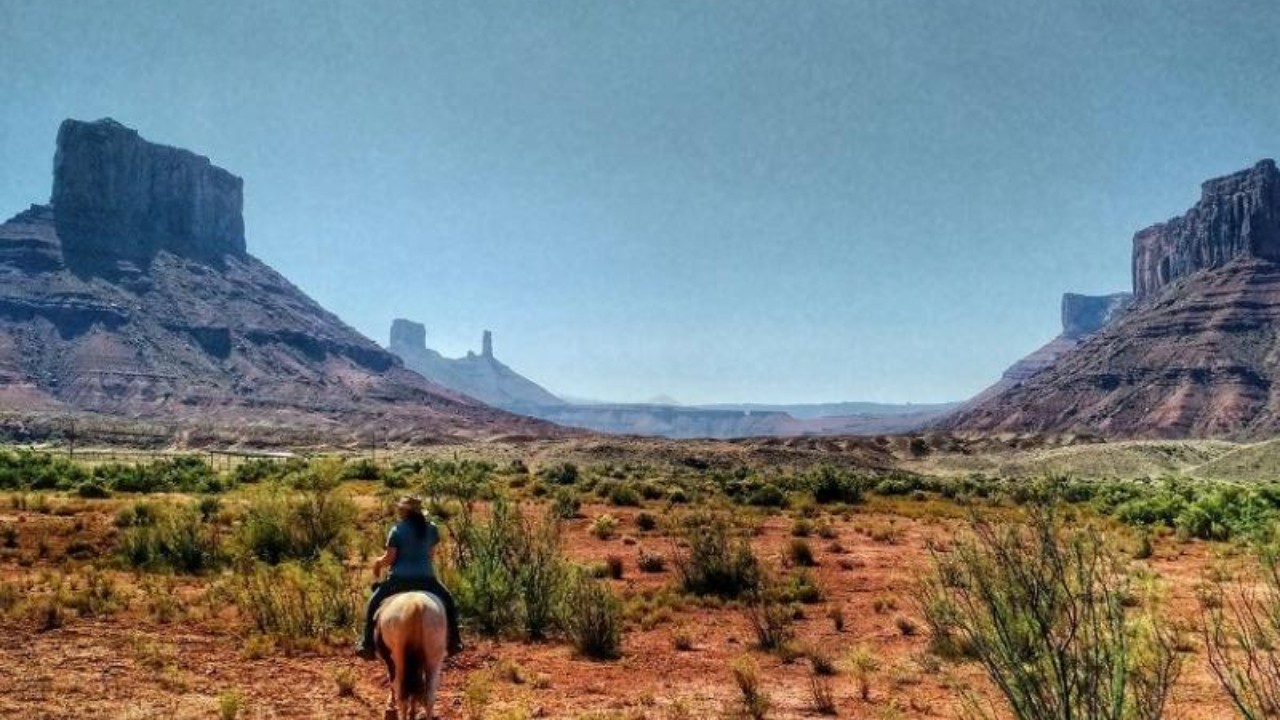
Public capital allocation toward conservation easements involves a direct transfer of wealth from taxpayers to private landowners in exchange for development rights restriction. When $2.8 million in municipal or state funding secures a 58-acre ranch in Utah, the transaction establishes a baseline case study for evaluating the efficiency of land-use preservation models. The core mechanism relies on perpetual deed restrictions that lower the property valuation by stripping away its highest and best use potential, primarily residential or commercial subdividing, while permitting traditional agricultural operations such as cattle grazing to continue.
Understanding the financial mechanics requires examining the valuation differential between unencumbered real estate and restricted real estate. Land value in the Intermountain West is rarely a function of its biological yield from cattle production; rather, it is a function of optionality for future real estate conversion. Grazing yields modest annual returns per acre, often measured in animal unit months, which pale in comparison to the capital appreciation realized through subdivision and infrastructure development. When a public entity or land trust acquires a conservation easement, it purchases this future option value. The financial outlay compensates the landowner for the permanent extinguishment of development rights, effectively freezing the property's legal footprint while leaving the operational asset in private hands.
The operational integration of cattle grazing within a publicly funded conservation framework creates a complex set of ecological and economic trade-offs. Proponents argue that maintaining cattle operations preserves open space, prevents the fragmentation of wildlife corridors, and sustains local agricultural economies. From an ecological perspective, however, continuous grazing introduces specific variables regarding soil compaction, riparian zone degradation, and native vegetation suppression. If the public investment aims to protect watershed integrity, biodiversity, or carbon sequestration capacity, the presence of livestock introduces an active management variable that requires strict monitoring parameters. Without explicit stocking rate caps, rotational grazing schedules, and riparian exclusion zones, public capital risks subsidizing an activity that degrades the very ecological assets the easement was designed to protect.
Analyzing the opportunity cost of this capital deployment reveals the structural limitations of perpetual conservation easements. A fixed expenditure of $2.8 million for 58 acres translates to approximately $48,275 per acre. In the context of Utah real estate markets, this reflects high-value sub-market positioning, typically found near rapidly expanding metropolitan fringes or recreational hubs where development pressure is acute. The fundamental question for capital allocators is whether purchasing development rights on high-cost acreage yields a higher conservation return on investment than alternative strategies, such as fee-simple acquisitions of larger, ecologically superior tracts in lower-cost regions, or the implementation of terminable ecosystem service contracts.
The transaction structure also introduces long-term monitoring and enforcement liabilities. A conservation easement is not a self-executing contract. The entity holding the easement assumes a perpetual monitoring obligation to ensure the landowner complies with the deed restrictions. This creates an ongoing administrative cost structure that is frequently capitalized inadequately at the time of the initial transaction. If the holding entity lacks the financial endowment or operational capacity to conduct annual physical inspections, review aerial imagery, and legally contest potential violations, the long-term integrity of the restriction degrades. The true cost of the preservation model must therefore include the net present value of perpetual monitoring and potential litigation expenses.
Evaluating the distributional impacts of these transactions highlights a tension between private asset appreciation and public amenity provision. While the public funds the easement, the underlying property remains privately owned, appreciating in value based on its restricted status combined with broader market trends for rural estates. The landowner retains exclusive possession, recreational access rights, and the ability to sell or pass down the property, albeit at a lower valuation multiple than an unrestricted parcel. The public secures visual open space and theoretical ecosystem protection, but typically receives no physical access or operational control. This asymmetry requires that the quantification of public benefits must strictly outweigh the financial outlay, a threshold that is difficult to prove without rigorous, longitudinal ecological accounting.
Scaling this model across regional land-use planning frameworks demands a shift from opportunistic parcel-by-parcel acquisition to systematic spatial prioritization. When funding decisions are driven by willing sellers rather than data-driven conservation blueprints, capital is allocated inefficiently based on who approaches the land trust rather than where intervention yields the maximum marginal ecological benefit. Resolving this inefficiency requires integrating GIS-based threat mapping, hydrological modeling, and wildlife migration tracking into the allocation calculus. Only by treating conservation capital as a scarce resource subject to strict portfolio optimization can public agencies ensure that investments in working landscapes yield measurable, long-term returns on investment.