The metal chair in an interrogation room has a specific, unforgiving kind of cold. It is the sort of cold that seeps through denim and reminds a person exactly where they are, and more importantly, what they left behind. For those who crossed borders a decade ago to join the black-flagged utopia of the Islamic State, that cold is now a permanent fixture of reality.
Recently, federal authorities made it clear that the door to redemption is not just locked; it is welded shut.
Environment Minister Tanya Plibersek, stepping into the media fray on behalf of a government hyper-vigilant about national security, issued a warning that was less of a political statement and more of a judicial promise. A second group of Australian citizens, trapped in the squalor of Syrian detention camps and linked to the collapsed caliphate, is attempting to find a pathway home.
The government’s response? The exact same consequences await them as those who came before. Total surveillance. Immediate arrest. The full, crushing weight of anti-terrorism laws.
To understand why a democratic nation is drawing such an uncompromising line in the sand, we have to look past the political podiums. We have to look at the human debris of a war that ended on the battlefield but refuses to die in the mind.
The Ghost in the Suburbs
Let us ground this abstract policy in a hypothetical reality, a composite of the cases currently sitting on the desks of the Australian Federal Police.
We will call him Zain.
Zain grew up in western Sydney. He played cricket, complained about the heat, and bought halal halal snack packs on Friday nights. Then, the internet found him. Or rather, he found a purpose online that his mundane suburban life could not provide. In 2015, he boarded a flight to Turkey, slipped across a porous border, and disappeared into the dust of Syria.
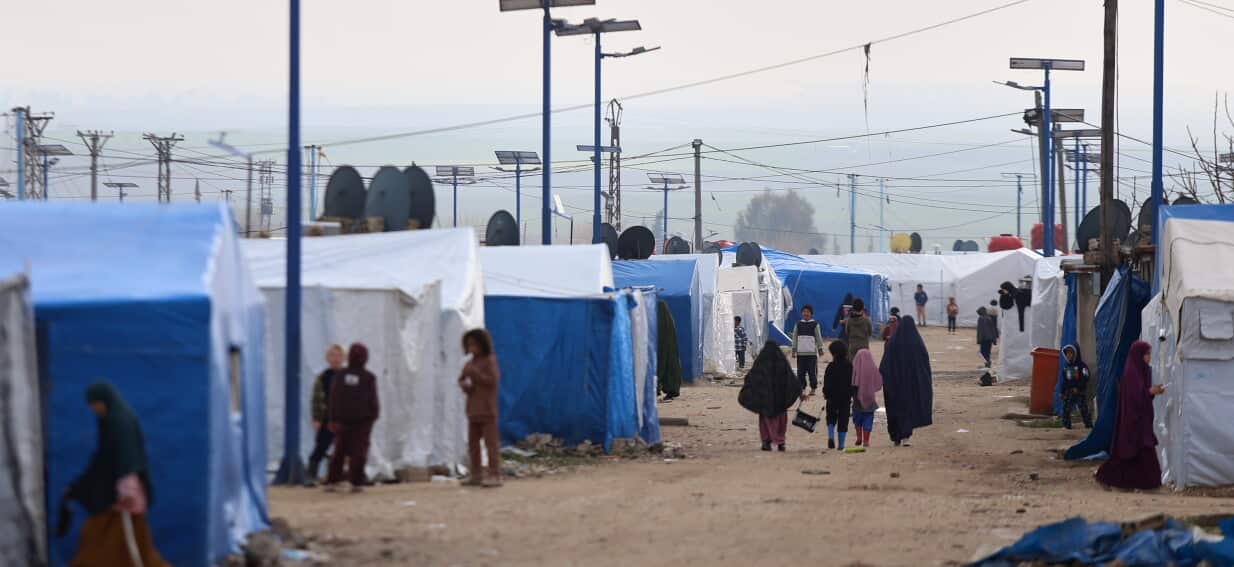
Ten years later, Zain is no longer the idealistic young man who wanted to build a righteous society. He is a survivor of a brutal siege, a man who watched his comrades die in the ruins of Baghouz. He has a wife he met under the shadow of the terror group, and three children who have known nothing but the canvas walls of the Al-Hawl refugee camp.
Now, consider the perspective of a neighbor living next door to the house Zain wants to return to.
You are watering your lawn. You see a moving truck. You know who is moving in. Do you see a reformed citizen who made a catastrophic mistake in his youth? Or do you see a ticking time bomb, radicalized by years of trauma and extremist ideology, waiting to bring the violence of the Middle East to a quiet Australian street?
This is the psychological knot the government is trying to untangle. The stakes are not ideological; they are intensely personal. They are about the collective peace of mind of a neighborhood.
The Legal Machinery of Containment
When Plibersek speaks of "same consequences," she is referencing a sophisticated, multi-layered legal trap designed to neutralize threat before it even touches tarmac.
Australia’s temporary exclusion orders and control orders are among the strictest in the democratic world. For anyone returning from former Islamic State territory, life does not resume where it left off. It changes entirely.
- Control Orders: Returning individuals can be forced to wear electronic tracking anklets, observe strict curfews, and submit to unrestricted searches of their electronic devices.
- Assistance Restrictions: They are often banned from communicating with specific people, utilizing encrypted messaging apps, or accessing certain areas of their own cities.
- The Threat of Prosecution: If evidence exists of direct participation in hostilities or foreign incursions, the journey ends not in a family home, but in a maximum-security prison cell.
The system is designed to turn a citizen into a ghost within their own country. It is a form of civic purgatory.
But the real problem lies elsewhere. It rests within the camps themselves, where thousands of women and children remain in a legal limbo that international observers describe as a breeding ground for the next generation of extremism.
The Arithmetic of Mercy versus Safety
Every government must balance a brutal equation. How much risk is an administration willing to accept in the name of humanitarian duty?
The first repatriation repatriation effort in late 2022 saw a small group of women and children brought back to Australia. It sparked fierce political debate. The opposition accused the government of compromising national security, while human rights lawyers argued that leaving Australian children in a war zone was a moral failure.
Now, a second wave is building pressure against the dam.
Imagine being the intelligence analyst tasked with assessing a thirty-year-old mother who spent her twenties inside the Islamic State. She claims she was coerced. She claims she was merely a housewife, trapped by a husband who took her passport.
How do you verify a lie told in a desert where the records have been burned to ash?
You cannot. You can only guess. And in the business of national security, a wrong guess costs lives. That uncertainty is why the political language remains so deliberately harsh. It is designed to reassure a nervous public that empathy will not override scrutiny.
The Unseen Scar
The debate often treats these returnees as political chess pieces, but the reality is flesh, blood, and profound trauma. The children who are part of these repatriation requests did not choose where they were born. They did not choose to spend their formative years watching public executions or shivering through Syrian winters.
If they return, they enter a society that views them with deep, abiding suspicion. Schoolyard whispers. Government surveillance vans parked down the street. The knowledge that their family name is forever flagged in a federal database.
The conflict has shifted from the open desert to the quiet arena of social reintegration. It is a slow, agonizing process of de-radicalization that takes years, with no guarantee of success.
The sun sets over Canberra, and the politicians pack their briefcases, leaving behind transcripts of warnings and promises of border integrity. But thousands of miles away, in a tents packed tight against the wind, the people who once thought they could destroy the world are waiting to see if their home country will ever let them back inside.
The chair in the room remains cold. The state is waiting. The law is ready. And for those seeking a second chance, the price of admission back into the ordinary world may be higher than they can afford to pay.