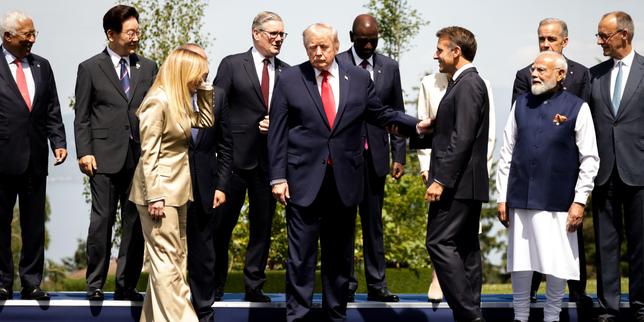
World leaders at the G7 summit in Evian have issued their customary call for a "strong and coordinated response" to contain the latest Ebola outbreak. It is a script we have read many times before. A lethal virus emerges, panic grips Western capitals, and pledges of solidarity flow from lakeside resorts. But behind the diplomatic press releases lies a systemic failure. The current international strategy for containing Ebola relies on a reactive model that prioritizes political optics over frontline execution, leaving vulnerable populations to bear the brunt of delayed funding and bureaucratic friction.
To understand why these summits rarely yield immediate results, one must look at the mechanics of global health financing.
The Anatomy of a Delayed Response
When an outbreak occurs, the window to contain it is narrow. Contact tracing, isolation units, and ring vaccination must happen within days, not weeks. Yet, the financial pipelines controlled by the G7 are notoriously sluggish.
The money pledged at high-level summits does not exist as a liquid reserve ready for deployment. It represents commitments that must wind through legislative approvals, ministerial sign-offs, and administrative assessments. By the time capital reaches field hospitals, the virus has often crossed provincial or national borders.
[Outbreak Detected] -> [G7 Political Pledges] -> [Bureaucratic Approval] -> [Delayed Field Funding]
This structural delay creates a dangerous reliance on emergency reassitances. Organizations like Médecins Sans Frontières (Doctors Without Borders) frequently arrive on the scene with limited resources long before official bilateral aid materializes. The G7's rhetoric implies a unified command structure. In reality, the response is a fragmented network of non-governmental organizations, local health ministries, and international bodies competing for the same pool of delayed funding.
The Breakdown of Local Trust
Top-down international interventions often fail to account for the social fabric of the affected regions. Sending foreign medical teams in biohazard suits into rural communities without establishing deep local partnerships breeds suspicion.
During previous outbreaks in West Africa and the Democratic Republic of Congo, community resistance became a major obstacle to containment. When local populations see armored vehicles and militarized quarantine zones instead of community-led education and native healthcare workers, cooperation vanishes. People hide their sick. Safe burial practices are ignored in secret. The epidemic spreads faster.
True coordination requires humility. It means funding local leadership and utilizing community influencers rather than relying solely on Western experts flown in for a few weeks. The G7 routinely overlooks this reality because investing in long-term local healthcare infrastructure lacks the immediate political capital of a dramatic emergency response announcement.
The Vaccine Distribution Monopoly
We now possess highly effective Ebola vaccines, a major scientific triumph. However, possession does not equal protection. The distribution of these medical tools reveals a deep geopolitical divide.
Stockpiles of the Ervebo vaccine are strictly controlled. The International Coordinating Group (ICG) on Vaccine Provision manages the global emergency supply, but the manufacturing capacity remains concentrated in a handful of wealthy nations. When a crisis hits, the allocation process becomes highly politicized.
Supply Chain Chokepoints
The logistics of an Ebola vaccination campaign are a nightmare. The vaccines require an ultra-cold chain, meaning they must be stored at temperatures between -60°C and -80°C until deployment.
Imagine attempting to maintain those temperatures in a tropical climate with unreliable electricity and damaged roads. It requires specialized mobile freezers, generators, and a constant supply of fuel. When the G7 promises millions of doses, they rarely mention that the infrastructure to deliver those doses to the equator is severely lacking. A vial of vaccine sitting in a capital city airport because there is no refrigerated truck to move it is entirely useless.
- Temperature Requirements: -60°C to -80°C
- Infrastructure Needs: Continuous power, specialized freezers, secure transport
- Current Status: Highly centralized in urban hubs, scarce in rural zones
Beyond the Evian Communiqué
The rhetoric out of Evian suggests that a sudden burst of political will can extinguish a viral firestorm. This is an illusion. Outbreaks are the direct consequence of broken, underfunded daily healthcare systems.
When a clinic lacks basic personal protective equipment, clean water, and gloves, a single undiagnosed case of Ebola can turn the facility into a super-spreader site. If the G7 genuinely wants to prevent the next global health crisis, the focus must shift from reactive emergency funds to sustained, unglamorous investment in primary care.
The current model is unsustainable. Western nations cannot keep treating global health as a series of isolated fires to be put out with hasty press conferences and back-dated checks. The virus mutates, moves, and exploits every single gap we leave open through bureaucratic neglect.
The test of the Evian summit is not the eloquence of its joint statement. The true metric is the speed at which cold-chain freezers, protective gear, and direct financial control are handed over to the doctors and nurses already standing on the frontlines. Everything else is just noise.