The sea at La Guaira usually tells you everything you need to know about the day ahead. For generations, the fishermen along this stretch of the Venezuelan coast have looked to the Caribbean waters to read the weather, the catch, and the rhythm of their lives. But no one looks at the sea to find out if the ground beneath their feet is about to tear itself apart.
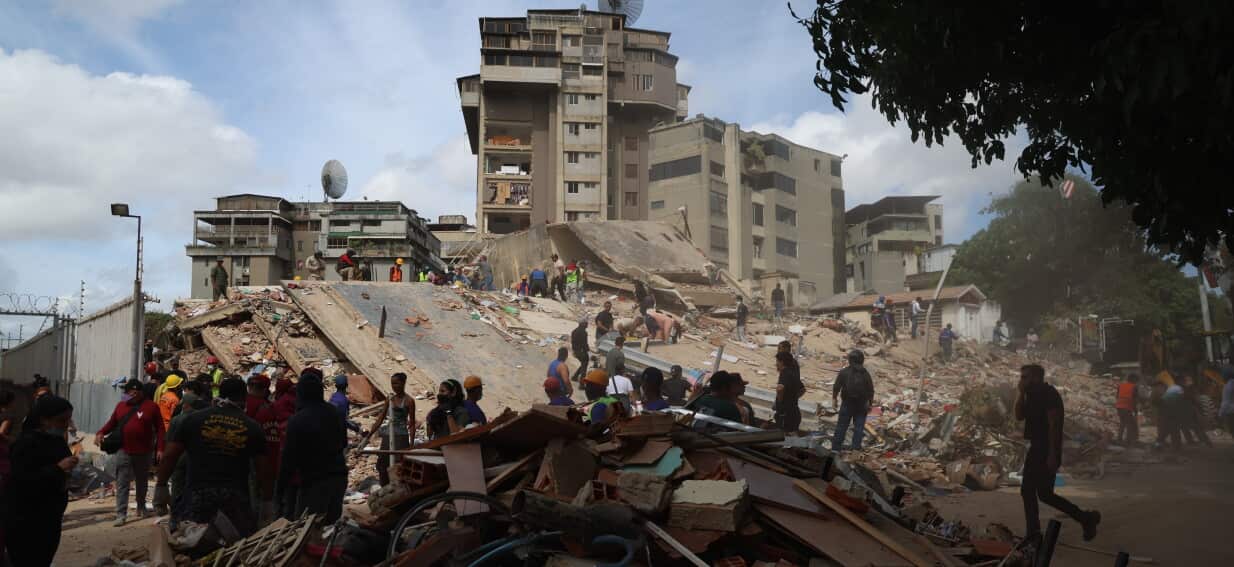
When the first earthquake struck, it was a sudden, violent jolt that disrupted the afternoon hum of the port city. Concrete groaned. Windows shattered. Dust rose in choking plumes from the hillsides where homes cling tightly to the steep terrain. For a few terrifying seconds, time froze. Then came the second one. The twin quakes, striking in rapid succession, did not just rattle the infrastructure of a vital coastal hub; they fundamentally altered the landscape, leaving a scar that is visible even from the edge of space. Discover more on a connected issue: this related article.
To understand what happened in La Guaira, you can look at the cold data. You can read the seismology reports detailing the magnitudes and the fault lines. But the true story of a disaster is never found in the numbers alone. It is found in the stark, before-and-after reality captured by the silent witnesses orbiting miles above our heads.
The View from 300 Miles Up
Before the disaster, satellite imagery of La Guaira showed a vibrant, dense tapestry of human activity. The port was a chaotic grid of colorful shipping containers. Roads snaked tightly between the shoreline and the mountains. Neighborhoods like Maiquetía and Caraballeda were tightly packed clusters of rooftops, interspersed with the occasional green patch of a courtyard or a soccer field. More analysis by TIME highlights similar perspectives on this issue.
Then the earth moved.
When you look at the satellite images captured just hours after the twin quakes, the changes are chillingly precise. It is like looking at a spot-the-difference puzzle where the stakes are life and death. Where a row of buildings once stood along a hillside, there is now a jagged brown gash of exposed earth. A landslide, triggered by the double shockwaves, swept down the slope, swallowing structures whole and burying the road below under tons of debris.
At the port, the neat geometry of the shipping docks is visibly disrupted. The alignment of the piers looks subtly warped, a testament to the immense lateral forces that pushed against the coastline. In the residential sectors, the uniform gray and red of the rooftops is punctuated by bright blue squares—tarp patches hastily erected by survivors to shield what remains of their belongings from the elements.
A Tale of Two Tremors
Why did this hit La Guaira so hard? The answer lies in the cruel mechanics of a twin earthquake.
Think of a building like a boxer. The first quake is a heavy blow. It might not knock the building down, but it compromises its stance. It cracks the foundational concrete, weakens the internal rebar, and stresses the joints. The structure is left dazed, holding on by a thread.
Then, before the dust can even settle, the second blow lands.
This second tremor forces an already compromised structure to absorb another massive wave of energy. Walls that managed to hold together during the initial shock simply disintegrate. Hillsides that were loosened and destabilized by the first vibration lose all cohesion during the second, cascading downward in a torrent of mud and rock. This cumulative trauma is what makes consecutive seismic events so devastatingly destructive.
The Human Element in the Pixels
Every altered pixel in those satellite frames represents a shifted reality for someone on the ground.
Consider a hypothetical resident named Alejandro. He has spent his entire life in a small house overlooking the harbor. When the first tremor hit, he ran to the doorway, watching his kitchen shelves empty onto the floor. The house held. He thought the worst was over. He stepped outside to check on his neighbors, and that was when the second shock threw him to the ground. When he stood up, the retaining wall that had protected his street for forty years was gone, replaced by a steep drop-off into a pile of rubble.
From space, Alejandro’s ruined retaining wall looks like a tiny alteration in a gray line. On the ground, it means his neighborhood is now inaccessible to emergency vehicles. It means the water lines are severed. It means the place he called home is no longer safe to inhabit.
The data captured by these satellites does more than just document destruction; it guides the recovery. Emergency responders use these exact before-and-after comparisons to map out the safest routes into devastated areas. They can see which bridges are still standing, which roads are blocked by landslides, and where the highest concentration of structural failure has occurred. It is a macro-level tool used to solve micro-level crises.
The scars on the coastline of La Guaira will remain visible for years to come. The earth eventually stops moving, the dust settles, and the sea returns to its calm, predictable rhythm. But the images captured from above serve as a permanent reminder of the fragile relationship between the cities we build and the volatile ground we build them on.