The morning air in Kathmandu did not taste like smoke. It tasted like pulverized bone.
When the earth tore open, it did not do so with a dramatic roar that lets you brace your muscles. It arrived as a violent, sickening roll, like being inside a ship tossed upon a boiling sea of concrete and slate. Houses that had stood for generations—built of heavy brick and mud mortar, designed to withstand monsoon rains but utterly defenseless against tectonic fury—pancaked in seconds.
By the time the tremors finally subsided, the official tally of the dead had already crossed one thousand. But numbers are a comfort. Numbers let politicians in distant capitals measure tragedy in neat columns, as if lives were rows on a spreadsheet that could be balanced with enough international aid and a few cargo planes.
They are wrong.
Ask Ram, a hypothetical rescue worker whose calloused hands and hollow eyes mirror the hundreds of real volunteers digging through the ruins of the Kathmandu Valley right now. Ram is not thinking about statistics. He is thinking about the microscopic particles clogging his throat, the oppressive humidity of a Himalayan spring, and the unmistakable, heavy scent that has begun to drift down narrow alleyways where doorways used to be.
The scent of decay.
It is a smell that changes a city overnight. It transforms a place of morning prayers, ringing temple bells, and the smell of roasting spices into a vast, open-air tomb. In the first twenty-four hours, hope is loud. People claw at slabs of concrete with bare hands, tearing their fingernails to bloody strips, fueled by the desperate hope of hearing a child’s cry or a muffled tap against a beam. By hour seventy-two, the volume drops. The frantic scraping of metal on stone gives way to a heavier, more mechanical silence.
Heavy machinery arrives. And with it, the dread.
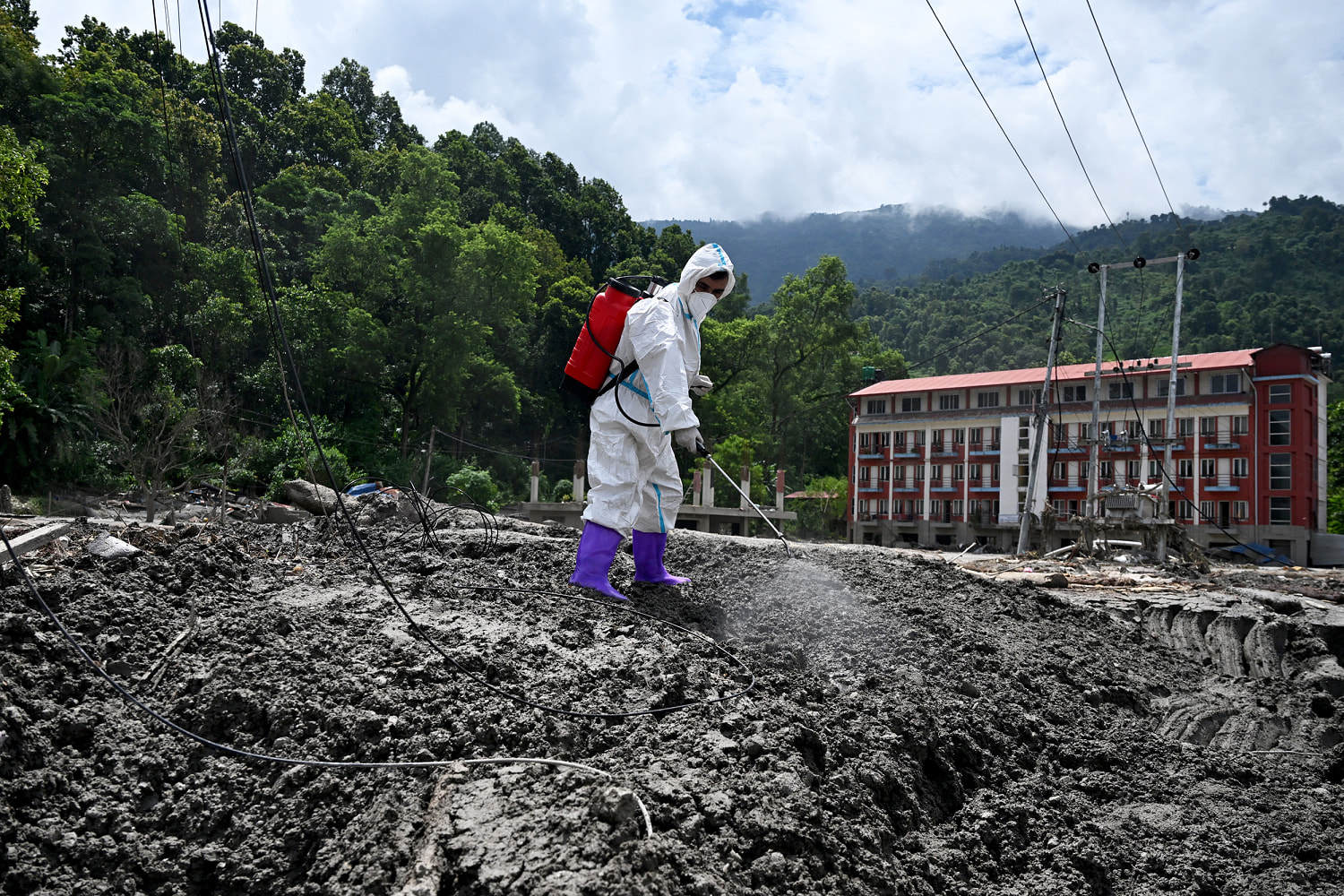
Consider the physics of disaster response in a landscape carved by mountains. Nepal is a country of staggering beauty, but that very geography becomes an insurmountable wall when disaster strikes. Remote mountain villages in districts like Gorkha and Sindhupalchowk are cut off not just by miles, but by massive landslides that have choked the rivers and swallowed entire switchback roads.
Helicopters are the only lifeline, buzzing like giant dragonflies over jagged peaks, but they cannot carry everything. They cannot carry enough body bags. They cannot carry enough clean water to stave off the cholera outbreaks that inevitably follow a catastrophe of this magnitude.
Back in the capital, the hospitals are spilling onto the lawns. Surgeons operate under makeshift tents made of blue plastic tarps while aftershocks—stubborn, terrifying ghosts of the initial rupture—send tremors through the grass, forcing doctors to pause mid-incision, waiting to see if the ground will open beneath their feet.
This is the hidden cost of the earthquake. It is not merely the lives snuffed out in the initial ten-second collapse. It is the slow, grinding erosion of a community's safety. It is the orphaned children wandering through tent cities set up in municipal parks, clutching small bundles of clothing, staring blankly at helicopters they do not understand. It is the farmers who survived the shaking only to realize their terraced fields—the work of their ancestors, carved laboriously into the hillsides—have slid away into the gorges below, taking their future harvest with them.
We like to think of humanity as resilient. We use words like recovery and rebuilding as if they are inevitable destinations, like trains pulling into a station. But resilience is not an automatic setting. It is manufactured out of sweat, grief, and an ungodly amount of time. It requires people to wake up in a tent with nothing left of their ancestral home except a broken clay water jug, and decide to plant a seed anyway.
The international community sends checks. Cargo pallets drop from the bellies of military transports. Tents go up. Rations are distributed. These things matter. They are the scaffolding of survival.
Yet, as the dust finally settles over the ruins of Kathmandu and the true, staggering scale of the loss begins to sink into the national consciousness, the real work remains untouched by foreign hands. It belongs entirely to the survivors. It belongs to those who must walk through the rubble of what used to be their lives, breathe in the heavy air of memory and loss, and find a way to carry the dead with them into a tomorrow they never asked to see.
The earth is quiet now. But the silence is heavy with everything it took.