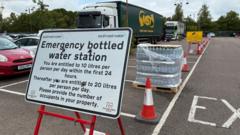
The handle on the kitchen tap moves with a loose, mocking freedom. There is no resistance. No shudder in the copper pipes behind the plaster. Just a hollow, echoing clack as the lever hits the stop, followed by total silence.
For about 1,200 properties spread across the affected district, this silence has become the baseline soundtrack of daily existence.
Water misery is a sterile phrase. It sounds like a bureaucratic note scribbled on a clipboard during a Tuesday morning council meeting. It smells like damp paper. It feels like an abstraction until you are the one standing in a sunlit kitchen at six in the morning, staring at a row of empty plastic milk jugs, wondering if the supply truck has made it down your gravel road yet.
Let us be precise about the numbers. Twelve hundred properties means roughly three thousand individual human beings waking up to a fundamental disruption of the modern social contract. When you turn a knob and nothing happens, the invisible infrastructure that holds our lives together snaps. We forget that civilization is largely a plumbing project. Underneath the asphalt, beneath the manicured lawns and the neighborhood gossip, runs a delicate web of pressure and gravity. When that web tears, the modern world dissolves instantly into the seventeenth century.
Consider Arthur.
Arthur is not a real historical person, but he is every resident on the far side of the ridge who spent the weekend hauling two-gallon containers from the back of a municipal flatbed. Arthur is seventy-four. His hands ache when the temperature drops, which makes carrying fifty pounds of liquid relief across an icy driveway feel less like a chore and more like an endurance trial. He has lived in the same brick bungalow for forty years. He remembers when the water pressure used to be so high it would blast the dried mud off his boots in a single heartbeat.
Now, he watches the weather reports with a quiet, superstitious dread.
The trouble did not arrive with a dramatic explosion. There was no Hollywood geyser bursting through the downtown asphalt, no cinematic disaster movie moment. It arrived the way these things always do: as a drop in pressure, a strange sulfurous hiccup in the lines, and then nothing. Just the dry wheeze of air trapped in the main distribution pipes.
Utility crews work beneath yellow halogen lights through the damp hours of midnight. They dig trenches in the red clay, their breath pluming in the cold air, swearing softly at rusted gate valves and split iron mains that were installed back when Eisenhower was in office. They are skilled people, mechanics of the underground, but they are fighting an uphill battle against a clock that moves too fast for aging infrastructure. Every patched leak seems to reveal another hairline fracture waiting ten feet down the line.
The human cost of this delay is measured in small, grinding indignities.
It is the mother who has to boil bottled water on a camp stove to sterilize her infant's bottles before dawn. It is the small diner down on the corner that had to lock its doors by noon because the health inspector does not care why the taps are dry, only that they are. It is the quiet humiliation of standing in line behind your neighbors, trading weary smiles and comparing notes on whose storage tank is holding out the longest.
We talk about infrastructure investments in terms of millions of dollars, bond measures, and municipal budgets. These are the defensive shields politicians use to keep reality at arm's length. But the true currency of a broken water main is human time. It is hours stolen from sleep, from work, from peace of mind, spent hauling buckets and rationing the most basic element of survival.
Water is heavy. Eight pounds a gallon. When you are forced to carry your daily life one armload at a time, you learn the exact weight of neglect.
Out on the edge of town, the yellow signs warning of road work flutter in the wind. The backhoes idle in the red mud, waiting for specialized replacement fittings that are sitting in a freight yard two states away. The sun climbs higher, baking the fresh dirt of the excavation sites. Inside the houses, the kettles sit dry on the burners, waiting for a pressure that cannot return until the last bolt is turned and the main valves are cracked open.
Arthur walks out to his front porch, shading his eyes against the midday glare. Down the road, the relief truck is turning the corner, its tires crunching on the gravel, bringing another hundred gallons of patience in plastic jugs.