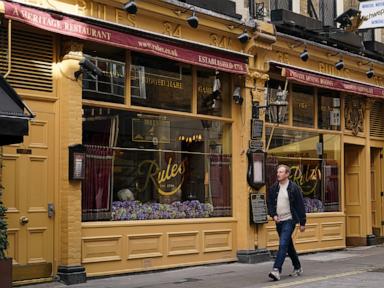
Handing over the building that houses London's oldest restaurant to a conservation charity sounds like a fairy tale. Philanthropy meets history. Everybody claps.
Except the math rarely works. And the incentives get crooked fast.
I have spent years watching heritage real estate deals across Europe and North America get wrapped in noble intentions and then quietly bleed out. Founders hand over iconic bricks to charities expecting eternal stewardship. Instead, they often trade commercial agility for bureaucratic paralysis, rising maintenance bills, and a slow drift away from the very culture that made the property famous in the first place.
The lazy consensus around a donation like this is predictable. A wealthy owner or estate does something generous with a storied building, a conservation charity gains a flagship asset, and the public assumes the structure and its history are now safe forever.
That assumption is lazy. Worse, it is dangerous.
Buildings do not preserve themselves. Restaurants do not survive on nostalgia alone. And charities are not magic shields against structural decay, shifting foot traffic, or commercial reality.
The Myth of "Safe in Charity Hands"
When people hear that a historic building has been donated to a conservation charity, they picture white-gloved historians gently brushing dust off oak beams while money flows effortlessly from grateful patrons.
Real life looks a lot more like arguing with contractors over damp timber while a commercial tenant wonders why the roof is leaking during dinner service.
To understand why this model is so often misunderstood, we need to separate two things people casually lump together: architectural conservation and commercial hospitality viability. Architectural conservation focuses on protecting historic fabric, materials, and character—often under strict listing rules and heritage standards. Commercial hospitality viability is about whether a kitchen, dining room, and cellar can actually function, pass modern safety and hygiene expectations, turn a profit, and pay rent without going bust.
A building can be lovingly conserved and still become a terrible place to run a restaurant. Conversely, a restaurant can be wildly successful while subtle maintenance shortcuts slowly eat away at centuries-old structure.
When a property moves into a conservation charity's portfolio, the charity's mission centers on preservation, public benefit, and long-term stewardship. That sounds great on a press release. Yet charities operate under constraints that commercial landlords do not share. Fundraising cycles fluctuate. Grant priorities shift. Boards turn over. A building that looks like a crown jewel on day one can quickly become a heavy, illiquid liability if major structural work hits at the wrong moment.
I have seen heritage properties sit half-used or bogged down in endless compliance reviews because nobody had the liquid cash to fix unglamorous problems like drainage, wiring, or load-bearing timbers. Donors love giving away trophy assets. Charities love announcing trophy acquisitions. Nobody loves paying for the twentieth-year repointing bill when there is no ribbon-cutting ceremony attached to it.
Why People Ask the Wrong Questions About Historic Venues
Whenever a story breaks about a centuries-old restaurant building changing hands to a charity, the public asks the same tired questions.
"Does this mean the restaurant is saved forever?"
No. And asking that question misses how restaurants actually survive.
A building is not a business. A historic dining room can keep its beams, its floorboards, and its plaque on the wall while the kitchen underneath changes hands, shifts menus, or struggles to keep margins alive in an era of high labor, energy, and food costs. Hospitality is brutal even in brand-new buildings with modern extraction systems and straightforward layouts. Inside an ancient structure, every renovation costs more, takes longer, and comes with surprises behind the plaster.
Transferring ownership of the walls does not hand out immunity from inflation, supply shocks, or changing dining habits. If the tenant cannot make the numbers work, a prestigious landlord will not magically make pork belly cheaper or staffing easier.
"Isn't a charity better than a profit-hungry landlord?"
Not automatically. Sometimes a sharp commercial landlord with deep pockets and a vested interest in keeping a prime site thriving is far better equipped to fund urgent repairs quickly than an under-resourced nonprofit waiting on a grant committee.
Profit gets treated like a dirty word in heritage circles, which is backwards. Steady commercial revenue is often what pays for upkeep year after year without begging strangers for bailouts. When you strip commercial urgency out of real estate management, you sometimes replace greed with inertia. Inertia is slower, quieter, and often just as destructive to old buildings.
"Won't this protect the history better than private ownership?"
History is not just bricks. It is living use.
Think about what makes London's oldest restaurant interesting in the first place. It is not merely a museum piece behind a velvet rope; it is a place where people have eaten, argued, celebrated, and passed through for generations. A building that gets over-sanitized into a museum loses the pulse that gave it meaning. A building that gets under-funded rots from the inside out.
True protection requires balance: enough respect for the past that you do not rip out what matters, and enough practicality for the present that the space stays alive, safe, and relevant.
What Heavy Hitters in Heritage and Economics Actually Tell Us
Serious thinkers in urban economics and historic preservation have been pointing out these tensions for decades.
Jane Jacobs warned us in The Death and Life of Great American Cities that cities need a mix of old and new buildings—and crucially, that old buildings only play their vital role if they remain economically workable rather than turning into expensive monuments or abandoned shells. When historic spaces become too rigid or too costly to operate normally, neighborhoods lose the very texture that makes them compelling.
Economist Tyler Cowen has similarly highlighted the hard trade-offs behind preservation: saving everything, or freezing things in amber, carries steep opportunity costs and often runs headfirst into economic reality. Preservation is never free; every choice to lock a building into a specific regime shapes who can use it, how it adapts, and who pays when things break.
In the UK heritage sector itself, organizations like Historic England have long emphasized practical stewardship, maintenance, and viable ongoing use as essential to keeping listed buildings in good condition. A building sitting idle or financially starved is in far worse shape than one actively maintained through a sound operating model.
None of this means conservation charities are villains. Many do vital work rescuing buildings nobody else will touch. The mistake is treating charity ownership as an automatic cure-all rather than a high-wire act with very specific failure modes.
A Thought Experiment: Two Paths for an Ancient Dining Room
Imagine a scenario where a 300-year-old London building housing a famous restaurant is handed over to a well-meaning conservation charity with plenty of prestige and modest liquid reserves.
In Scenario A, the charity treats the asset like a sacred relic. Every minor repair triggers a long committee review. Rent is set low to keep a beloved local operator going, which feels generous on paper until a major roof or foundation issue arrives. Suddenly the charity has to launch an emergency appeal, delay work, or restrict how the space is used to protect the fabric. The building survives, technically, yet feels increasingly stiff, costly, and fragile.
In Scenario B, the charity runs the asset with hard-nosed commercial discipline paired with strict conservation standards. Ring-fenced maintenance reserves are built from day one. Lease terms clearly spell out who pays for structural work versus fit-out upgrades, and commercial use is structured to generate predictable funds for long-term care. The romance is lower; the survival odds are much higher.
Most public commentary assumes Scenario A happens automatically because the motives are pure. Motives do not stop water ingress. Governance and cash flow do.
Where My Contrarian View Can Go Wrong
If I push this skepticism too far, I can miss real advantages that charity ownership genuinely brings.
A dedicated conservation charity can take a multi-generational view that a private owner—facing inheritance splits, debt refinancing, or a sudden urge to cash out—simply will not take. Charities are often better positioned to resist short-term temptations to gut character for maximum square-footage yield, and they can sometimes unlock heritage grants, tax reliefs, or public backing that private landlords cannot touch.
There is also a huge difference between a small, cash-strapped trust and a major conservation body with serious endowment backing, technical surveyors, and decades of experience managing complex historic estates. Treating every charity like a chaotic amateur is just as lazy as treating every charity like a saint.
The flaw in the popular narrative isn't that charities exist. It's that people confuse noble intent with guaranteed execution.
What Actually Works When Saving Historic Hospitality Real Estate
If you care about keeping an iconic restaurant building standing and thriving—whether you are an owner planning a transfer, a charity leader evaluating a gift, or a reader judging the headline—stop looking at the ribbon-cutting and start looking at the plumbing and the ledger.
- Attach cash to the keys. Never celebrate a property donation without checking whether a dedicated maintenance endowment or sinking fund came with it. A gift of an old building without repair capital is often a gift of future stress.
- Write crystal-clear leases before the ink dries. Spell out exact responsibilities for structural repairs, listed-building consents, fire and safety upgrades, and day-to-day wear. Ambiguity in a historic lease is a lawsuit waiting to happen.
- Protect living use, not just museum status. Keep the business model realistic enough that a capable operator can actually succeed inside the space without cutting corners on safety or heritage care.
- Judge stewardship by condition in ten years, not headlines today. Anyone can look generous in week one. Real conservation shows up in dry basements, sound roofs, healthy tenants, and honest financial reporting a decade later.
Headlines love a generous gesture. Old buildings only care whether someone paid the roofer.