The power dynamic in Southern California baseball isn't just a lopsided rivalry. It's a complete role reversal that happened right under our noses. If you lived through the early 2000s, you remember a different world. The Angels were the "Thunder Sticks" kings, winning the 2002 World Series and churning out American League West titles like a factory. The Dodgers? They were a mess of corporate mismanagement and internal drama under the Fox and McCourt eras.
Fast forward to the first quarter of the 2020s. The script flipped. Now, the Dodgers are the gold standard of professional sports, while the Angels have become a cautionary tale of how to waste once-in-a-generation talent. Looking at the last twenty-five years of L.A. baseball requires acknowledging two distinct epochs. One belonged to Mike Scioscia and a scrappy Rally Monkey. The other belongs to a blue juggernaut that spends money like water and develops talent like a lab.
The Early Century Kings of Anaheim
People forget how dominant the Angels were from 2002 to 2009. They didn't just win; they bullied the AL West. While the Dodgers were busy with ownership lawsuits, the Angels were redefining "Winning Baseball" in the Junior Circuit. They had a specific identity built on aggressive baserunning, elite relief pitching, and a defense that didn't give away extra outs.
The 2002 team was the peak. They didn't have the highest payroll. They had guys like Garret Anderson, Darin Erstad, and a rookie named Francisco Rodriguez who emerged from nowhere to strike out the world. They took down the "Moneyball" A's and the powerhouse Yankees. It felt like the start of a dynasty. For about eight years, the Big A was the place to be, and the Dodgers felt like the "other" team in town. Between 2004 and 2009, the Angels won five division titles. The Dodgers were mostly a footnote during that stretch, struggling to find a consistent identity or an owner who actually cared about the product on the field.
The Blue Tide Rises in Chavez Ravine
The turning point wasn't a single game. It was the sale of the team to Guggenheim Baseball Management in 2012. That changed everything. Suddenly, the Dodgers had more money than anyone else and, more importantly, the smartest people in the room running the show. Andrew Friedman came over from Tampa Bay and brought a data-driven approach that combined with a massive bank account.
The results have been almost boringly consistent. Over a decade of consecutive NL West titles. Three World Series appearances in four years. A ring in 2020. They stopped being a baseball team and became a machine. They don't just buy stars like Shohei Ohtani or Freddie Freeman; they build them. Guys like Will Smith and Max Muncy are products of a development system that the rest of the league tries to copy but can't quite match.
The All Quarter Century Dodgers Roster
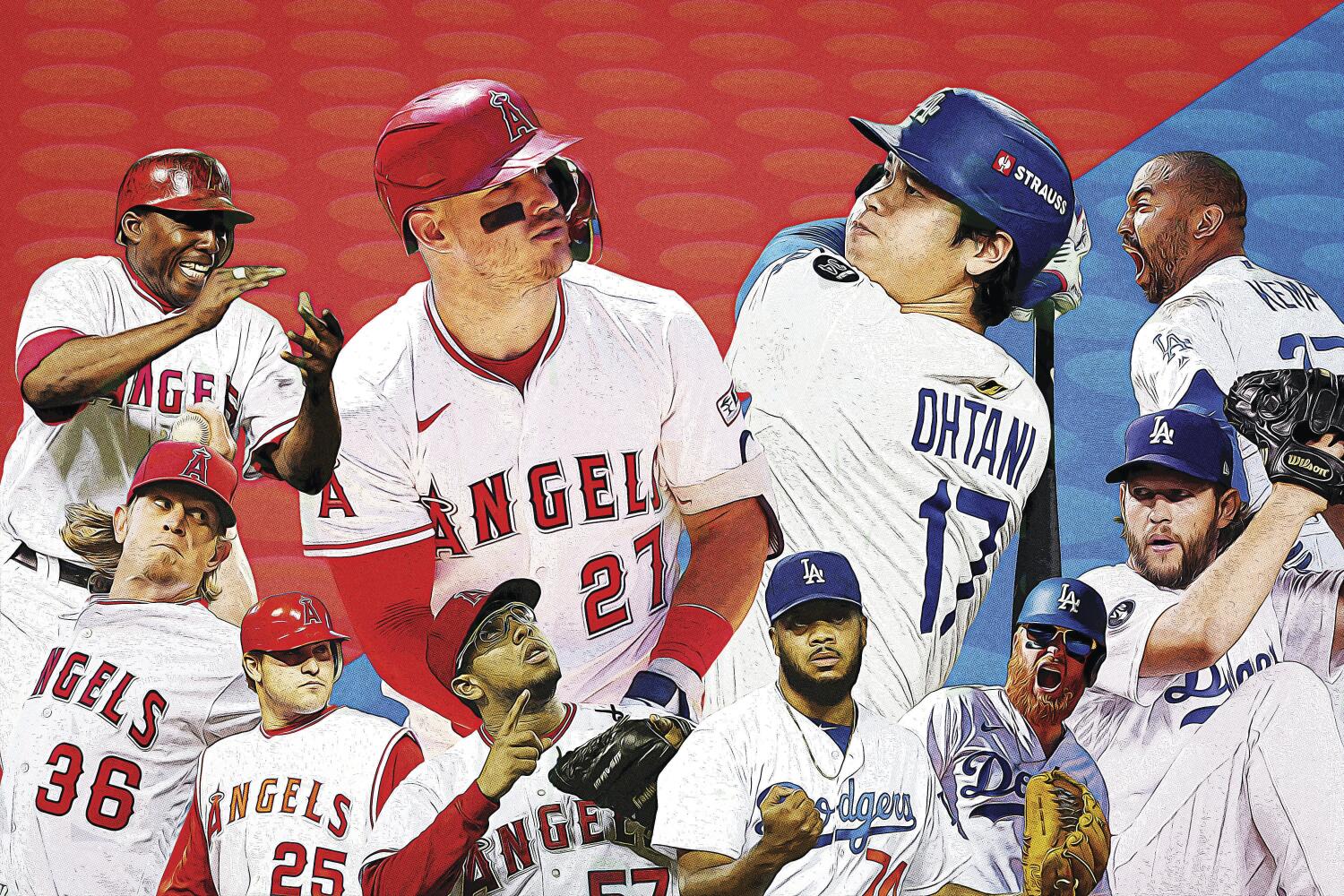
If you're building a team of the best Dodgers since 2000, the pitching staff alone is terrifying. You start with Clayton Kershaw. He’s the definitive L.A. athlete of this era. Three Cy Young awards, an MVP, and a career ERA that defies logic.
Then you look at the infield. Adrian Gonzalez provided the steady veteran presence that stabilized the early 2010s. Corey Seager was the postseason hero. Now, you have Mookie Betts playing wherever you ask him to, and Freddie Freeman hitting line drives in his sleep. The outfield has seen names like Matt Kemp during his near-40/40 season and Cody Bellinger during his MVP run.
But the real strength of the Dodgers over these twenty-five years has been the depth. It's the ability to lose a superstar to injury and plug in a guy from Triple-A who somehow hits .280 with 20 home runs. That’s the difference between a good team and a powerhouse.
The All Quarter Century Angels Roster
The Angels' list is top-heavy. It’s actually tragic. You have Mike Trout, arguably the greatest center fielder to ever play the game. You have Vladimir Guerrero, who could hit a ball bounced in the dirt for a home run. You have the dual-threat era of Shohei Ohtani, which we might never see again.
On paper, an all-time Angels team from the last 25 years looks incredible. Troy Glaus at third, Albert Pujols (even if he was past his prime) at first, and Torii Hunter patrolling the outfield. But the pitching is where the gap widens. Aside from Jered Weaver and perhaps John Lackey, the Angels have struggled to find elite, consistent starting pitching for the better part of two decades.
That’s why the Angels' success was front-loaded in this century. They had the core in the early 2000s, but they couldn't sustain the arms. While the Dodgers were hoarding pitching prospects, the Angels were signing aging hitters to massive contracts that eventually hampered their ability to build a complete roster.
Why the Gap keeps Widening
The difference between these two franchises right now is organizational philosophy. The Dodgers treat every pick and every roster spot as an asset to be optimized. They’re never "out" of a season. The Angels, meanwhile, have spent years trying to catch lightning in a bottle. They've paired Trout with expensive veterans who were already on the decline, hoping for a quick fix that never came.
Basically, the Dodgers built a foundation while the Angels tried to buy a roof.
It's honestly tough for fans in Orange County. They watched their team dominate the local landscape and then slowly fade into irrelevance despite having the two best players on the planet for several years. The "Freeway Series" used to be a clash of titans. Now, it feels like an exhibition game where one team is preparing for October and the other is wondering what went wrong.
Comparing the Icons
If you had to pick the face of the century for each side, it’s Kershaw vs. Trout. Both are first-ballot Hall of Famers. Both have spent their entire careers (so far) with one team. But their paths represent their franchises. Kershaw has been surrounded by talent and has multiple World Series appearances. Trout has been a lone island of excellence on teams that can't seem to win 80 games.
It’s a stark reminder that in baseball, one man can’t carry a team. Not even if that man is Mike Trout or Shohei Ohtani. The Dodgers understood this. They built a system where no single player is the entire load-bearing wall. When Kershaw's health wavered, others stepped up. When the Angels lost a key piece, the whole house of cards collapsed.
The Landscape in 2026
As we stand here today, the Dodgers are still the team to beat. They’ve managed to stay relevant and elite for longer than almost any team in the history of the sport. Their ability to pivot, spend, and develop is unparalleled. The Angels are in a period of transition, still looking for the identity they lost somewhere around 2010.
If you're looking to understand how these two teams diverged, look at their farm systems. The Dodgers consistently rank in the top ten despite picking at the bottom of the first round every year. The Angels have frequently hovered near the bottom. You can't win consistently in the modern era without a pipeline of cheap, young talent. The Dodgers have a river of it; the Angels have a leaky faucet.
Check the current standings and look at the run differential. That tells the whole story. The Dodgers aren't just winning games; they're dominating the statistical profile of the league. If the Angels want to reclaim the city, they don't need another $300 million hitter. They need to rebuild the way they evaluate talent from the ground up. Until then, L.A. stays blue.
Go to a game at both stadiums this season. The energy at Dodger Stadium is that of a team expecting a deep playoff run every single night. At Angel Stadium, it's a bit more nostalgic, clinging to the memories of 2002 while hoping for a glimpse of individual greatness. The contrast is the story of the century.