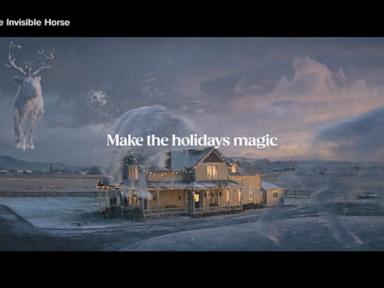
Every November, marketing trade publications clap like trained seals whenever Disney drops a tear-jerking holiday commercial. This year is no different. Industry press releases are already breathless over the latest "Make the Holidays Magic" campaign, praising its heartwarming visuals, cross-platform reach, and emotional resonance.
They are completely missing the point.
When a legacy entertainment giant leans this hard into manufactured sentimentality, it isn't projecting strength. It is masking structural vulnerability. Behind the sweeping orchestral scores and wide-eyed children staring at glowing castles lies a calculated, defensive maneuver designed to distract consumers—and Wall Street—from a business model under severe strain.
To understand what Disney is actually doing, you have to stop watching the commercial like a consumer and start reading it like an activist investor.
The Nostalgia Trap and Brand Dilution
Conventional marketing wisdom claims that emotional storytelling builds long-term brand equity. That is true when a brand is introducing a new idea or reinforcing a distinct promise. It fails miserably when a company uses sentimentality as a substitute for actual innovation.
Disney’s holiday playbook relies entirely on retroactive emotional arbitrage. Instead of earning fresh affection through groundbreaking films or accessible experiences, the company withdraws equity from an account funded decades ago by Walt Disney, Pixar’s golden era, and classic Renaissance animators. Every glowing Mickey ear and twinkling Main Street light in these ads is a reminder of what the brand used to mean, deployed to make you forget what it currently costs.
I have watched dozens of legacy consumer brands fall into this exact trap over the last twenty years. When product quality plateaus or pricing outpaces perceived value, the marketing department inevitably pivots to heritage. They wrap price hikes in warm blankets. They sell you your own childhood back at a 40% markup.
The mechanics of this strategy rely on three predictable levers:
- The Halo Effect: By grouping theme parks, streaming services, cruise lines, and retail merchandise under a single "holiday magic" umbrella, Disney attempts to transfer the goodwill of a classic animated short onto a wildly expensive, overcrowded theme park vacation.
- Guilt-Driven Conversion: Holiday advertising aimed at parents rarely sells a product; it sells parental validation. The unspoken subtext of every "Make the Holidays Magic" spot is simple: If you don't buy the ticket, the toy, or the subscription, you are depriving your family of a core memory.
- Sunk-Cost Conditioning: Once a household commits to the Disney ecosystem during the fourth quarter, switching costs spike. The holiday push isn't about Q4 revenue alone; it is customer acquisition for the next twelve months of recurring streaming fees and merchandise drops.
Trade writers love calling this "brand storytelling." In reality, it is margin defense disguised as holiday cheer.
Why Marketing Pundits Keep Asking the Wrong Question
If you read standard industry coverage of Disney’s seasonal rollouts, the conversation always revolves around creative execution. Did the ad make people cry? How many views did it get on YouTube in the first 48 hours? Which agency cut the spot?
Those metrics are vanity traps. Measuring a multi-billion-dollar conglomerate’s holiday campaign by social media sentiment is like judging a skyscraper's structural integrity by the color of its lobby paint.
The real question isn't whether the "Make the Holidays Magic" campaign is emotionally effective. Of course it is. Disney employs some of the finest editors, composers, and commercial directors on the planet. If they couldn't make a million-dollar commercial elicit a tear, they should all be fired.
The real question is: What is the customer acquisition cost required to sustain this illusion, and how long before diminishing returns set in?
In marketing science, Byron Sharp and the Ehrenberg-Bass Institute proved long ago that brands grow primarily through mental and physical availability, not deep emotional love. Consumers do not sit around deeply bonding with multinational corporations; they buy out of habit, convenience, and salience. When a brand spends massive capital on high-gloss emotional appeals while simultaneously introducing friction into the actual customer experience—complex park reservation systems, tiered lightning lanes, password-sharing crackdowns, and relentless price increases—it creates cognitive dissonance.
Imagine a scenario where a parent watches the "Make the Holidays Magic" spot, feels a surge of warmth, and immediately opens a browser to book a four-day trip to Orlando. Within fifteen minutes, that warmth evaporates. They are confronted with dynamic ticket pricing, separate fees just to skip standard lines, dining reservations that had to be booked sixty days prior, and a total bill that rivals a European vacation.
No commercial can bridge that gap forever. Eventually, the gap between the advertised magic and the transactional reality becomes so wide that the advertising itself starts generating resentment.
Dismantling the Myth of "Synergy"
Whenever Disney launches an omnichannel holiday push, analysts inevitably trot out the old chart showing how one division feeds another. A kid watches a movie on Disney+, asks for the plush toy at Target, begs to go to Disneyland, and eventually books a Disney Cruise.
On paper, this flywheel looks unstoppable. In practice, it frequently cannibalizes itself.
True cross-division integration only works when each touchpoint delivers independent value. Over the past several years, Disney’s flywheel has suffered from severe IP fatigue. When every holiday campaign leans on the exact same roster of legacy characters—Mickey, Elsa, Woody, Darth Vader, Spider-Man—the brand stops creating new cultural gravity and starts functioning like a museum gift shop.
Consider the structural flaws in the current omnichannel holiday blitz:
- Audience Fragmentation: Gen Alpha and younger Gen Z consumers do not consume media the way Millennials did. They spend their screen time on user-generated platforms, interactive gaming worlds, and creator-led ecosystems. A polished broadcast-style holiday commercial hits the parents, not the kids driving household entertainment choices.
- Retail Compression: Big-box retailers have drastically reduced shelf space for traditional licensed toys due to shifting consumer habits and inventory gluts. A massive top-of-funnel brand campaign cannot force consumers to buy plastic merchandise when household budgets are already stretched by inflation.
- Streaming Churn: Bundling holiday goodwill with streaming promotions drives short-term sign-ups, yet Q1 churn rates across the entire SVOD sector remain brutal. People sign up for the holiday specials and cancel in January once the credit card statements arrive.
I have sat in boardrooms where executives burned tens of millions of dollars on unified seasonal campaigns believing that sheer media weight could overcome product fatigue. It never works. Advertising accelerates the truth; if
Disney's Holiday Campaign Isn't About Magic It Is a Desperate Tax on Your Nostalgia
business, entertainment
Every November, marketing trade publications trip over themselves to praise Disney’s latest holiday commercial. They call it heartwarming. They call it a masterclass in emotional storytelling. They applaud the soaring orchestral scores, the wide-eyed children, and the predictable call to "Make the Holidays Magic."
They are falling for the oldest trick in the corporate playbook.
When a company with a market cap north of $150 billion spends tens of millions of dollars to remind you how to feel during December, it is not offering a gift. It is executing a defensive maneuver. Behind the soft-focus lens flares and tear-jerking vignettes lies a cold, hard reality of modern media economics: nostalgia is the ultimate refuge for a brand that has lost its pricing power.
I have sat in boardrooms where executives burned eight-figure Q4 budgets trying to manufacture "viral warmth." I have watched legacy brands mistake high production value for actual brand equity. When a company leans this heavily into sentimentality, it is rarely because they are dominating the market. It is because their core product has become too expensive, too complicated, or too diluted to sell on its own merits.
The Lazy Consensus of "Emotional Branding"
The standard industry take on Disney's holiday push is predictable. Pundits argue that in a fractured media environment, only legacy giants can create shared cultural moments. They point to the tears shed over animated shorts and declare the campaign a triumph of brand affinity.
This analysis misses the entire point of how modern consumer behavior works.
Marketing scientists like Byron Sharp, author of How Brands Grow, have spent decades proving that consumers do not have deep, romantic relationships with corporations. Buyers are cognitive misers. They rely on mental availability—how easily a brand comes to mind in a buying situation—and physical availability. When Disney blasts the airwaves with "Make the Holidays Magic," they are not trying to make you love them more. They are paying a massive media tax to rent space in your working memory right before you open your wallet for theme park tickets, streaming bundles, and licensed plastic.
There is a massive difference between brand love and habitual recall.
Trade reporters confuse the two because emotional ads win creative awards at Cannes. Investors, however, care about customer acquisition cost (CAC) and lifetime value (LTV). When you look at the actual unit economics of the entertainment sector, relying on tear-jerking holiday spectacles is a symptom of severe friction in the sales funnel.
The Illusion of Effortless Magic
Think about what Disney is actually selling beneath the holiday wrapping paper.
If you want to take a family of four to Walt Disney World this winter to experience that advertised magic firsthand, you are no longer just buying a park ticket. You are entering a complex, dynamic-pricing maze. You need to understand Lightning Lane Multi Passes, Single Passes, park reservations, dining windows that open 60 days in advance at 6:00 AM, and tiered hotel pricing.
The product itself has become a logistical stress test.
When the actual user experience requires a spreadsheet and a $5,000 credit limit, your advertising cannot focus on product features. You cannot run a commercial explaining the benefits of surge-priced queue-skipping. So, you pivot to pure, unadulterated emotion. You sell the memory of a vacation rather than the reality of the transaction.
This is the classic "sizzle over steak" trap, and it is dangerous. In behavioral economics, there is a well-documented phenomenon known as expectation-disconfirmation theory. When your marketing promises effortless, transcendent magic, and your product delivers a two-hour wait in the rain followed by a $25 quick-service lunch, you do not just lose a repeat customer. You create an active detractor.
I once advised a mid-sized hospitality group that tried to pull this exact move. Their properties were aging, and their booking software was a nightmare. Instead of fixing the operational bottlenecks, the CMO spent 70% of the annual marketing budget on a cinematic holiday campaign about "coming home." Q4 bookings spiked slightly, driven by the emotional hook. By Q2, their Net Promoter Score had cratered, and churn hit an all-time high. You cannot advertise your way out of an operational tax.
Why "Making Magic" Is Actually About Fighting Churn
To understand why Disney is pushing the holiday narrative so aggressively right now, you have to look at the streaming wars and the broader retail slump.
We are deep into the era of subscription fatigue. Consumers are actively pruning their monthly recurring charges. Disney+, Hulu, and ESPN+ are locked in a brutal street fight with Netflix, Amazon, and YouTube for attention. In this environment, acquiring a new subscriber is prohibitively expensive. Retaining an existing one is the only way to protect margins.
Holiday campaigns serve as a massive retention anchor. By positioning their intellectual property—whether it is Mickey Mouse, Star Wars, or Marvel—as an essential ingredient of a family's December traditions, Disney is attempting to make canceling their streaming bundle feel like canceling Christmas.
It is a brilliant psychological lock-in mechanism, if it works.
The problem is that the consumer psyche has evolved. Modern audiences, particularly Millennials and Gen Z parents, have razor-sharp radar for corporate manipulation. They have grown up on the internet. They know that behind every sweeping orchestral crescendo is a Q4 earnings call where executives need to justify the price hikes they pushed through in October.
When a brand tells you to "Make the Holidays Magic" while simultaneously raising the price of an ad-free streaming tier and shrinking portion sizes at its resorts, it creates cognitive dissonance. The ad feels less like an invitation and more like a guilt trip.
The Fallacy of the "Shared Cultural Moment"
Let’s dismantle another myth perpetuated by the entertainment press: the idea that a single holiday commercial can unite a fragmented audience.
Twenty years ago, a major holiday ad campaign aired during prime-time network television. Millions of households watched the exact same 60-second spot at the exact same time. That shared viewing experience created genuine cultural velocity.
Today, media consumption is completely atomized.
Your kids are watching short-form creator content on YouTube or TikTok. You are streaming on-demand without commercials, or scrolling past sponsored posts on Instagram in 0.4 seconds. When Disney drops a high-budget holiday spot today, it does not land like a cultural meteor. It lands like a press release. The only people dissecting its emotional resonance are marketing executives on LinkedIn and entertainment journalists looking for easy clicks.
Data from attention-tracking firms like Lumen Research consistently shows that the vast majority of digital video ads fail to hold active visual attention for more than two seconds. Consumers have developed industrial-grade banner blindness. A three-minute cinematic short about holiday togetherness might get millions of views on YouTube, largely propped up by paid media spend, but views are a vanity metric.
If a viewer watches a touching animated story, feels a brief pang of nostalgia, and then immediately closes the app to buy a generic toy on Amazon because it ships in 24 hours for half the price, the campaign failed.
What Legacy Brands Actually Need to Do (And Why They Won't)
If you are running a brand, watching Disney’s holiday playbook and trying to copy it is commercial suicide. You do not have their vault of century-old intellectual property, and you cannot afford to light tens of millions of dollars on fire just to remind people you exist.
Even for Disney, this strategy has diminishing returns. Every time you pull the nostalgia lever, the payout gets slightly smaller. Eventually, you run out of childhood memories to monetize.
If legacy entertainment and retail brands actually wanted to win the holiday season—and the three quarters that follow—they would stop trying to manufacture magic in an editing bay and start engineering it into the customer journey.
Here is what actually drives sustainable growth when consumer wallets are tight:
- Radical Friction Reduction: Instead of spending $30 million on an ad campaign telling people how magical your product is, spend $30 million making the product easier to buy and use. Eliminate hidden fees. Simplify pricing tiers. Fix the broken mobile app. Convenience is the new magic.
- Product-Led Nostalgia: Stop begging consumers to remember the good old days. Build something new that is so undeniably good that it becomes the nostalgia of 2046. Pixar did not conquer the world in the late 90s and early 2000s by running ads about how much you loved Snow White as a kid. They did it by releasing Toy Story, Monsters, Inc., and Finding Nemo—relentless, original product innovation.
- Transparent Value: Modern consumers respect candor. If your product is a luxury, price it like a luxury and deliver white-glove service. Do not wrap a premium-priced, mass-market experience in populist, heartwarming messaging. The mismatch destroys trust.
The Honest Downside of Abandoning the Spectacle
To be completely fair, there is a risk in walking away from the big, emotional holiday push.
If Disney suddenly stopped running sweeping, sentimental campaigns and shifted 100% of its budget to direct-response performance marketing and operational upgrades, they would likely suffer a short-term dip in top-of-funnel awareness. In the attention economy, silence is dangerous. When a market leader steps off the stage, competitors immediately rush in to fill the vacuum. Universal Studios, Netflix, and Roblox are all waiting for Disney to blink.
Furthermore, Wall Street is addicted to short-term signals. A splashy holiday campaign reassures institutional investors that the brand still has cultural relevance, even if the underlying metrics are soft. Cutting the spectacle requires a level of executive courage that rarely survives a quarterly earnings cycle.
The Verdict on "Holiday Magic"
The next time you see a headline breathlessly praising a mega-corporation’s latest holiday tear-jerker, look past the cinematic lighting and the swelling strings. Ask yourself what operational flaw, price hike, or retention problem that commercial is trying to cover up.
Real magic does not need a 60-second spot to convince you it exists. When a product is truly great, the customer does the marketing for you. When a brand has to beg you to feel the magic, the spell is already broken.


