Dirt gets under your fingernails before it ever gets into your bank account.
That is the first thing they forget to mention in the glossy handbooks about entrepreneurship. You do not start with a business plan or an LLC filing fee or a pitch deck designed to separate venture capitalists from their capital. You start with soil that refuses to drain, a spade that bends against a stubborn stone, and the quiet, crushing realization that you cannot afford the one thing every cultivator needs more than water: room. Read more on a connected issue: this related article.
Clara knew that room intimately. Or rather, she knew its absence.
For three years, her horticultural ambitions were compressed into a suburban backyard roughly the size of a billiard table. Every square foot of available sunlight was accounted for. Dahlias brushed against the back door. Zinnias vied with tomato cages for airspace. She grew seedlings on her kitchen windowsill under flickering fluorescent bulbs, nursing tiny green shoots in old yogurt containers. It was a valiant, exhausting micro-economy of stems. More journalism by Vogue delves into related perspectives on the subject.
Yet enthusiasm has a physical limit. You can only squeeze so much commercial viability out of twenty-four square yards before the plants begin to choke one another out.
Commercial cut flowers require volume. They require consistency, irrigation lines, heavy-duty tarping to suppress weeds, and space to rotate crops so the earth does not exhaust its nitrogen. Clara had the hands for it. She had the eye for color palettes that wedding planners wept over. What she lacked was horizontal truth. She lacked acreage.
Across the fence lived Arthur.
Arthur was eighty-two years old and possessed a lawn that could best be described as a historic monument to neglect. It was not a weed-choked eyesore of trash and old tires; it was simply vast, untamed, and aggressively beige for nine months of the year. For decades, it had been a buffer zone between properties, a green desert that required two hours of deafening Sunday morning lawn-mowing to keep the municipal code enforcement officers at bay.
Arthur hated mowing. Clara hated walls.
The transaction did not begin with a contract. It began with an overripe heirloom tomato left on a porch and a conversation about the wretched humidity.
"My hips," Arthur muttered, leaning heavily on an aluminum walker. "The mower vibrates right through them. Feels like someone taking a ball-peen hammer to my lower spine."
"You should stop," Clara said.
"Then the city fines me."
"Or," Clara said, looking past his shoulder at the empty expanse of sun-baked turf stretching toward the treeline, "you could let me plant things there."
In real estate, land is treated as a static asset, measured in square footage and appraised for its highest and best financial return. But in neighborhoods, land is relational. It is social currency. It is memory.
When Arthur agreed to let Clara use a quarter-acre of his northern flank, he wasn't entering into a formal agricultural land lease. He was trading an insurance liability for a front-row seat to creation.
We often talk about the modern economy as if it were entirely digital, floating somewhere in fiber-optic cables beneath the ocean floor. We obsess over software-as-a-service and remote workflows, forgetting that the most durable wealth still relies on dirt, rain, and cooperation. Micro-farming partnerships like the one forged between Clara and Arthur represent a quiet, radical counter-movement against suburban isolation.
Consider the mathematics of modern small business startup costs. Land acquisition is the insurmountable wall. To buy an agricultural plot near a major metropolitan area—where boutique floristry actually finds its paying clientele—requires capital that a solo artisan simply does not possess. Commercial lease rates can easily devour projected profit margins before the first seed hits the furrow.
By utilizing underutilized residential acreage, Clara bypassed the capital barrier entirely.
Of course, sharing land with a neighbor introduces complications that a commercial landlord never poses. There are social contracts to navigate. What happens when your irrigation hose snakes across their property line? What happens when a sudden hailstorm flattens a crop of snapdragons right where their grandchildren like to play catch?
Trust is the collateral.
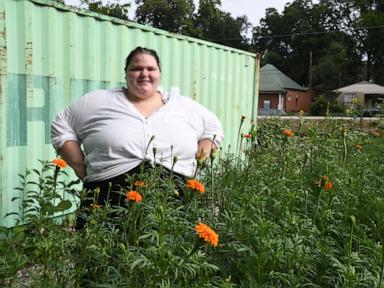
"At first," Clara admitted later, her hands stained green with chlorophyll and dark earth, "I was terrified. Every time Arthur walked out onto his back deck, I assumed he was going to regret it. I thought he was going to look at the rows of black plastic mulch and irrigation drip tape and realize his yard looked like a construction site."
Instead, Arthur brought out a folding chair. He sat there in the late afternoon heat, watching the bumblebees navigate the cosmos blossoms. He didn't farm. He observed. He became the unofficial quality control manager of the operation, grading the height of the sunflowers with the stern eye of a retired civil engineer.
The structural arrangement worked because it was built on mutual dependency rather than corporate hierarchy. Clara provided the labor, the horticultural expertise, and the market access through local farmers' markets and direct-to-florist deliveries. Arthur provided the space and, eventually, something far more valuable: community validation.
When local residents saw an octogenarian and a thirty-something gardener working in tandem across a previously invisible property line, the psychological barrier of the suburban fence dissolved. Neighbors stopped to ask questions. They traded gossip over heirloom squash varieties. They began asking if they could trade their own unused side yards for a share of the harvest.
This is where the true power of localized micro-agriculture lies. It does not just produce commodities; it repairs the frayed edges of community infrastructure.
We live in an era characterized by hyper-individualism. Our homes are fortresses equipped with privacy fences, Ring doorbells, and entertainment systems designed to keep the outside world at bay. We can order groceries, work forty hours a week, and entertain ourselves for months without ever exchanging a meaningful sentence with the people who live twenty feet away.
That isolation is expensive. It extracts a toll on our mental health, our sense of safety, and our resilience during crises.
When Clara's business expanded—when she finally turned a profit in her second year and hired her first part-time assistant—the victory did not belong solely to her. It belonged to the block. The flowers she sold for autumn weddings and spring galas carried the ambient history of Arthur’s neglected lawn, transformed through sweat and shared ambition into something beautiful.
There is a lesson here about how we look at scarcity.
We are often told that resources are fixed, that space is at a premium, and that success is a zero-sum game where one person's gain requires another's displacement. But residential neighborhoods are full of latent abundance. Millions of acres of manicured, chemically fertilized suburban turf sit idle, consuming water and fossil fuels simply to maintain an aesthetic of detached suburban perfection.
If even a fraction of that dormant earth were redirected toward local food and floral production, the entire landscape of small-scale entrepreneurship would shift.
Arthur passed away late last autumn, shortly after the final frost had blackened the last of the dahlias. The house went up for sale. In the frantic modern housing market, people worried about what would happen to the garden. Would a new developer come in, bulldoze the beds, and plant more Kentucky bluegrass? Would the enterprise that took three years to build vanish overnight?
The new owners are a young couple with a toddler and a golden retriever.
They looked at the quarter-acre of established flower beds, the buried water lines, and the rich, organic soil that Clara had spent years amending with compost and cover crops. They didn't see an eyesore. They saw an inheritance.
The agreement was renegotiated over coffee on the back deck. The terms are different now—a modest reduction in rent, paid in fresh bouquets every Friday through the summer months.
The soil remembers. The roots go deep. And somewhere down the block, another fence line waits for someone brave enough to ask what lies on the other side.