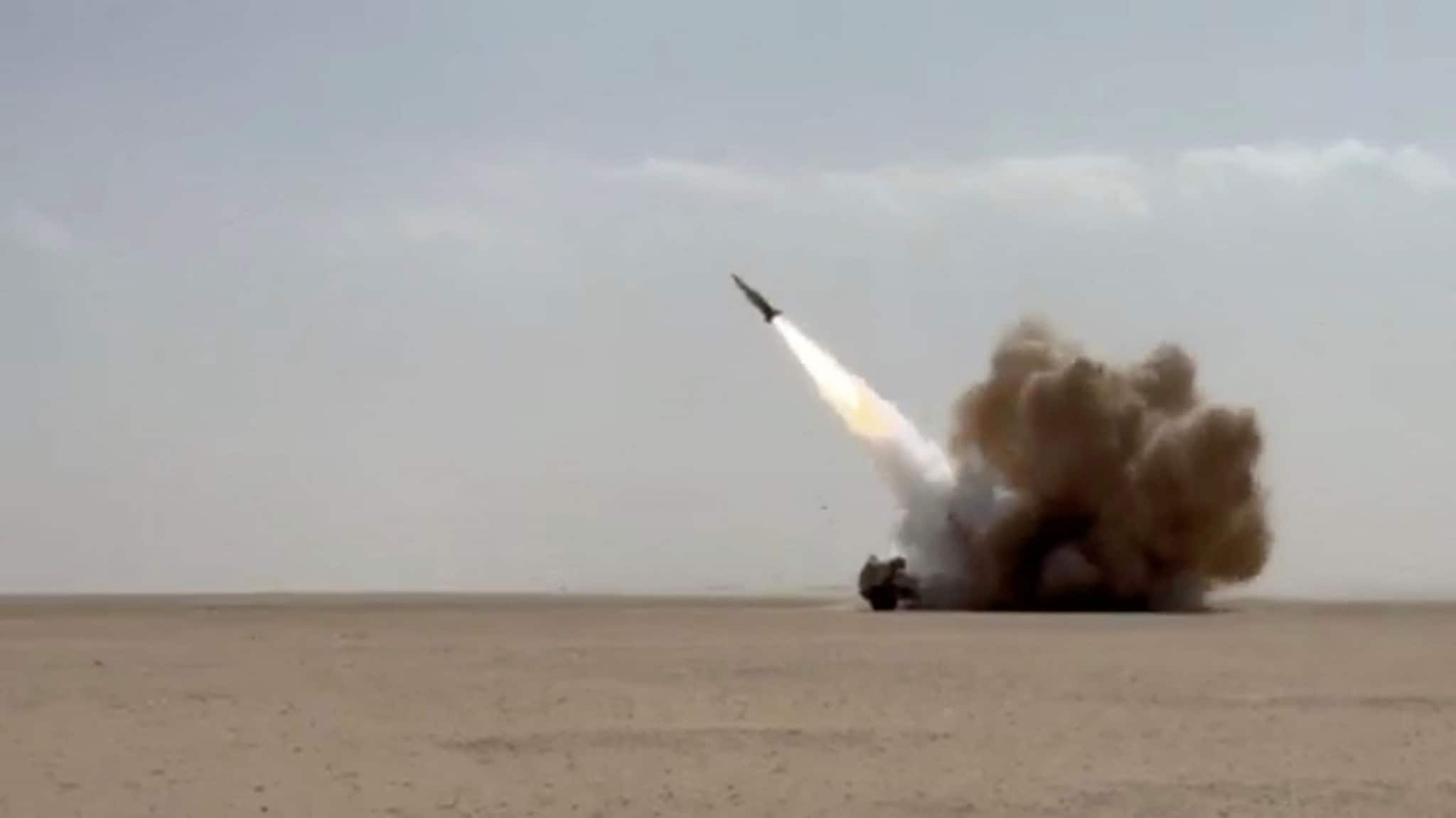
The mainstream diplomatic press is currently repeating a tired, comforting lie. They are parroting statements from regional leaders claiming that Iran’s ballistic missile program was "never part" of historical Western negotiations, treating this administrative separation as a defense of the status quo.
It is a comforting narrative for bureaucrats. It is also completely detached from geopolitical reality. For an alternative perspective, read: this related article.
To pretend that a nation's nuclear ambitions can be neatly decoupled from its delivery systems is the ultimate exercise in diplomatic theater. You cannot negotiate the warhead while ignoring the rocket that carries it. By celebrating the fact that missiles were excluded from past frameworks like the JCPOA, analysts are praising the very flaw that guaranteed the breakdown of regional stability.
The Fiction of the Isolated Warhead
Diplomats love silos. They create narrow mandates so they can claim easy victories. Similar reporting on this matter has been provided by The Guardian.
When regional commentators insist that missile programs were a separate track, they are technically correct about the paperwork but fundamentally wrong about the strategy. In international security, a weapon system is an ecosystem.
- The Physics Problem: A nuclear payload requires precise delivery telemetry. The engineering challenges of miniaturizing a warhead and maximizing the throw-weight of a medium-range ballistic missile (MRBM) are inherently linked.
- The Strategic Lever: Tehran did not build the Shahab-3 or the Kheibar liquid-fuel missiles for conventional bombardment alone. The massive capital investment in high-payload, long-range vectors makes zero economic or military sense unless they are intended to hold a deterrent that goes far beyond conventional explosives.
By treating the missile program as a separate regional issue rather than the spine of Iran's strategic posture, Western negotiators allowed the development of the delivery architecture to continue unchecked. While inspectors were busy checking seals on centrifuges in Natanz, assembly lines in Isfahan were refining the guidance systems that make those centrifuges meaningful.
Why the Paper Separation Failed the Test of Reality
Look at the actual mechanics of the 2015 Joint Comprehensive Plan of Action (JCPOA). UN Security Council Resolution 2231 contained famously ambiguous language, "calling upon" Iran to refrain from work on missiles designed to be nuclear-capable.
Tehran exploited this semantic loophole immediately. They argued their missiles were purely conventional. The West pretended to believe them to keep the deal alive.
"We have seen billions of dollars in sanctions relief flow into regional economies based on the assumption that a signed piece of paper alters a state's core security doctrine. It never does."
This is where the conventional consensus collapses. The lazy analysis suggests that bringing missiles into the mix would have killed the deal. The hard truth is that excluding them made the deal irrelevant. A nation with a sophisticated missile network and a paused nuclear enrichment program is simply a nation waiting out a clock.
The Fallacy of the Purely Conventional Deterrent
Let us address the standard counter-argument from defensive realists: Iran needs its missile arsenal because its conventional air force is obsolete, relying on pre-1979 American hardware and outdated Russian jets. They argue the missiles are a legitimate conventional deterrent against regional rivals.
This argument ignores how escalation works. When you possess thousands of precision-guided ballistic missiles capable of striking deep into Europe or targeting maritime chokepoints like the Strait of Hormuz, the line between conventional and non-conventional deterrence disappears.
Imagine a scenario where a regional conflict escalates rapidly. A conventional missile strike on critical infrastructure looks identical on radar to a strategic strike until detonation. By allowing the proliferation of these platforms under the guise of "sovereign defense," international diplomacy created a hair-trigger environment.
The True Cost of Tactical Blindness
- Assymmetry Exploitation: Missiles were exported to non-state actors, fundamentally altering the security matrix of the Levant and the Arabian Peninsula.
- Sanctions Evasion: Dual-use technologies applicable to both space launch vehicles (SLVs) and Intercontinental Ballistic Missiles (ICBMs) flowed through legal loopholes because they were categorized under "scientific advancement."
Stop Asking if Missiles Were Part of the Deal
The media keeps asking: Was the missile program explicitly included in the negotiations?
This is the wrong question. The real question is: Why did we ever think a negotiation that excluded them could succeed?
If you manage an enterprise security budget, you do not celebrate securing the server room if you leave the back door wide open and hand out keys to the parking lot. Yet, that is exactly what the diplomatic community did. They isolated the nuclear material—the server—while ignoring the delivery vehicle—the wide-open back door.
The assertion that the missile program was a separate issue is not a defense of diplomatic integrity. It is an admission of systemic failure.
Moving forward, any framework that treats ballistic development, drone proliferation, and enrichment as separate menu items is dead on arrival. They are expressions of the same singular geopolitical ambition. Treat them as separate, and you are simply funding the next crisis.