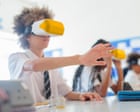
London secondary schools have begun deploying virtual reality headsets as a frontline intervention for student stress and anxiety. What started as an experimental pilot in a handful of academies is rapidly expanding into a city-wide trend, with educators swapping traditional counseling sessions for immersive digital environments. These schools are betting that a fifteen-minute immersion in a simulated forest or a tranquil underwater scene can recalibrate a child’s nervous system more effectively than a conversation with a pastoral lead.
The immediate goal is physiological regulation. When a student enters a state of acute stress or a panic attack, the school’s priority is to lower their heart rate and ground them in the present moment. Proponents argue that VR achieves this by completely hijacking the visual and auditory senses, leaving no room for the intrusive thoughts that fuel a "fight or flight" response. However, this shift toward high-tech escapism raises uncomfortable questions about the root causes of the UK’s youth mental health crisis and whether we are merely treating the symptoms with a digital sedative.
The Mechanics of a Virtual Sanctuary
The technology being utilized is not the clunky hardware of a decade ago. Schools are primarily using standalone headsets that do not require a tethered computer, allowing students to use them in "quiet zones" or repurposed storage rooms. The software is specifically designed for clinical relaxation rather than entertainment.
Sensory Redirection
The process works through a concept known as distraction therapy. By flooding the brain with peaceful, low-stakes stimuli—the movement of a leaf or the rhythmic sound of waves—the prefrontal cortex is given a reprieve from the high-pressure environment of the classroom. For a student struggling with sensory overload, the VR headset acts as a controlled environment where the user has total agency.
Biofeedback and Data
Some of the more sophisticated trials incorporate wearable sensors that track heart rate variability. If the student’s heart rate remains high, the virtual environment might change colors or simplify its visual complexity to further encourage a downward trend in physical tension. This provides teachers with tangible data on a student's stress levels, moving beyond the subjective "how do you feel" to a measurable metric of biological calm.
The Cost of the Silicon Stick on a Band Aid
While the immediate results are often positive, the financial and systemic implications are significant. A single headset, plus the necessary software licensing and staff training, can cost a school thousands of pounds. In a climate where many London schools are struggling to afford basic supplies or maintain full-time mental health staff, the investment in VR can seem like an expensive detour.
Critics within the educational sector worry that the "cool factor" of VR is being used to mask a lack of fundamental support. A headset cannot listen to a child’s problems. It cannot identify the source of bullying, nor can it mitigate the pressure of the national curriculum. It provides a temporary exit from reality, but the student eventually has to take the goggles off and face the same environment that triggered them in the first place.
The Shift From Connection to Isolation
Historically, school-based mental health support relied on the relationship between the student and a trusted adult. The introduction of VR changes that dynamic. Instead of co-regulation—where a calm adult helps a child find their own calm—we are moving toward automated regulation.
There is a risk that this technology becomes a convenient way to "park" difficult students. It is much easier for a busy teacher to send a disruptive or distressed pupil to a VR station than it is to engage in a thirty-minute de-escalation dialogue. We must be careful not to replace human empathy with an algorithm that simulates peace.
The Dependency Trap
There is also the question of long-term coping mechanisms. Education is supposed to equip children with the internal tools to manage stress. If a child learns that the only way to find peace is to plug into a computer, they are not developing the resilience needed for the real world. A hypothetical example would be a student who excels in a virtual environment but finds themselves completely unable to navigate a crowded university lecture hall or a high-pressure job interview later in life because they never learned to regulate their breathing without a digital prompt.
Privacy and the Data Goldmine
Whenever a child interacts with a digital platform, data is generated. The companies providing these VR experiences are collecting information on how long a student uses the device, which environments they prefer, and, in some cases, their physiological responses.
London schools must be incredibly vigilant about who owns this data and how it is used. The biometric markers of a distressed thirteen-year-old are highly sensitive. If this information is stored on third-party servers or used to "optimize" software in ways that schools don't fully understand, we are opening a door that will be very difficult to close. The lack of standardized regulation regarding VR in schools means each headteacher is essentially negotiating their own terms with tech firms that are far more savvy about data extraction than the average educator.
Beyond the Goggles
If VR is to be more than a gimmick, it must be integrated into a wider, human-centric strategy. It should be a bridge, not a destination.
Integrating the Experience
The most successful trials are those where the VR session is followed by a debrief with a counselor. The student uses the headset to reach a baseline of calm, and then—while in that receptive state—they talk through the issues that led to the stress. This uses the technology as a tool to facilitate human connection, rather than replace it.
Environmental Reform
Ultimately, the surge in student stress is an indictment of the school environment itself. High-stakes testing, the erosion of creative subjects, and the omnipresence of social media have turned many London schools into pressure cookers. No amount of virtual forest bathing can fix a broken system. If we are spending millions on headsets to help kids escape the classroom, perhaps we should be looking at why the classroom is so unbearable in the first place.
The reality is that these trials are a desperate response to a crumbling youth mental health infrastructure. With waiting lists for child and adolescent mental health services (CAMHS) stretching into years, schools feel they have no choice but to innovate. They are grabbing whatever tools are available.
The tech works. It calms the pulse and clears the mind. But a clear mind in a toxic environment is a temporary victory. We must ensure that in our rush to embrace the virtual, we do not abandon the hard, slow work of fixing the real world for the children who have to live in it.
Identify the specific stressors within your school’s culture before signing a three-year software contract that might only serve as an expensive distraction from the systemic changes your students actually need.