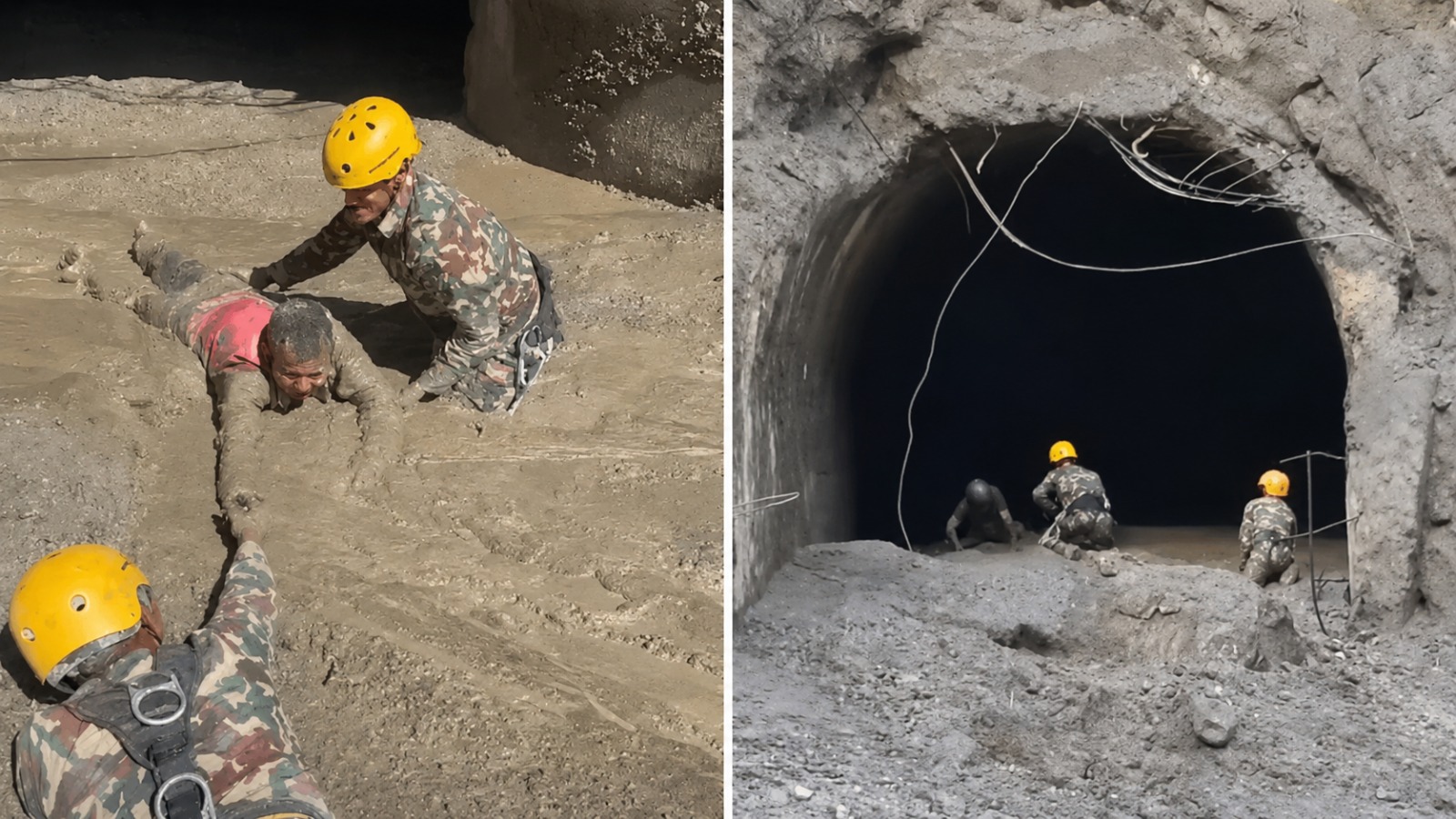
Walking through Devighat right now feels surreal. Where riverside homes, markets, and bustling pilgrim paths used to sit, you'll now find thick gray mud, twisted metal, and towering mounds of stone. There is nothing left, it is all debris.
Catastrophic flash floods triggered by high-altitude glacial instability and sudden overflows along the Nepal-China border sent walls of water crashing down mountain gorges. Entire settlements like Trishuli Bazar, Betrawati, and Devighat bore the brunt of the torrent. When the water finally receded, it left behind a stark wasteland where survival gave way to the grim reality of recovery.
Local Hands on Heavy Machinery
Official state responses take time to mobilize across fractured mountain terrain. Local residents aren't waiting around for bureaucracy to catch up. More than 150 volunteers from the Likhu Rural Municipality packed into tipper trucks and deployed heavy JCB excavators straight to Devighat. They brought their own fuel, food, and determination.
The strategy is simple and grueling. Teams are splitting up to clear blocked arterial roads from Dunge to Betrawati so emergency supplies and search units can pass through. They are manually digging through feet of packed sediment. They are searching for anyone trapped underneath.
Sitaram Pulaimer joined the deployment from Ward 1. He watched his neighbors lose everything in minutes. "All the people from Likhu Rural Municipality wards 1 to 6 are going to Devighat," Pulaimer said. "We are going to help flood victims with rescue work and cleanup. There is nothing left there. It's all debris".
The Scale of the Crisis
Official tallies struggle to capture the true magnitude of what happened along the Trishuli River basin. Thousands of individuals remain missing across the disaster zones, and bodies continue to surface miles downstream.
Navraj Thapa, another volunteer on the ground, points out that visual confirmation tells a much darker story than spreadsheet data. "Destruction, what else?" Thapa said. "Right before our eyes, such a massive flood and storm came. We used to see such things in English movies; now we are seeing it live".
The physical toll matches the emotional one. A heavy stench hangs in the humid air of the valley, signaling that livestock and possibly more victims remain buried beneath the silt. Volunteers are working in shifts, catching quick naps on truck beds before returning to the dig sites.
What Happens Next on the Ground
Clearing the mess will take weeks, not days. Even with nearly 20,000 security personnel and specialized aircrews operating across the country, local community initiatives remain the backbone of immediate recovery.
If you want to support recovery efforts in places like Devighat, focus on grassroots humanitarian funds directly aiding local municipalities with fuel, heavy machinery rentals, and clean water logistics. The immediate priority isn't just finding the missing—it's restoring basic sanitary access and preventing secondary health crises in a region stripped of its infrastructure.