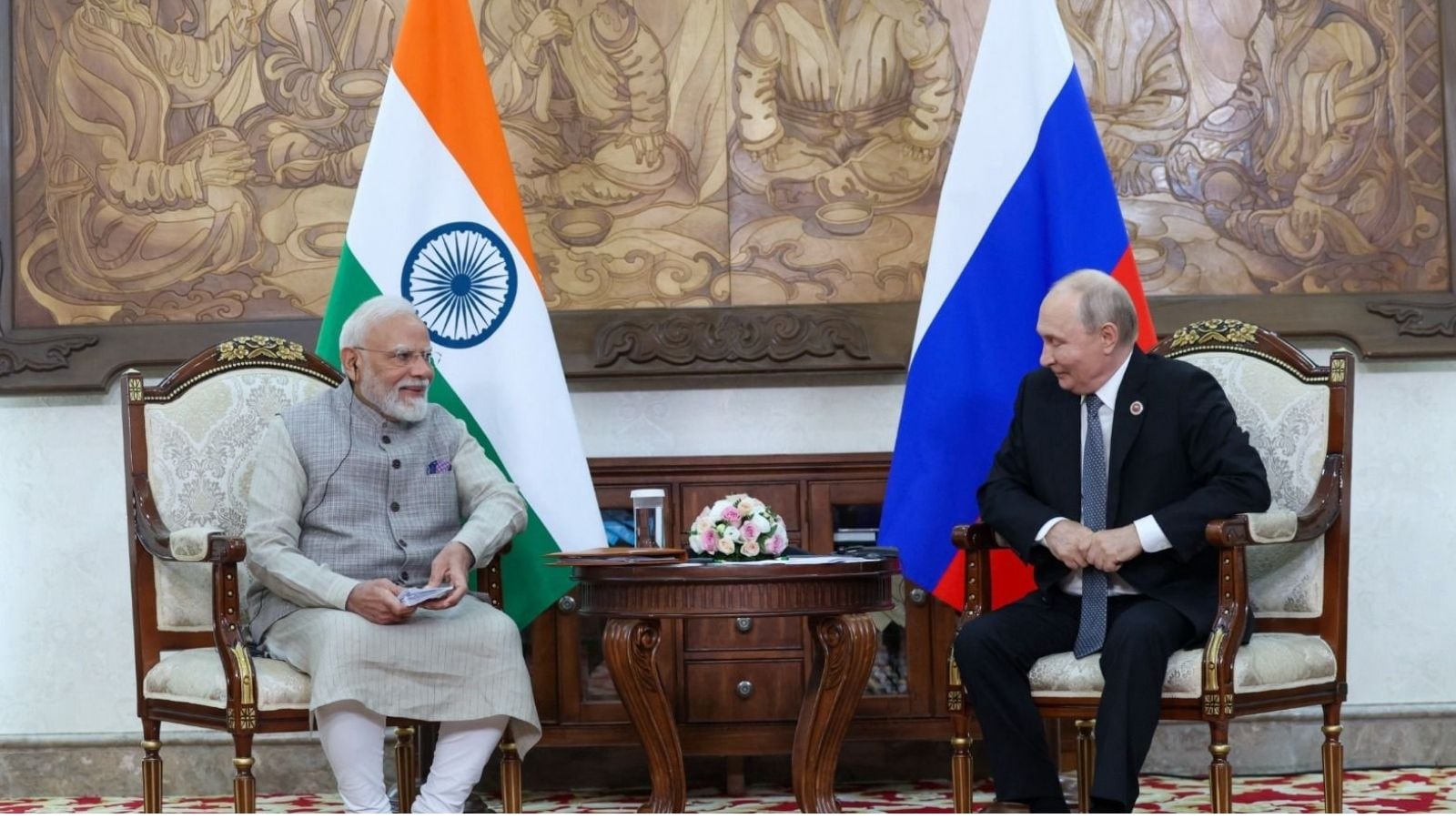
Every mainstream foreign policy desk in the Western hemisphere spent the last forty-eight hours hyperventilating over the first 2026 bilateral sit-down between Narendra Modi and Vladimir Putin. The headlines followed a tired, predictable script. They wailed about trade deficits, whispered about circumaded sanctions, and wrung their hands over the durability of historic non-alignment.
They completely missed the point. If you liked this piece, you should read: this related article.
The lazy consensus in international journalism assumes that New Delhi is walking a tightrope between Washington and Moscow, desperately trying not to fall off. That framing treats India like a hesitant bystander caught in a superpower crossfire. It is an arrogant misread of modern statecraft. India isn't balancing. India is extracting.
I have watched diplomatic corps operate from the inside for over a decade, and I can tell you that the panic emanating from Western capitals is rooted in a profound misunderstanding of transactional sovereignty. When Modi sits across from Putin to talk energy corridors, national currency settlements, and defense manufacturing pipelines, he is not defying the West. He is simply ignoring its moral monopoly. For another look on this event, check out the latest coverage from NBC News.
Let us dismantle the core falsehoods driving the current commentary.
The Sanctions Delusion
Western analysts love to trot out bilateral trade volume figures as proof that New Delhi is undermining global isolation campaigns against Moscow. They point to discounted crude oil imports and military spare parts agreements as if India were engaged in clandestine sanctions-busting.
This view ignores basic arithmetic.
India is a nation of 1.4 billion people experiencing rapid industrial expansion. Energy security is not a political preference; it is a matter of immediate domestic survival. If discounted Russian barrels keep fertilizer plants running in Punjab and stabilize fuel prices for middle-class commuters in Mumbai, no Indian prime minister will apologize for buying them. Expecting New Delhi to cripple its own economy to punish a country that supplied its military hardware for half a century is a delusion born of Western solipsism.
Washington understands this quietly, which is why the Treasury Department issues strategic waivers and looks the other way on refined petroleum products finding their way to European ports. But the commentariat refuses to acknowledge the hypocrisy. They want a world where developing economies sacrifice their GDP on the altar of multilateral optics. India told that world to get lost years ago.
The Strategic Autonomy Myth
Another favorite trope in contemporary journalism is that India's historical non-alignment has evolved into multi-alignment, suggesting a clever form of diplomatic hedging.
That term is too polite. What we are witnessing is aggressive self-interest.
India buys French Rafale jets, American drones, Israeli missile defense systems, and Russian nuclear reactors. It participates in the Quad to counter Chinese maritime ambitions in the Indo-Pacific, yet turns right around and coordinates with Beijing inside the BRICS bloc to de-dollarize international trade settlements.
To the casual observer, this looks like a contradiction. To anyone who understands realpolitik, it is a masterclass in leverage.
Imagine a corporate restructuring where a CEO refuses to tie the firm's supply chain to a single vendor, buying critical inputs from competing conglomerates while extracting price concessions from all of them. That is India's foreign policy playbook. They are not waiting for permission from the G7, nor are they taking orders from the Kremlin. They are purchasing discounted commodities in rupees, securing tech transfers that Western nations refuse to share, and hedging against a multipolar future where American hegemony is no longer the only game in town.
The Currency Conundrum
Let us address the elephant in the room that financial commentators love to obfuscate: bilateral trade settlements outside the SWIFT system.
When Western sanctions cut Russia off from international banking rails, alarmists predicted immediate disaster for Indo-Russian commerce. Instead, the two nations accelerated local currency trade mechanisms. Sure, there were initial hiccups regarding rupee accumulation in Russian central bank accounts—excess capital that Moscow struggled to deploy without buying Indian assets.
The mainstream press framed those friction points as proof that alternative payment architectures are bound to fail. That is wishful thinking.
Those friction points were simply teething problems in a historic rewiring of global trade plumbing. Once you decouple trade from the dollar, you create alternative gravity wells. Every transaction settled in national currencies chips away at the exorbitant privilege of the greenback. New Delhi knows this. Moscow knows this. And the fact that India is willing to test these alternative mechanisms without triggering secondary sanctions from Washington demonstrates just how much diplomatic capital South Block currently commands.
The Western Blind Spot
The deeper frustration in Western capitals is not that India is buying oil from Russia. It is that India refuses to internalize Western moral urgency as its own.
When European leaders lecture Delhi on international law, Indian External Affairs Minister S. Jaishankar does not blink. He points out, correctly and ruthlessly, that Europe's problems are not the world's problems, and that European historical amnesia regarding colonialism does not grant them moral authority over contemporary Asian security dynamics.
This posture drives Western think tanks crazy because it refuses to accept the subordinate role assigned to the Global South in the post-Cold War unipolar era.
The 2026 Modi-Putin meeting is not a throwback to Soviet-era friendship treaties. It is a cold-eyed business transaction between two powers managing an asymmetrical relationship. Russia needs India as a major economic outlet and a diplomatic lifeline. India needs Russia as a reliable energy supplier, a counterweight against total Chinese hegemony in Central Asia, and a source of heavy engineering and defense tech that no one else is willing to transfer with zero strings attached.
Stop looking at this relationship through the lens of loyalty, alliances, or ideological campism. Those concepts belong to the twentieth century.
India is playing chess while the commentary class is still arguing over the rules of checkers. Modi does not care about your sanctions regime, your moral posturing, or your preferred global narrative. He cares about Indian growth, Indian security, and the consolidation of India's status as an independent pole in a fractured world order.
Get used to it.