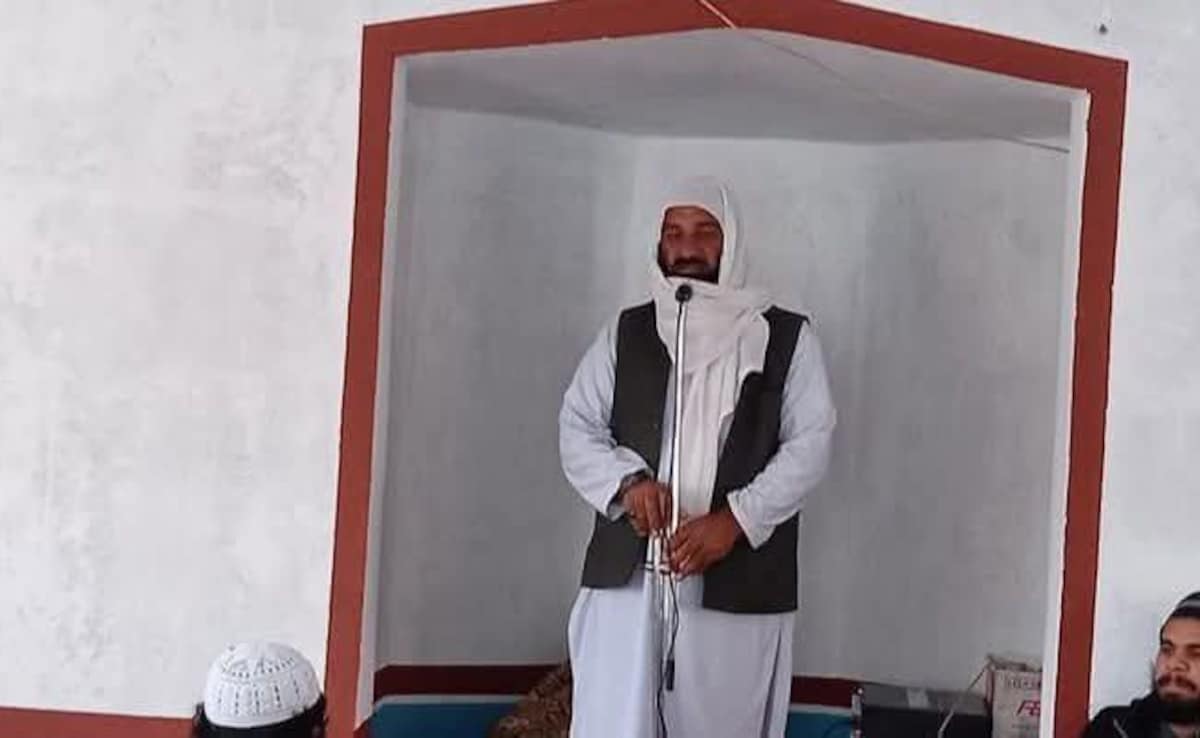
The shadow war in Pakistan’s borderlands just claimed another high-profile name. Sheikh Yousuf Afridi, a man described as a cornerstone of the Lashkar-e-Taiba (LeT) network and a confidant of Hafiz Saeed, was gunned down on Monday in Landi Kotal. He wasn't just another name on a watchlist. He was a regional linchpin.
I've seen this pattern play out dozens of times over the last two years. A "religious scholar" with deep ties to banned militant groups walks out in broad daylight, and suddenly, two men on a motorbike or a hidden shooter ends the story. No one claims responsibility. The Pakistani authorities promise an investigation that usually goes nowhere. It's the same script, different city.
Who was the man behind the title
Sheikh Yousuf Afridi wasn't a frontline foot soldier. He operated in the "intellectual" and logistical space, which often makes a person more dangerous and harder to replace. He belonged to the Zakhakhel tribe in the Khyber region, a background that gave him immense local clout.
Within the LeT hierarchy, he served as a recruiter and a coordinator. Think of him as the bridge between the high-level ideology of the Markaz in Muridke and the raw recruits in the tribal belts of Khyber Pakhtunkhwa. His role involved:
- Ideological grooming: Using his status as an Ahl-e-Hadith scholar to radicalize young men.
- Logistical coordination: Managing the movement of cadres near the Afghan border.
- Counter-extremism (Internal): Interestingly, he was reportedly active in challenging the "Khawarij" (a term often used for the TTP) on an intellectual level, making him an enemy of both the state's enemies and foreign intelligence agencies.
The hit in Landi Kotal
The attack happened in Landi Kotal, about 250 kilometers from Islamabad. It was clinical. Unknown gunmen opened fire, spraying him with bullets. He died on the spot. The attackers vanished into the rugged terrain of the Khyber region before anyone could react.
If you're following the region, you know this isn't an isolated event. Over 30 "high-value targets" associated with groups like LeT, Jaish-e-Mohammed, and Hizbul Mujahideen have been picked off in Pakistan since 2023. It’s a literal graveyard for the old guard of the 26/11 era.
Why the ISI is sweating
You have to look at the timing. Just a week ago, Amir Hamza, another founding member of LeT and a top-tier leader, was shot and injured in Lahore. Before that, it was Bilal Arif Salafi in Muridke.
The Pakistani establishment—specifically the ISI—is in a bind. These men were once considered "strategic assets." Now, they're sitting ducks. There are a few theories on who's pulling the trigger:
- The "Unknown Gunmen" Theory: Indian intelligence often gets the blame in the Pakistani press, though New Delhi consistently denies any "extrajudicial" policy.
- Internal Factionalism: As funding dries up and international pressure mounts, these groups are eating their own.
- TTP Rivalry: The Tehreek-e-Taliban Pakistan (TTP) hates the Salafi scholars who provide the religious justification for the Pakistani state’s "war on terror."
The fallout for Lashkar-e-Taiba
LeT is a shadow of its former self. With Hafiz Saeed rotting in Kot Lakhpat jail and his inner circle being dismantled one by one, the group is losing its structural integrity. Afridi’s death creates a vacuum in the Khyber region—a critical transit point for militants moving between Pakistan and Afghanistan.
When a recruiter like Afridi is eliminated, the pipeline slows down. It’s not just about losing a shooter; it’s about losing the guy who knows which tribal elders to bribe and which mosques are friendly to the cause.
What happens next
Expect the security around the remaining "old guard" to tighten. The ISI has already moved several high-profile targets into "safe houses," which are basically glorified prison cells to keep them from being assassinated.
If you're tracking regional security, watch the Durand Line. The tension between Pakistan and the Afghan Taliban is at an all-time high, especially after recent airstrikes in Kunar. Groups like LeT are caught in the middle of a messy, multi-sided proxy war.
Basically, the days of these commanders walking freely in the streets are over. If you're on a "wanted" list in South Asia and you're currently in Pakistan, you're likely looking over your shoulder every five seconds. And honestly, for the families of victims of the 26/11 attacks, this slow-motion dismantling of the LeT network is a long-overdue bit of karma.
Stay informed by following updates from local Khyber agencies and regional security analysts. The "unknown gunmen" aren't done yet.