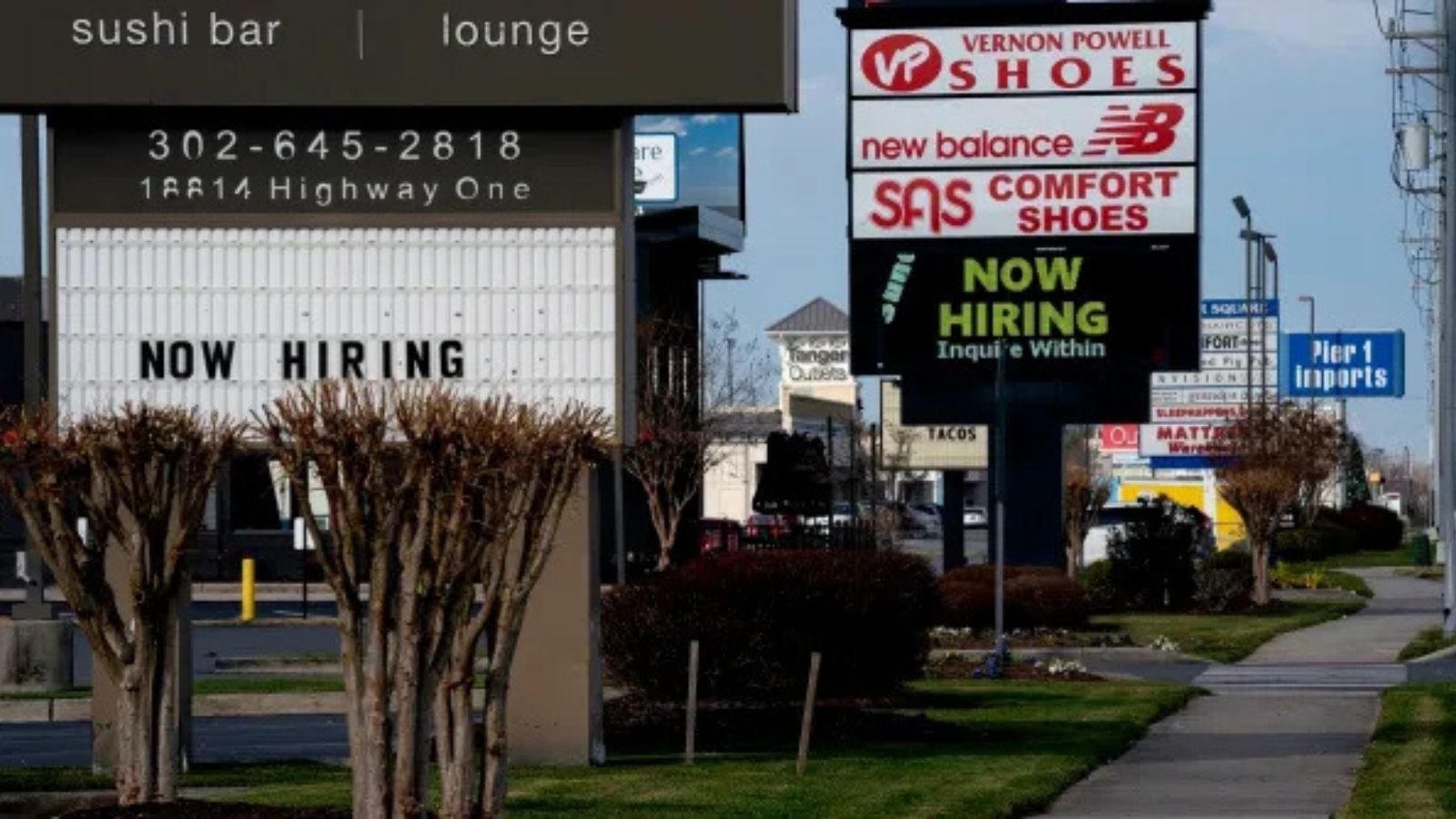
The traditional employment contract is dead, but the autopsy report is being misread as a lifestyle choice. While surface-level business reporting characterizes "income stacking" as a clever Gen Z hack for the digital economy, the reality is far more clinical. This isn't a trend born of ambition or a desire for variety. It is a desperate survival mechanism triggered by the total collapse of the entry-level wage against the skyrocketing cost of existence.
Income stacking—the practice of holding multiple remote or physical roles simultaneously—has become the baseline requirement for early-career workers to achieve what their parents called a "standard of living." By combining a full-time salaried position with freelance contracts, social media monetization, or gig-economy shifts, Gen Z is attempting to outrun an inflation rate that has effectively rendered the single-income household an antique. They aren't "juggling" jobs for fun. They are frantically trying to keep their heads above water in a labor market that increasingly views employees as a subscription service rather than an investment.
The Myth of the Side Hustle
The language used to describe modern work is often a coat of bright paint on a crumbling wall. We call it the "passion economy" or "flexible working," but these terms obscure a brutal shift in risk. In the past, companies shouldered the burden of health insurance, retirement contributions, and professional development. Today, those costs have been offloaded onto the individual.
When a 23-year-old works a corporate marketing job by day and manages three Shopify stores by night, they aren't diversifying their portfolio. They are compensating for a primary salary that likely barely covers rent in a Tier-1 city. Data from the Bureau of Labor Statistics and independent cost-of-living indexes suggest that in cities like New York, San Francisco, or London, the average entry-level salary has stagnated while housing costs have tripled since the late 1990s.
This creates a math problem that cannot be solved by "grinding harder" at a single firm. The math dictates that you must find a second, third, or fourth stream of revenue just to reach the starting line. Income stacking is the byproduct of a broken social contract where loyalty is no longer rewarded with stability.
The Remote Work Loophole
The rise of distributed work provided the perfect environment for this phenomenon to explode. Before 2020, holding two full-time jobs was physically impossible for most. You couldn't be in two cubicles at once. Now, with the disappearance of the manager hovering over your shoulder, high-output workers have realized they can fulfill the requirements of a 40-hour role in 15 hours.
Instead of asking for more work—which usually results in more responsibility without more pay—they sell those remaining 25 hours to someone else.
This creates a unique ethical friction. Many companies still operate under "exclusivity clauses" written in an era when the office was a physical cage. These employers feel entitled to 100% of a worker's mental capacity, even if the tasks are completed. Employees, conversely, view themselves as service providers. If the work is done and the quality is high, why does it matter if the laptop is also open to a different Slack channel?
This friction is leading to a silent war. Companies are deploying invasive "productivity software" to track keystrokes and mouse movements, while employees are counter-deploying "mouse jigglers" and AI-driven automation tools to maintain the appearance of activity. It is an arms race of performative labor.
The Hidden Cost of Cognitive Switching
While the financial gains of stacking can be significant—sometimes doubling or tripling a base salary—the mental tax is rarely calculated. Human brains are not designed for rapid context switching. Jumping from a legal compliance review to a graphic design brief and then to a customer support ticket causes a phenomenon known as attention residue.
Every time you switch tasks, a part of your focus stays stuck on the previous job. Over a 12-hour day of income stacking, the quality of work inevitably thins out. We are creating a generation of workers who are "jacks of all trades" by necessity but "masters of none" by exhaustion. The long-term impact on professional expertise is worrying. If no one spends 10,000 hours focused on a single craft because they are too busy managing four different revenue streams, where will the next generation of deep-level experts come from?
The Fallacy of the Self-Made Brand
Social media has played a deceptive role in this shift. Platforms like TikTok and Instagram are flooded with "day in the life" videos of twenty-somethings who claim to earn $15,000 a month through five different streams. These videos often omit the reality: the burnout, the lack of a safety net, and the fact that most of these "streams" are highly volatile.
Consider a hypothetical example of a stacker. They have a $50,000 base salary as a junior analyst. They make $1,000 a month from a YouTube channel, $500 from a weekend delivery gig, and $2,000 from freelance consulting. On paper, they are thriving. But if the YouTube algorithm changes, the freelance client cuts their budget, or the analyst gets laid off in a "restructuring" event, the entire house of cards collapses.
This is precarity disguised as autonomy.
The stacker is responsible for their own taxes, their own equipment, and their own mental health care. They have no paid time off because if they stop working, three of their four income streams stop immediately. This is not the freedom that was promised by the founders of the gig economy. It is a digital version of the 19th-century piecework system, where workers were paid by the shirt they sewed rather than the hour they worked.
The Corporate Complicity
Employers are not innocent bystanders in this. In fact, many have leaned into the trend by shifting full-time roles to "contract" positions. By hiring "fractional" workers, companies save thousands on benefits and payroll taxes. They are, in effect, forcing their workforce to income stack because they refuse to provide a living wage that accounts for the modern economy.
We are seeing the emergence of the "Bifurcated Worker." On one side, you have a small elite of highly paid specialists. On the other, a massive army of generalists who must stitch together a living from various apps and platforms. The middle class, which was built on the foundation of the single, stable career, is being squeezed out of existence.
The Myth of Efficiency
Proponents of income stacking argue that it makes the economy more efficient. They claim that labor is being allocated exactly where it is needed, when it is needed. This is a cold, spreadsheet-based view of humanity. Efficiency for the market often means instability for the human.
When a worker's income is fragmented across four different sources, their ability to plan for the long term—to buy a home, to start a family, to save for a period when they can no longer work—is severely compromised. Banks are notoriously hesitant to lend to people with inconsistent, multi-source income, even if the total amount is high. The system is still built for the 1950s, but the workforce is living in 2026.
The Burnout Ceiling
There is a hard limit to how long a person can sustain this pace. The human nervous system has a breaking point. We are currently seeing a massive spike in "unexplained" chronic fatigue and anxiety disorders among young professionals. It isn't unexplained. It is the natural result of trying to live three lives simultaneously.
The tragedy is that Gen Z is often blamed for being "lazy" or "unwilling to work" by the very people who destroyed the economic ladder they are trying to climb. If a young person refuses to work a 60-hour week for a salary that doesn't cover their groceries, that isn't a lack of work ethic. It is a rational refusal to participate in a losing game. Income stacking is their attempt to change the rules of that game, but the house still holds all the cards.
Reclaiming the Narrative
To understand the future of work, we have to stop looking at income stacking as a curiosity and start seeing it as a warning. It is a symptom of an economy that has decoupled productivity from compensation. Since 1979, productivity has grown eight times faster than pay. The "extra" value created by workers has been captured by shareholders and executive suites, leaving the workers to scrounge for "side hustles" to make up the difference.
If we want to stop the fragmentation of the workforce, the solution is not more "flexibility" or better apps for finding gigs. The solution is a return to a wage structure that respects the cost of living. Until a single job can provide a dignified life, workers will continue to stack. They will continue to lie to their bosses, work through their nights, and burn themselves out before they hit thirty.
The industry likes to call this "the future of work." A veteran journalist would call it the end of the weekend. Stop calling it a trend and start calling it a crisis.