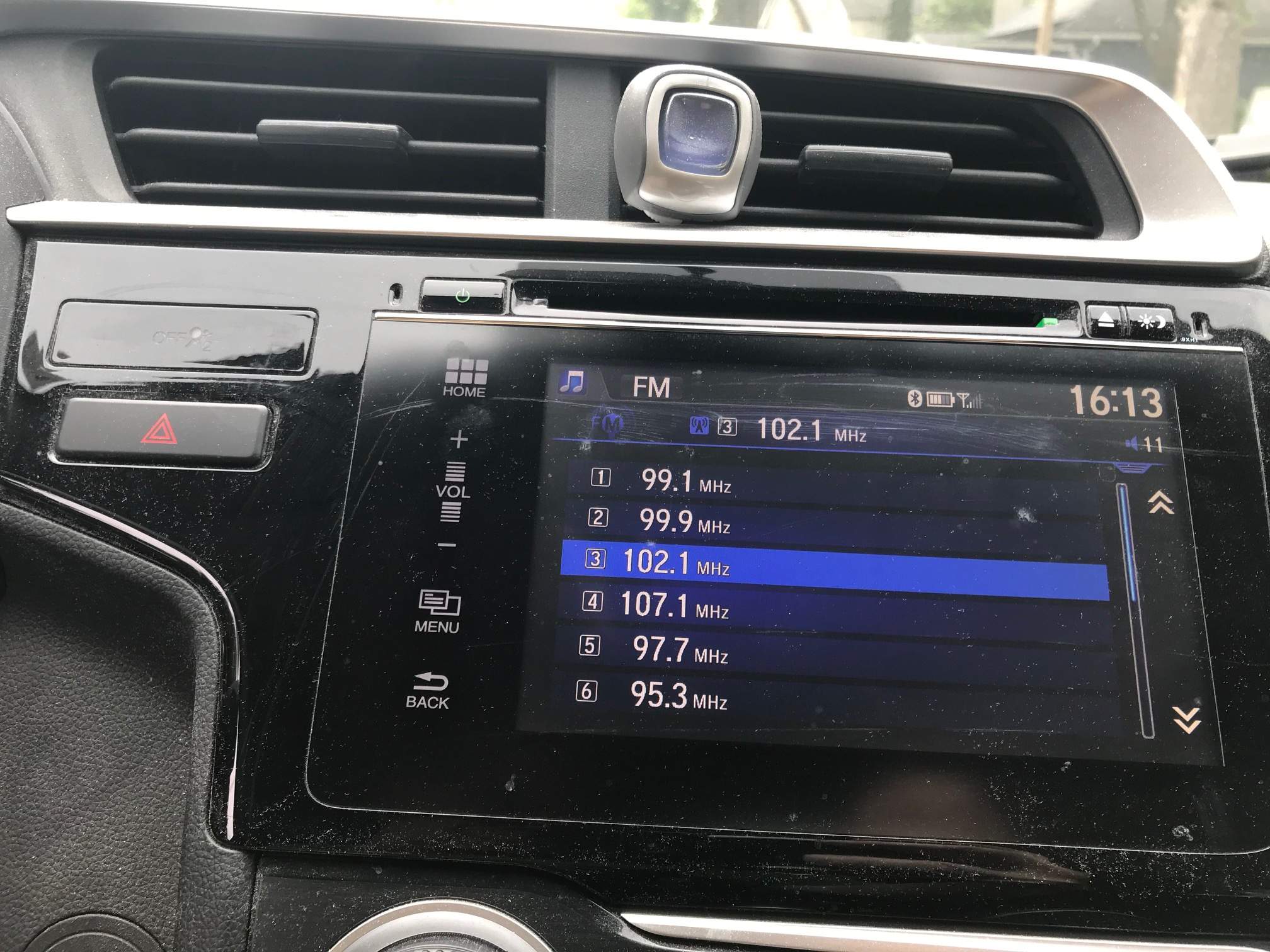
The tech elite has been trying to kill FM radio for fifteen years. They want you to believe that the dashboard dial is a relic, a dusty piece of 20th-century nostalgia destined for the scrapyard while sleek, subscription-based streaming platforms take over the world. Auto manufacturers cite weight savings from removing copper antennas. EV startups claim electromagnetic interference makes AM/FM reception impossible. Streaming giants point to their skyrocketing subscriber metrics.
They are all lying to you, or worse, they are high on their own supply.
The narrative that in-car FM radio is endangered is a manufactured consensus. It is pushed by automakers desperate to monetize your dashboard via recurring software subscriptions and tech platforms eager to capture every second of your data profile. The data tells a completely different story. Broadcast radio isn't dying; it is actively resisting, and the expensive digital alternatives are facing a harsh economic reality check.
The Myth of the All-Digital Dashboard
The core argument for the demise of broadcast radio relies on a flawed premise: that consumer preference is entirely driven by choice abundance.
Every year, major media consumption reports drop, and every year, the tech press misinterprets them. Look at Edison Research’s long-running "Share of Ear" study. Even with the explosion of podcasts, algorithmic playlists, and satellite options, broadcast radio consistently commands the lion's share of time spent listening in the car. We are not talking about a marginal cohort of tech-averse drivers. We are talking about over 80% of consumers who still turn on the radio during their daily commute.
Why? Because the tech industry fundamentally misunderstands human psychology during transit.
Streaming platforms require active cognitive load. You have to choose a playlist, skip songs that don’t fit the vibe, manage data connections in dead zones, and pay a monthly premium for the privilege. Radio requires exactly one interaction: hitting a physical button. It offers zero-friction curation. It provides local utility—traffic updates, local news, immediate weather alerts—that an algorithm based in a server farm three states away cannot replicate.
Automakers like Tesla and Rivian attempted to strip AM/FM access from their vehicles, masking a cost-cutting measure as forward-thinking innovation. The pushback wasn't just loud; it was legislative. When federal lawmakers step in with bipartisan support to mandate AM/FM capabilities in modern vehicles for public safety reasons, it reveals a structural permanence that no Silicon Valley product manager can disrupt.
The Cracking Economics of Streaming Audio
Let's look at the financial architecture of the alternatives. The consensus says streaming is the superior business model. The books say otherwise.
The subscription streaming model is facing a growth wall. Consumers are experiencing subscription fatigue, aggressively auditing their monthly digital drains. Audio streaming platforms operate on razor-thin margins because of royalty structures. Every time a song plays on a streaming service, money flows out to record labels and publishers. The more users listen, the more the platform pays.
+--------------------------+-----------------------------------+
| Audio Delivery Mechanism | Marginal Cost Per Additional Listener |
+--------------------------+-----------------------------------+
| FM Broadcast Tower       | $0.00                             |
| Digital Audio Streaming  | Incremental Bandwidth & Royalties |
+--------------------------+-----------------------------------+
Broadcast radio operates on a completely different mathematical reality. Once a station pays for the transmitter, the electricity, and the tower lease, the marginal cost of adding a one-millionth listener is exactly zero. It scale efficiently in a way that unicast digital streaming never will.
Advertisers are starting to wake up to this discrepancy. Digital audio ads are easily skipped, blocked, or ignored. They are often delivered to bots or users who have muted their devices. FM radio advertising is baked directly into the local auditory environment. For regional businesses, tier-two automotive groups, and local services, the ROI of a high-power FM broadcast remains completely unmatched by hyper-targeted digital programmatic ads that get lost in the noise.
The EV Interference Excuse is Laziness
The loudest technical argument against the survival of broadcast radio in modern vehicles involves electric drivetrains. Engineers claim that the propulsion systems of modern electric vehicles generate significant electromagnetic interference (EMI), which degrades the analog radio signal, creating a terrible user experience.
This is a failure of engineering will, not a physical impossibility.
I have spent years looking at automotive component sourcing. Removing the analog tuner and the associated shielding saves an OEM roughly $15 to $30 per vehicle. Multiply that by millions of units, and you find the real motivation. Companies like Ford initially pulled AM radio from their EV lines, blaming EMI, only to reverse course entirely after intense public pressure.
Engineers know how to shield components from EMI. They do it for the massive array of sensors, cameras, and computing modules already packed into modern digital chassis. Claiming that an FM tuner cannot be shielded is a lazy justification for stripping out a feature to hit a margin target, while simultaneously trying to force consumers onto a paid data plan or an in-house app store.
Dismantling the Connected Car Delusion
The automotive industry wants your car to be a smartphone on wheels. They envision a closed ecosystem where you pay $9.99 a month for navigation, $4.99 for heated seats, and another $14.99 for premium audio access.
This strategy ignores the reality of infrastructure stability.
The moment a driver enters a rural area, a mountainous pass, or a concrete parking structure, the hyper-connected car becomes a dumb metal box. Cellular networks are fragile, prone to congestion, and geographically spotty. Broadcast radio relies on high-power, low-frequency transmitters that blanket hundreds of miles regardless of cellular tower density. It is a redundant, resilient network that costs the end user nothing to access.
To suggest that a fragile, paid, cellular-dependent network will entirely replace a free, bulletproof, broadcast network is pure tech hubris. The dashboard of the future will not be an exclusive playground for streaming apps. The consumer won't allow it, the physics don't support it, and the economics don't justify it.
Stop buying into the narrative that everything old must disappear to make room for a venture-backed replacement. The dial isn't going anywhere. Turn it on.