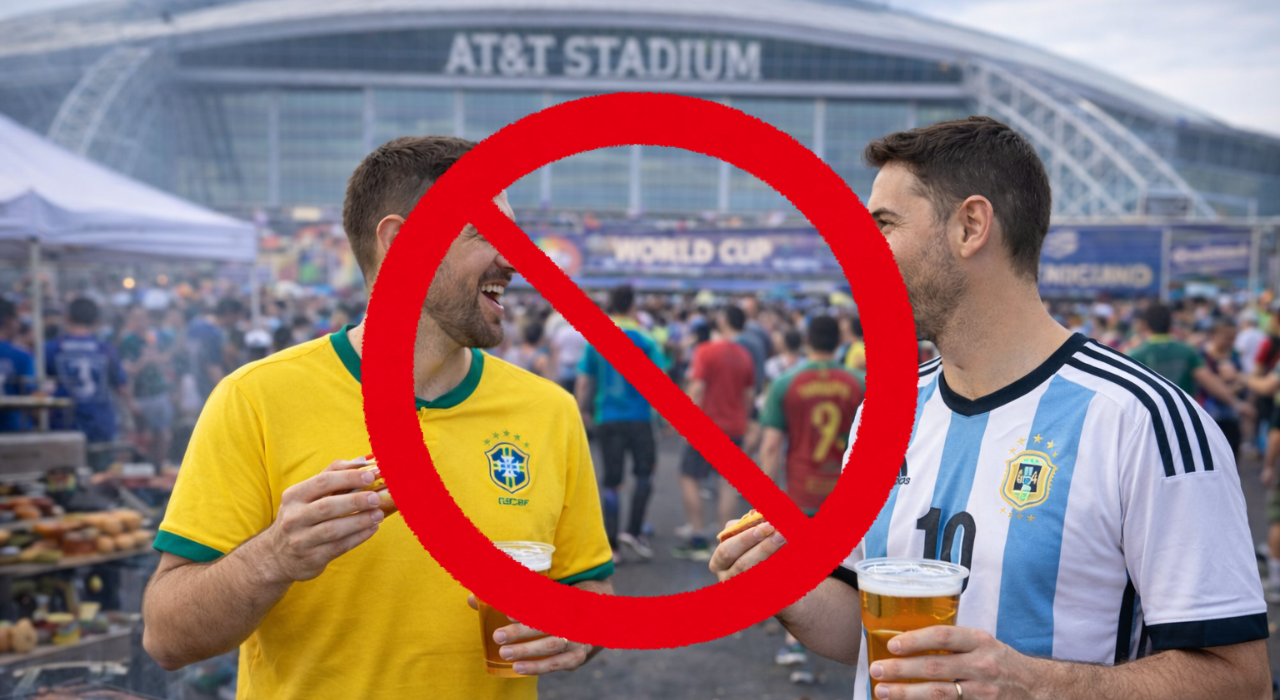
The charcoal smoke hits you long before you see the stadium lights. It’s a thick, savory fog that carries the scent of charred bratwurst, cheap beer, and the frantic optimism of a Sunday morning. For decades, the American parking lot has served as a secular church. It is a place where social hierarchies dissolve over a plastic folding table. The CEO in the $400 jersey flips burgers for the plumber in the faded cap, and for four hours before kickoff, they are brothers-in-arms.
But as the 2026 World Cup approaches, this ritual—the tailgate—is facing an existential threat.
FIFA, an organization headquartered in the pristine quiet of Zurich, operates with a different blueprint for "fan engagement." Their vision is polished, corporate, and tightly controlled. In the world of international soccer, the "matchday experience" doesn't happen around a Weber grill in a sea of asphalt. It happens in high-end fan zones and sterile, ticketed plazas. As the world’s biggest sporting event prepares to descend on North American soil, a quiet war is being waged over the very soul of the stadium perimeter.
The conflict isn't just about hot dogs. It’s about who owns the air around the game.
The Zurich Blueprint vs. The American Lot
Consider the logistics of a typical World Cup match. FIFA requires "clean sites." This isn't just a term for picking up litter; it is a legal and commercial mandate. To protect their billion-dollar sponsors, FIFA establishes a massive exclusion zone around every stadium. Within this radius, no unapproved brand can exist. No unsanctioned beer can be poured. No local taco truck can park.
Now, place that mandate on top of a place like Arrowhead Stadium in Kansas City or MetLife in New Jersey. These venues were built for car culture. They are surrounded by vast, grey deserts designed specifically for the American tradition of the pre-game party. Under the FIFA model, these lots—usually teeming with thousands of private parties—become sterile security buffers.
The collision is inevitable. On one side, you have fans who view the tailgate as the primary event, with the game itself serving as the three-hour epilogue. On the other, you have a governing body that views an uncontrolled crowd with grills and coolers as a security nightmare and a missed revenue opportunity.
The Invisible Stakes of a Cold Grill
To understand what is being lost, you have to look at the economy of the parking lot. I’m not talking about the millions in ticket sales or the television rights. I’m talking about the human economy.
Think of a hypothetical fan named Mike. Mike has held season tickets for thirty years. His "spot" in the lot is more than a parking space; it’s his summer home. He knows the names of the people three cars down. They’ve seen each other’s kids grow up. They’ve mourned losses and celebrated births between the wheel wells of SUVs.
When FIFA bans tailgating for the World Cup, they aren't just changing the rules. They are dismantling a community. By forcing fans into official "Fan Fests," the experience is commodified. Instead of Mike bringing his own cooler and sharing a drink with a stranger, Mike is now standing in a forty-minute line to pay $16 for a plastic cup of Budweiser because it’s the only brand allowed within three miles of the pitch.
The spontaneity is murdered. The "invisible stakes" are the loss of a culture that wasn't created by a marketing department. It was grown in the mud and the sun.
A Security Wall Built of Red Tape
The official justification for these bans usually centers on "safety and security." It sounds logical. Managing 80,000 people is a Herculean task, and adding thousands of open flames and liters of alcohol to the mix complicates the math.
But there is a deeper, more cynical logic at play.
A tailgate is an autonomous zone. If you are eating a burger you brought from home, you aren't buying a "FIFA Signature Slider" inside the gates. If you are lounging in a lawn chair, you aren't browsing the official merchandise tent. The American matchday is a sprawling, decentralized ecosystem. FIFA, however, prefers a funnel. They want to move the human herd from the train station, through the security checkpoint, and directly into the commercial stream.
In Qatar or Russia, this transition was easier because the local sports cultures didn't have a direct equivalent to the American parking lot. But in 2026, the World Cup is playing in our backyard. We are inviting the world over, but we are being told we aren't allowed to host the party on our own porch.
The Ghost of 1994
We have been here before, though the scale was different. During the 1994 World Cup in the United States, the culture clash was palpable. Back then, soccer was a curiosity to the average American sports fan. Now, it is a passion. The fans who will fill the stadiums in 2026 aren't just "soccer fans"—they are American sports fans. They expect a certain level of agency over their day.
If you tell a fan in Philadelphia or Dallas that they have to arrive by shuttle, stay in a designated concrete pen, and pay a premium for the privilege of standing in the heat without a chair, you aren't "enhancing" their experience. You are insulting it.
The danger for FIFA is a disconnect that sours the atmosphere. The World Cup relies on the "vibe" of the host nation. If the stadiums are surrounded by empty, silent asphalt because the tailgaters were turned away by private security, the broadcast will lose its heartbeat. The world will see a shiny stadium, but they won't see the soul of American sport.
The Compromise that Wasn't
Some host cities are trying to find a middle ground. They talk about "designated grilling areas" or "sponsored tailgating zones."
Don't be fooled.
A sponsored tailgate is just a bar with no roof. It’s an outdoor shopping mall. The essence of the tradition is that it is yours. You bring the meat. You bring the music. You bring the weird, lucky hat. As soon as a corporate logo is slapped on the entrance of the lot, the magic evaporates.
The logistics are admittedly brutal. FIFA’s "Last Mile" policy means that the walk to the stadium is supposed to be a choreographed journey through brand activations and official signage. A guy in a stained jersey yelling about a referee while flipping a burger doesn't fit the aesthetic. He is a glitch in the software.
The Quiet Death of the Afternoon
What happens when the charcoal goes cold?
The impact ripples outward. It affects the local grocery stores that sell out of ribs on game day. It affects the small-scale vendors who have spent decades perfecting the art of the stadium periphery. But mostly, it affects the rhythm of the day.
Without the tailgate, the matchday becomes a transaction. You show up, you watch the product, you leave. The "human-centric" element—the hours of conversation, the shared recipes, the communal anticipation—is replaced by a digital ticket and a security pat-down.
We are trading a folk tradition for a global spectacle.
It is a high price to pay for a few weeks of soccer. The 2026 World Cup promises to be the biggest event in the history of the sport, a celebration of a game that belongs to everyone. Yet, in the effort to make it perfect, the organizers risk making it hollow.
The asphalt cathedral is being deconsecrated.
When the final whistle blows in the summer of 2026, the record books will show the scores and the trophy winners. But for those who remember what a Saturday morning used to feel like in a stadium parking lot, the silence of the grills will be the most haunting statistic of all.
The smoke is clearing, but not because the party is over. It’s because it was never allowed to begin.


