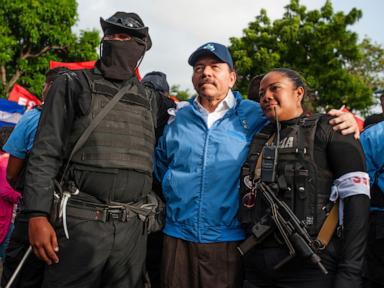
Daniel Ortega took the stage in Managua after a 61-day public absence, looked out at a crowd assembled for the 47th anniversary of the Sandinista Revolution, and dropped the pretense.
There won't be any more elections in Nicaragua.
Not a postponed vote. Not another rigged ballot like the one in 2021 where he threw every serious contender in prison. He told the country point-blank that the electoral system is finished. Days later, Nicaragua's Sandinista-dominated National Assembly confirmed it's moving forward to codify his demand into law, citing a need to preserve "peace, security, and stability".
If you've followed Central America over the last decade, this shouldn't shock you. But it's a massive shift in how autocratic regimes operate in the region. Most dictators prefer the facade of voting—it gives them a veneer of legitimacy and something to point to when foreign diplomats bring up human rights. Ortega and his wife, Rosario Murillo, decided they don't care about the veneer anymore.
The Road to Absolute Dynasty
This isn't an isolated decision made on a whim. It's the final piece of a legal and political puzzle Ortega and Murillo have been piecing together for years.
Look at what happened leading up to this moment:
- 2018 Crackdown: Mass anti-government protests were met with severe force, leaving over 350 dead and hundreds arbitrarily detained.
- 2021 Election Farce: Authorities jailed seven prospective opposition candidates, shuttered independent news outlets, and effectively ran an uncompetitive election.
- NGO and University Closures: The regime stripped away civil society, shutting down over 5,600 NGOs, 29 universities, and 58 independent media outlets.
- Constitutional Overhaul: The Assembly lengthened presidential terms from five to six years and elevated Murillo from vice president to official "co-president," cementing a dynastic succession plan.
By the time Ortega gave his speech, the infrastructure of Nicaraguan democracy wasn't just weakened—it was completely dismantled.
Why Abandon the Ballot Box Now
You might wonder why Ortega bothered to formally end voting if he was already guaranteed to win every contest.
The short answer is fear.
When a dictator strips away every check and balance, even a tightly controlled election creates a flashpoint for public anger. Even a tiny crack in the wall can give opposition forces a focal point to mobilize around. Rather than managing the risks of another staged vote—which was slated for 2027 after earlier constitutional shifts—the Ortega-Murillo regime chose to build what Ortega explicitly called "a wall, a barrier" against political competition.
It's also about solidifying dynastic power. Ortega is 80 years old. His health has been a subject of intense speculation, highlighted by his recent two-month absence from public life. By codifying a system where power rests entirely within the executive "co-presidency" without the requirement of periodic elections, he guarantees that Murillo seamlessly holds absolute control if he dies or steps aside.
How the World Is Reacting
The international response was immediate, but predictably limited in its practical impact.
Volker Türk, the United Nations High Commissioner for Human Rights, condemned the announcement, warning that it "further deepens the severe restrictions on fundamental freedoms, the dismantling of civic space, and the steady erosion of the rule of law". U.S. Secretary of State Marco Rubio issued a statement declaring that the move "lays bare their true authoritarian nature" and urged international partners to reject normal relations with the regime.
Opposition leaders in exile expressed outrage, though many noted it simply formalized a reality Nicaraguans have lived under for years. As former presidential aspirant Félix Maradiaga put it, Ortega "buried Nicaraguan democracy a long time ago".
The problem is that diplomatic statements and targeted sanctions haven't altered the regime's trajectory. Nicaragua has insulated itself through tighter ties with authoritarian partners, showing little sensitivity to isolation from Western democracies.
What This Means for Regional Stability
Ortega's formal end to elections sets a dangerous precedent for Latin America. It proves that a leader can transition from a flawed democracy to a total police state without facing catastrophic internal or external consequences capable of unseating them.
For ordinary Nicaraguans, it closes the last remaining peaceful mechanism for political change. When you eliminate the ballot box, you leave a country with no institutional outlet for grievances, driving more citizens into exile and deepening the political freeze across Central America.
If you're watching this situation, keep your eye on two key factors: whether the National Assembly passes specific constitutional amendments replacing elections with an explicit, formal apparatus, and how regional trade blocs handle economic agreements with a government that has completely discarded democratic governance.