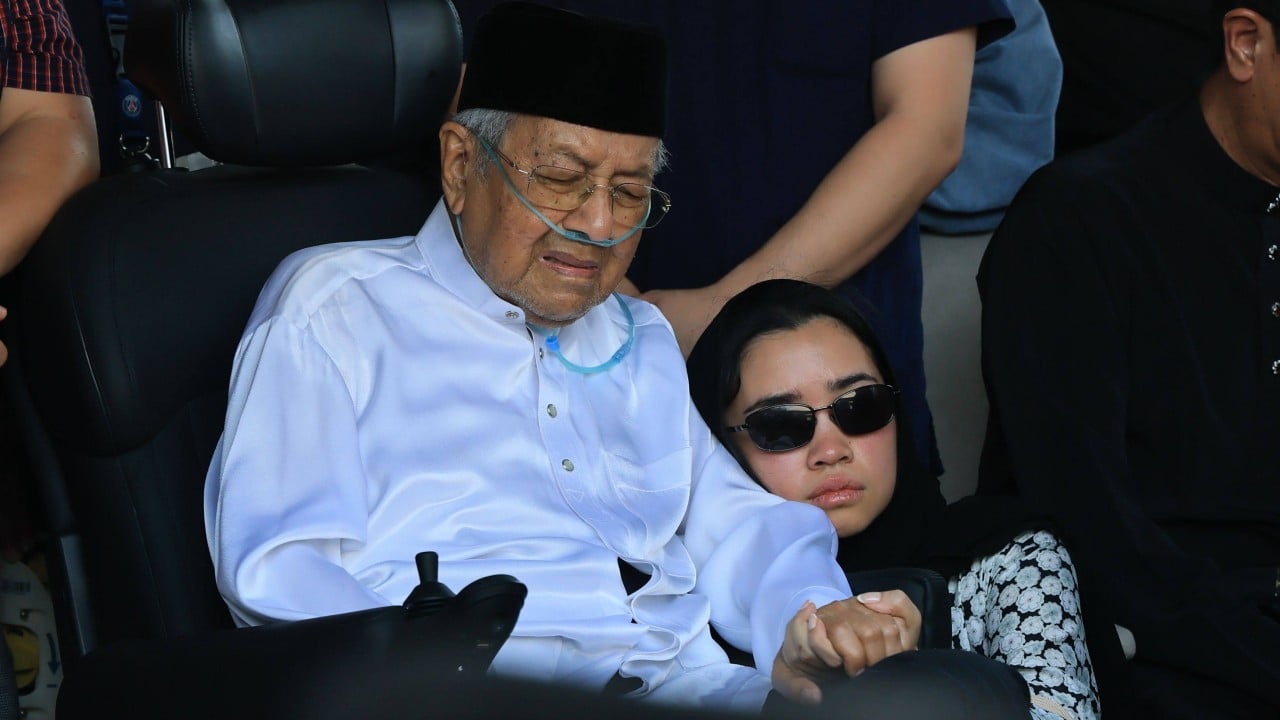
The obituary industrial complex has a predictable script. When a towering political figure experiences profound personal loss, the narrative immediately pivots from ruthless accountability to tear-soaked hagiography. Headlines wring their hands over isolation. Pundits murmur about a fading patriarch sitting in an empty room, staring at portraits, stripped of his lifelong anchor.
It is lazy journalism. It is emotional manipulation disguised as empathy. And it fundamentally misunderstands how power works in Kuala Lumpur and beyond.
Tun Dr Mahathir Mohamad is not a tragic, helpless victim of grief tossed about by the cruel tides of fate. He is the master architect who spent decades reshaping the Malaysian state to his exact specifications. To reduce a calculating, iron-willed political operator to a lonely old man mourning Tun Siti Hasmah is an insult to his intellect, his agency, and his historical record. Grief is real. Human sorrow is universal. But political sentimentality is a narcotic, and the media is pushing it hard.
Let us strip away the varnish. For over twenty years in his first tenure and another turbulent stretch in his second, Mahathir did not survive by cultivating warmth. He survived by outmaneuvering allies, neutralizing rivals, dismantling institutional checks, and bending the judiciary to executive will. He built an apparatus of control that outlasted economic panics, party schisms, and international reprimands. A man who orchestrates the political exile of his own handpicked successors and stares down global financial institutions does not suddenly dissolve into pathetic isolation because the sentimental spotlight shifts to his domestic quarters.
The lazy consensus treats political longevity as a byproduct of personal charm or marital stability. That is historical illiteracy. Longevity in authoritarian or semi-democratic frameworks is an exercise in structural dominance. Mahathir understood early that institutions are disposable, but loyalties managed through patronage and fear are permanent.
When commentators weep over his supposed loneliness following the passing of Siti Hasmah, they are participating in a long-standing Malaysian political tradition: the humanization shield. For decades, Siti Hasmah served as the indispensable softening agent for a polarizing leader. Her public grace, her violin playing, her self-effacing demeanor—these were not just personal traits; they were strategic counterweights. Whenever Mahathir’s policy crackdowns, fiery rhetoric, or authoritarian maneuvers alienated the urban middle class or international observers, the gentle image of his marriage stepped in to absorb the shock.
Journalists fell for it then. They are falling for it now.
By framing him as a lonely widower, the commentariat effectively grants amnesty to his entire political ledger. You cannot simultaneously evaluate a man as the titan who industrialized Malaysia, crushed judicial independence, detained dissidents under the Internal Security Act, and engineered multiple party realignments, and then weep over his tea table because he lacks company. Power demands a cold accounting. Sentimentality refuses to pay the bill.
Consider the mechanics of political isolation. In modern democracies or hybrid regimes, leaders do not become lonely because they lose loved ones; they become irrelevant when they lose control of the narrative. Mahathir has never lost control of the narrative. Even in his nineties, when most retired leaders are confined to writing sanitized memoirs and cutting ribbons at charity galas, he was staging political comebacks, launching new coalitions, and dictating front-page news. A man who can collapse a sitting government from the backbench is not sitting in isolation. He is working the switchboard.
To buy into the "lonely" narrative is to ignore his own autobiography of survival. Mahathir is a survivor because he treats relationships—political and personal—as instruments of utility and endurance. To paint him as a broken-hearted retiree is to project our own bourgeois anxieties onto a cold-blooded political strategist.
The media loves the trope of the fallen titan because it comforts the public. It reassures us that even the most powerful men are ultimately brought low by human weakness, mortality, and heartbreak. It equalizes the field. It tells the ordinary citizen that political power is ultimately hollow because at the end of the day, everyone dies alone.
It is a comforting lie.
Power is not hollow. It leaves structural scars that persist long after the strongman leaves office. The institutions Mahathir weakened—the courts, the civil service, the press—did not recover just because he shed tears. The precedents he set for executive overreach did not vanish when he went home. The ethnic polarization embedded in his economic and educational policies remains the defining fault line of Malaysian society today.
Focusing on his emotional state is a distraction from these structural realities. It shifts the gaze from the ledger of governance to the theater of mourning.
Let us look at the actual mechanics of his career without the romantic soft-focus lens. Mahathir’s entire political ethos was built on the principle of permanent conflict. He needed enemies—foreign currency speculators, rogue judges, rebellious princes, ungrateful protégés—to sustain his grip on authority. Conflict creates urgency, and urgency justifies exceptional measures. When you spend a lifetime treating politics as a zero-sum war of attrition, you do not retire into quiet contemplation. You scan the horizon for the next tactical advantage.
To suggest that a man wired this way is sitting in a corner feeling sorry for himself is to misread his entire psychology. He is calculating. He is assessing. He is watching who steps forward and who stumbles.
The public obsession with his personal grief also infantilizes the nation he shaped. It suggests that Malaysia cannot process its own political history without wrapping it in melodrama. Every crisis must be a family drama. Every policy failure must be softened by personal tragedy. We treat politicians like soap opera characters so we never have to hold them accountable as executives.
We must stop treating political figures as emotional casualties of their own choices. Mahathir made his choices with eyes wide open. He broke parties, locked up critics, centralized authority, and rewrote the rules of engagement in Southeast Asian politics because he believed he alone knew what Malaysia required to survive. That is not the profile of a lonely, vulnerable old man. That is the profile of an uncompromising autocrat who viewed the nation as his personal laboratory.
You do not pity the scientist who blew up the lab; you inspect the wreckage.
The next time an op-ed tries to draw a tear over the empty chair at his dining table, remember what actually sits on that table: the accumulated weight of decades of institutional erosion, political fracture, and relentless ambition. Mahathir is not lonely. He is surrounded by the ghost of every institution he dismantled and the reality of every rival he outlasted.
Stop looking at the widower. Look at the architecture. It is still standing, and it is still crushing dissent.