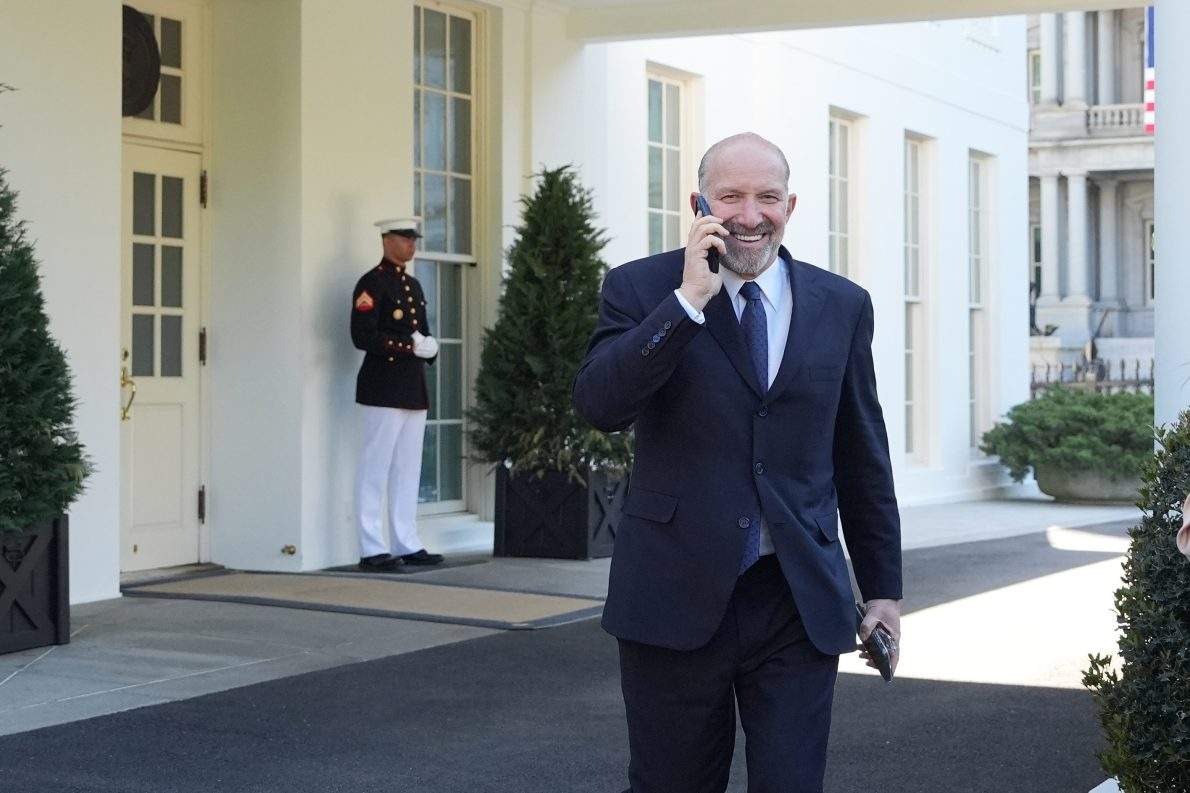
The business press is clutching its collective pearls because Howard Lutnick dared to suggest that CUSMA—the United States-Mexico-Canada Agreement—is a "bad deal." The prevailing wisdom among the Davos set is that trade agreements are sacred relics, untouchable once signed, and that any talk of "re-imagining" them is a precursor to economic scorched earth.
They are wrong. CUSMA isn't a masterpiece of modern diplomacy; it is a clunky, 20th-century patch on a 21st-century hemorrhage.
While analysts fret over "market stability," they ignore the reality that the current agreement has become a backdoor for Chinese industrial overcapacity. When Lutnick says the deal needs to be re-imagined, he isn't just posturing for a campaign trail audience. He is identifying the fundamental failure of a North American trade bloc that has allowed itself to be hollowed out from the inside. The "lazy consensus" says that any friction in the North American supply chain is a disaster. The truth is that the current friction-less path is exactly what's killing the American industrial base.
The Transshipment Myth and the Mexican Backdoor
The biggest lie told about CUSMA is that it protects North American labor. It doesn't. It protects North American assembly.
Under the current rules of origin, Mexico has increasingly become a sophisticated staging ground for Chinese components to receive a "Made in North America" sticker. Look at the surge in Chinese investment in Mexican industrial hubs like Querétaro and Nuevo León. This isn't a coincidence; it's a strategic bypass.
If you think a 75% regional value content requirement for autos is a high bar, you haven't seen how creative corporate accounting gets. I have watched firms shuffle overhead costs and R&D credits to hit those percentages while the physical guts of the vehicle—the high-value electronics and battery chemistry—still originate in subsidized factories in the Pearl River Delta.
CUSMA, in its current form, provides the legal framework for this arbitrage. To "re-imagine" it means ending the charade that "Regional Value" is the same as "National Interest."
The Cost of Convenience
We have traded resilience for efficiency. The mainstream economic argument is that CUSMA lowered prices for consumers. Sure, your refrigerator is $50 cheaper, but the factory that used to build it in Ohio is now a spirit Halloween store. The "bad deal" Lutnick refers to isn't about the price of goods; it's about the erosion of the tax base and the strategic vulnerability of our supply chains.
The "experts" will tell you that a trade war with Mexico or Canada would be "self-inflicted pain." This is a classic false dichotomy. The choice isn't between the status quo and total isolationism. The choice is between a trade agreement that serves as a shield for North American workers or one that serves as a sieve for global competitors.
Canada’s Digital Protectionism and the Dairy Farce
The media loves to paint Canada as the polite, rule-following neighbor. But the Canadian government’s insistence on supply management for dairy and their recent digital services taxes are blatant violations of the spirit of "free trade."
The U.S. has been playing nice for too long. CUSMA was supposed to fix the dairy disputes that plagued NAFTA. Instead, it created a new series of bureaucratic hurdles that effectively keep American farmers out of the Canadian market while Canadian subsidized lumber continues to flood the U.S. South.
Re-imagining this deal isn't about "bullying" Canada. It’s about demanding reciprocity. In business, if a contract is consistently breached or tilted in favor of one party, you don't "wait for the next review cycle." You renegotiate or you walk. Lutnick knows that the threat of walking is the only thing that brings Ottawa and Mexico City to the table with a real pen.
The 2026 Sunset Clause: A Feature, Not a Bug
Critics argue that the 2026 review clause creates "uncertainty." This is exactly what the establishment hates: accountability.
Most trade deals are designed to be "set it and forget it," allowing multinational corporations to outsource production with decades of legal certainty. The sunset clause in CUSMA is the only leverage the U.S. has left. It forces a hard look at the data every six years.
What does that data show?
- A ballooning trade deficit with Mexico that hit record highs in 2023 and 2024.
- A failure to curb the flow of fentanyl precursors through Mexican ports.
- A continued reliance on non-market economies for critical minerals.
If the deal isn't working for the American worker, why should it be permanent? The idea that we must maintain a failing agreement for the sake of "market sentiment" is the height of cowardice. Markets adapt. If the rules change to favor domestic production, capital will flow back to the U.S. It’s that simple.
Stop Asking if Trade Is Free
The wrong question being asked by every major news outlet is: "Will this make trade less free?"
The right question is: "Is this trade fair?"
There is no such thing as "free trade" with a country like China that uses state-owned enterprises to crush competition. When China uses Mexico as a proxy, the trade isn't free—it's subsidized by the American middle class. Lutnick and Trump are signaling a shift from "Free Trade" to "Strategic Trade."
Strategic trade recognizes that certain industries—semiconductors, steel, heavy machinery—are too important to be left to the whims of the lowest bidder in a globalized race to the bottom.
Why the Corporate Lobby Is Terrified
The Chamber of Commerce and the Business Roundtable are already drafting memos about the dangers of "re-imagining" CUSMA. Why? Because their members have built their entire profitability models on the Mexican labor arbitrage. They aren't worried about the "American economy"; they are worried about their quarterly margins.
I have sat in boardrooms where the decision to move a plant was made based on a 4% difference in labor costs, ignoring the 100% risk of geopolitical instability or IP theft. These executives aren't visionaries; they are spreadsheet managers who have outsourced their common sense.
A re-imagined CUSMA would likely include:
- Strict "Anti-Circumvention" Rules: If the capital behind a factory is Chinese, the goods aren't North American. Period.
- Environmental and Labor Parity: If Mexico wants access to our market, they need to play by our rules on emissions and wages. No more "brown" manufacturing at "green" prices.
- Currency Safeguards: Preventing partners from devaluing their way to a trade surplus.
The Counter-Intuitive Reality
The most "pro-business" move the U.S. can make right now is to introduce more friction into the trade of goods that undermine our national security.
The mainstream media calls this "protectionism" as if it’s a dirty word. In reality, it’s just basic maintenance of the national interest. We have spent thirty years dismantling our own capacity to build things under the guise of "global integration."
Lutnick isn't looking to destroy North American trade. He is looking to save it from its own obsolescence. If we don't fix the loopholes in CUSMA now, the North American market will eventually be nothing more than a distribution hub for goods manufactured elsewhere.
Stop listening to the economists who haven't seen the inside of a factory in twenty years. They are still reading from a textbook that was written before the rise of the CCP and the collapse of the American rust belt. The world has changed. The deal has to change with it.
If your trade agreement doesn't result in more jobs for your own citizens, it’s not an agreement—it’s a surrender. The 2026 review isn't a threat; it's an opportunity to finally stop pretending that the current system is working.
The "experts" want you to be afraid of the disruption. You should be much more afraid of the status quo.
The era of the American "sucker" is over. Pay attention to the man with the pen.