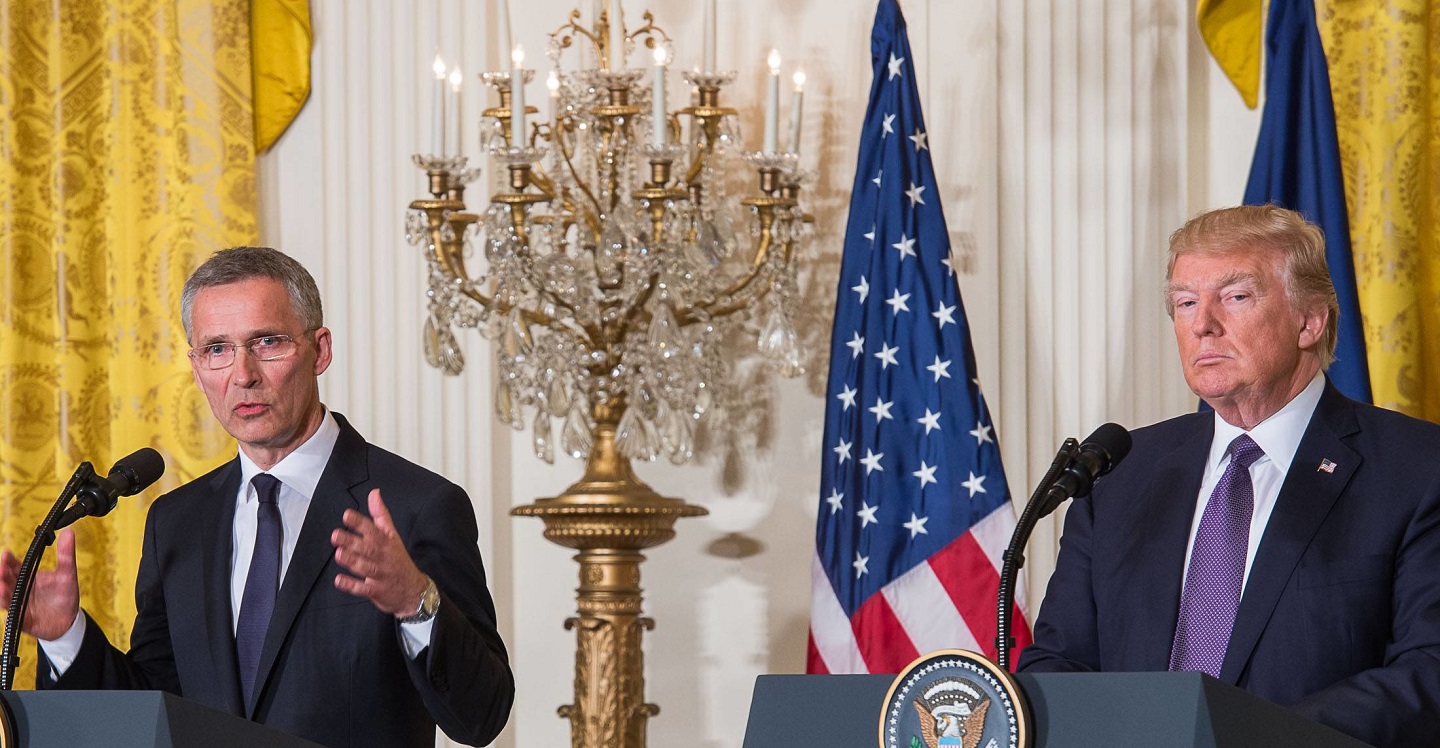
The assumption that Donald Trump’s return to power would act as a universal rising tide for Europe’s populist right is proving to be a fundamental miscalculation. While political analysts often lump "National Greatness" movements into a single global monolith, the reality on the ground in Brussels, Rome, and Budapest reveals a widening chasm. European firebrands who once rode Trump’s coattails are now discovering that his brand of "America First" is not a collaborative franchise, but a protectionist threat that could dismantle their own domestic economies. The friction is no longer just ideological. It is structural.
For years, figures like Viktor Orbán and Giorgia Meloni used the Trumpian playbook to signal a break from the neoliberal consensus. They shared the same enemies: globalist institutions, open borders, and the legacy media. But as the prospect of a second Trump term moves from theory to policy, the cost of admission for European populists has skyrocketed. Between the threat of sweeping trade tariffs and a fundamental disagreement over the security of the European continent, the "Special Relationship" of the radical right is hitting a wall of cold, hard national interest. For an alternative view, consider: this related article.
The Tariff Trap and the End of Ideological Solidarity
European populists base their entire appeal on protecting the local worker and the national industry. This creates an immediate, unsolvable conflict with a White House that views every trade deficit as a personal affront. Trump’s proposed universal baseline tariff—potentially reaching 10% or 20% on all imports—does not make exceptions for "friendly" nationalist governments.
Italy’s manufacturing sector and Germany’s automotive supply chains are deeply integrated into the American market. For Giorgia Meloni, a leader who has spent years pivoting toward a more traditional, Atlanticist foreign policy, a trade war with Washington would be a death sentence for her economic credibility. She cannot tell her base she is "protecting Italy" while the country’s luxury goods and industrial machinery are priced out of the U.S. market by a supposed ally. Similar reporting on the subject has been published by The New York Times.
This is the inherent paradox of global nationalism. When everyone puts their own country first, nobody comes second; they just collide. The populist leaders of Europe are realizing that Trump’s version of sovereignty is zero-sum. If the U.S. successfully "shores up" its industry through aggressive protectionism, it often does so at the direct expense of the European export engines that these populist leaders promised to save.
The Ukraine Wedge and the Security Vacuum
Nowhere is the divide more visible than in the muddy trenches of Eastern Europe. For the Polish right-wing or the Baltic hardliners, the existential threat is not "wokeism" or the European Commission; it is the Russian Federation. Trump’s repeated suggestions that he would end the war in Ukraine "in 24 hours"—likely by forcing territorial concessions—sends a shiver through the very movements that were once his loudest cheerleaders in Warsaw.
Viktor Orbán remains the outlier, maintaining a cozy relationship with the Kremlin that provides him with cheap energy and a "peace" platform. However, his stance has isolated him within his own peer group. The European populist movement is no longer a unified bloc on foreign policy. You cannot build a "Fortress Europe" if the commander-in-chief of NATO is threatening to walk away from the battlements.
The NATO Protection Racket
The rhetoric regarding NATO has shifted from a demand for fair spending to something resembling a protection racket. When Trump suggests he would encourage aggressors to do "whatever the hell they want" to allies who don't pay up, he isn't just attacking the liberal elite in Paris or Berlin. He is undermining the physical security of the nationalist governments in Prague and Warsaw. These leaders are forced into a humiliating position: defend an American president who views their safety as a line item on a ledger, or align with the "globalist" EU structures they spent a decade attacking.
Silicon Valley and the Sovereign Data War
A secondary but equally volatile front is being fought over technology and data. The European right has historically been skeptical of Big Tech, often framing companies like Google and Meta as engines of American cultural imperialism. Yet, the Trumpian era saw the rise of a new "MAGA-Tech" faction, exemplified by figures like Elon Musk.
European populists are now caught in a pincer movement. On one hand, they want to use these platforms to bypass traditional media. On the other, they are obsessed with "digital sovereignty." They want to control their own data and protect their own domestic tech ecosystems. A Trump administration that views any regulation of U.S. tech companies as an act of economic war puts European nationalists in an impossible spot.
The Subsidy Race
The Inflation Reduction Act (IRA) was a wake-up call for Europe, but a second Trump term promises an even more aggressive "drain" of European capital and talent. By offering massive tax breaks and cheaper energy costs, the U.S. is effectively poaching the industrial base of the EU. For a French or Dutch populist, watching their factories move to Ohio because of American subsidies is not a "victory for the right." It is a national emergency.
The Meloni Blueprint vs the Orbán Gambit
We are seeing two distinct strategies emerge among Europe’s right-wing elite for dealing with the "Trump problem."
The Meloni Blueprint involves performative alignment on social issues while maintaining a rigid, traditionalist stance on security and trade. She is attempting to be the "adult in the room" of the radical right, hoping that by being a reliable NATO partner, she can negotiate carve-outs for Italian industry. It is a high-stakes gamble that assumes the White House values loyalty over trade balances.
The Orbán Gambit is the opposite. It is a total bet on a Trump victory as a way to bypass Brussels entirely. Orbán isn't looking for trade deals; he’s looking for a political shield. By positioning Hungary as Trump’s primary outpost in Europe, he hopes to gain the leverage needed to ignore EU sanctions and rule-of-law requirements.
Neither of these strategies is guaranteed to work. The fundamental flaw is the assumption that Trump’s policy is driven by ideological kinship. History suggests it is driven by a transactional, "What have you done for me lately?" framework. In that framework, a small economy like Hungary’s has very little to offer besides a photo op.
The Cultural Disconnect
While the memes and the "anti-woke" rhetoric are shared across the Atlantic, the underlying social goals are often at odds. European populists, even the most radical, are generally committed to the social safety net. They are "pro-worker" in a way that includes state-funded healthcare and strong labor protections.
The American "MAGA" movement, particularly in its latest iteration, is increasingly tied to a libertarian, deconstructive view of the state. When Trump allies talk about "dismantling the administrative state," they are talking about the very mechanisms that European populists use to maintain their power and keep their constituents happy. A collapse of state services in the U.S. might be a libertarian dream, but in Europe, it would be a populist nightmare.
The Ghost of 2016
The euphoria that greeted Trump’s first victory in 2016 has been replaced by a weary pragmatism. European leaders have seen the volatility firsthand. They remember the steel and aluminum tariffs. They remember the sudden withdrawals from international agreements that left them exposed.
The "firebrands" are older now. They are no longer the insurgents throwing stones from the outside; many of them are the ones holding the keys to the government. With power comes a different set of priorities. They have to balance budgets, manage energy grids, and keep unemployment low. They have learned that a tweet from the Oval Office can do more damage to their local economy than a dozen directives from the European Commission.
The Breaking Point of the Nationalist International
The idea of a "Nationalist International"—a global alliance of sovereign-focused leaders—was always a contradiction in terms. You cannot have a global movement based on the rejection of globalism without eventually turning on each other.
As the U.S. moves toward a more isolationist and protectionist stance, the leaders of the European right are finding themselves in the uncomfortable position of having to defend the very international order they once decried. They need the WTO to challenge U.S. tariffs. They need NATO to deter Russian expansion. They need the EU single market to provide the economic scale to compete with both the U.S. and China.
The "Trump effect" in 2026 isn't a wave of shared victory. It is a centrifugal force that is pulling the European right apart, forcing every leader to choose between their ideological brand and their national survival. The firebrands haven't gone soft; they've just realized that in a world of "America First," they are inevitably second.
Nationalism is, by definition, selfish. When the most powerful country on earth decides to fully embrace that selfishness, its smaller "allies" don't get a seat at the table. They get the bill. The coming years will not be defined by a grand alliance of the right, but by a series of bitter, transactional disputes where the shared language of populism serves as a thin veil for deep-seated economic and strategic conflict.
European leaders who fail to diversify their security and economic dependencies away from a volatile Washington are not practicing "sovereignty." They are practicing negligence. The smart money in Rome, Paris, and even Warsaw is already looking for the exits, quietly building the "strategic autonomy" they once mocked when it was proposed by the centrist elite. They have seen the future of the Transatlantic alliance, and it looks less like a partnership and more like a hostile takeover.
The hard truth for Europe’s right is that they are more dependent on the stability of the global order than they ever cared to admit. Now that the man who wants to break that order is returning, they are the ones who stand to lose the most. The populist honeymoon is over. The era of the nationalist trade war has begun.
Prepare for a Europe that talks like Trump but acts like a protectionist fortress against him. It is the only way they survive.