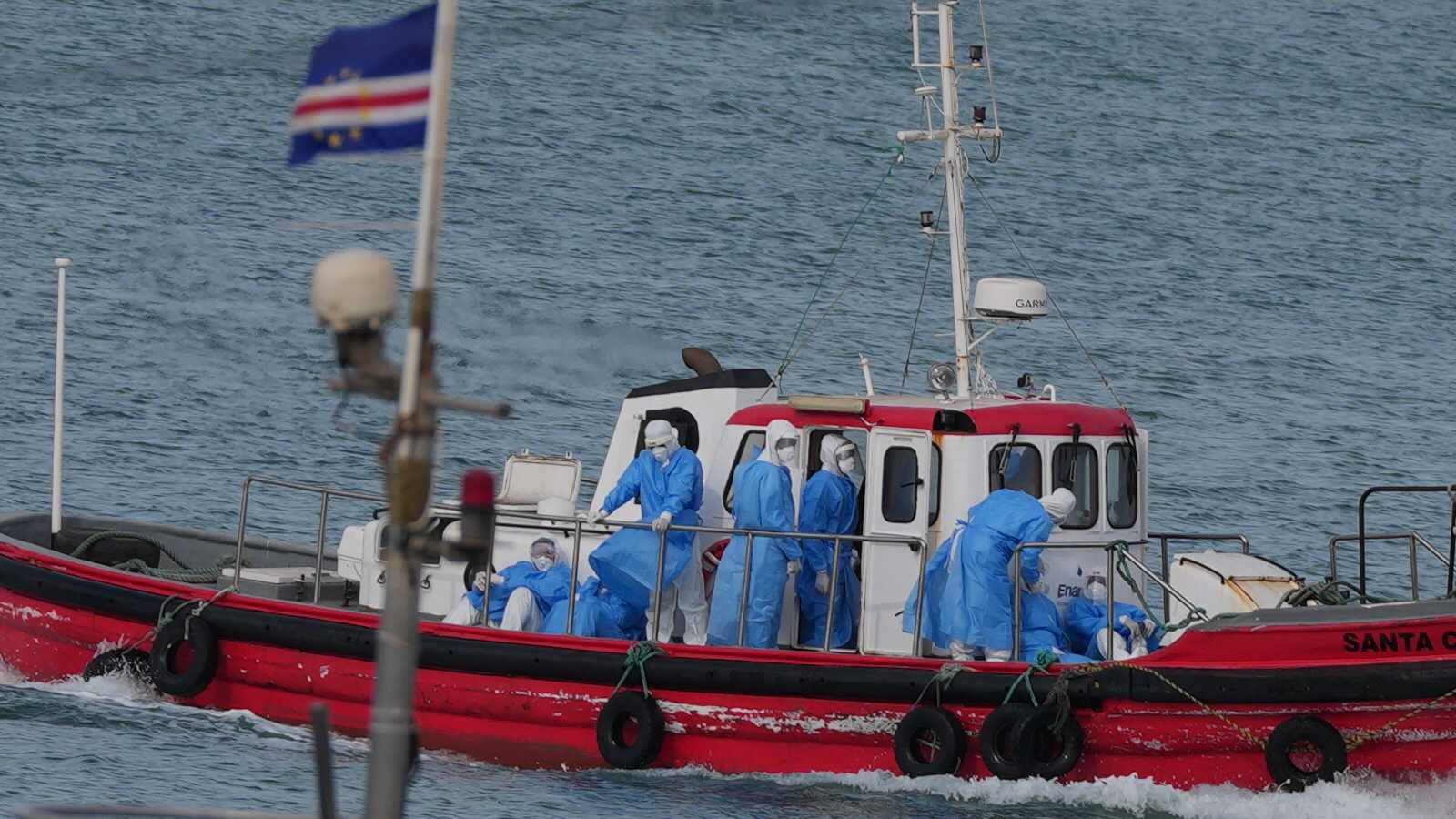
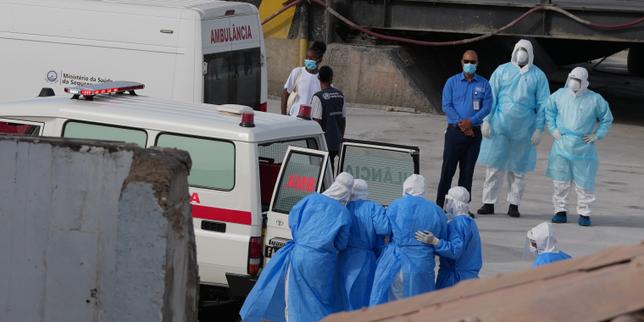
The leaked video of a ship captain announcing the first hantavirus death on a luxury liner isn't just a tragic moment captured on a smartphone. It is a fundamental breakdown of the sanitized image the cruise industry spends billions to maintain. While the footage focuses on the immediate panic and the captain’s somber voice over the PA system, the real story lies in how a virus typically associated with rural cabins and wilderness outhouses found its way into the sealed, pressurized environment of a modern cruise ship.
Hantavirus Pulmonary Syndrome (HPS) is a severe respiratory disease. People catch it by breathing in air contaminated with the droppings, urine, or saliva of infected rodents. It is not a disease of the sea. It is a disease of the earth. When it appears on a vessel carrying thousands of passengers, it signals a catastrophic failure in the "bubble" of luxury travel. The public deserves to know how a rodent-borne pathogen bypassed elite sanitation protocols to claim a life at sea.
The Logistics of a Biological Breach
A cruise ship is a floating city, but unlike a city on land, it relies on a closed-loop supply chain. Every piece of fruit, every bedsheet, and every decorative plant is brought on board at high-velocity ports. This is where the breach likely occurred.
Rodents are the primary vectors for hantavirus. Specifically, the deer mouse and the white-footed mouse are notorious carriers. These animals don't swim to ships. They are invited. They hide in dry-goods pallets, wooden crates, and industrial shipping containers. In the rush to restock a ship during a twelve-hour turnaround, the inspection of every single pallet for rodent evidence is a logistical nightmare that often relies on visual spot checks.
Once a rodent enters the ship's lower decks, it finds an environment that is essentially a high-tech labyrinth. The interstitial spaces between bulkheads, the massive ventilation ducts, and the sprawling food storage lockers provide perfect nesting grounds. In these dark, rarely visited corners, the virus enters the air.
The Myth of Sterile Luxury
The cruise industry markets itself on a promise of total cleanliness. Crew members are seen constantly wiping down handrails and spraying buffet stations with disinfectant. This is largely "hygiene theater." While these actions prevent the spread of common stomach bugs like norovirus, they do nothing against a pathogen lurking inside the ship's internal machinery.
If an infected rodent nests near a primary air intake or inside a ventilation shaft, the ship’s HVAC system becomes a delivery mechanism. It distributes fine, aerosolized particles of dried waste directly into the cabins and common areas. Passengers aren't getting sick because they touched a dirty surface; they are getting sick because they are breathing the ship's very breath.
Why Hantavirus is a Different Kind of Threat
Most maritime health scares involve Norovirus. It’s unpleasant, but rarely fatal for healthy adults. Hantavirus is a different beast entirely. It has a mortality rate of roughly 38 percent.
The early symptoms are deceptively mild. Fatigue, fever, and muscle aches mimic the common flu or even the general exhaustion of travel. However, after a few days, the lungs begin to fill with fluid. At sea, where medical facilities are equipped for stabilization rather than long-term intensive care, a hantavirus infection is a death sentence.
The Limits of Shipboard Medicine
Cruise ship infirmaries are impressive for what they are, but they are not Level 1 trauma centers. They are staffed by talented doctors and nurses who handle everything from broken bones to cardiac arrests. But they lack the heavy-duty respiratory equipment and specialized isolation wards required to manage a viral hemorrhagic outbreak.
When the captain in that viral video reported the death, he was acknowledging that the situation had outstripped the ship’s capabilities. By the time a passenger shows signs of respiratory distress from HPS, they need an ICU and mechanical ventilation. A ship in the middle of the ocean can only provide supplemental oxygen and hope for a quick medevac.
The Failure of Transparency and Regulatory Gaps
The maritime industry operates under a patchwork of international laws. While the CDC’s Vessel Sanitation Program (VSP) conducts rigorous inspections of ships calling at U.S. ports, these inspections are often scheduled or predictable. They focus heavily on food temperatures and pool chlorination. They are not necessarily looking for the microscopic evidence of a rodent infestation hidden behind a kitchen's false wall.
The "why" of this crisis points to a broader trend of cutting corners in the global supply chain. As cruise lines push for faster turnarounds and lower overhead, the pressure on suppliers increases. A warehouse in a tropical port might have substandard pest control, and that failure is exported directly to the ship.
The Economic Incentive to Stay Silent
There is a massive financial incentive for a cruise line to downplay a medical emergency. A ship that is declared a biohazard is a ship that isn't making money. It means cancelled itineraries, massive refund payouts, and a PR nightmare that can tank stock prices.
We see this reflected in the captain’s announcement. The language is often guarded, using clinical terms to avoid sparking a riot among the passengers. But the video reveals the truth that the corporate office cannot hide: the passengers’ faces. They realize they are trapped on a billion-dollar vessel with an invisible killer.
The Reality of Rodent Control at Sea
Modern ships use a variety of methods to keep pests away. Rat guards on mooring lines are the most visible, but they are often installed incorrectly or left off during busy port stays. Electronic deterrents and chemical traps are used internally, but rodents are remarkably adaptable.
If a ship has a resident population of rodents, the only true solution is a massive, invasive fumigation process that requires the ship to be empty. No cruise line wants to take a vessel out of service for two weeks to do this. Instead, they opt for localized "spot treatments" that kill a few mice but leave the colony—and the virus—intact.
Breaking the Chain of Infection
To prevent the next death, the industry must move beyond surface-level cleaning. This requires a fundamental shift in how supplies are handled.
- Mandatory Pre-Loading Inspections: Every pallet must be scanned for biological markers before it leaves the pier.
- HVAC Filtration Upgrades: Ships must be retrofitted with HEPA-grade filtration systems capable of catching aerosolized viral particles.
- Transparent Reporting: Any evidence of rodent activity in food prep or storage areas should be publicly reportable, just like food safety scores in restaurants.
The Hidden Cost of the All-Inclusive Dream
The tragedy captured on video is a reminder that the ocean is a hostile environment. We have built massive, floating palaces that trick us into thinking we are in a controlled, sterile world. We aren't. We are on a metal island that is only as safe as its weakest supply link.
The captain’s voice in that recording is the sound of a professional realizing the "bubble" has popped. For the family of the deceased, the vacation didn't just end; the world collapsed. For the rest of the passengers, the fear isn't just about the virus, but about the realization that the people in charge didn't see this coming.
When you step onto a cruise ship, you are trusting the cruise line with your life in a way that is unique to maritime travel. You cannot leave. You cannot call another doctor. You are part of their ecosystem. If that ecosystem is compromised by something as small as a mouse, the entire structure of trust falls apart. The industry cannot spray-clean its way out of this one. It requires a hard look at the grimy, unglamorous underbelly of how these ships are fed and fueled. Until the logistics are as clean as the lobby, the risk remains.